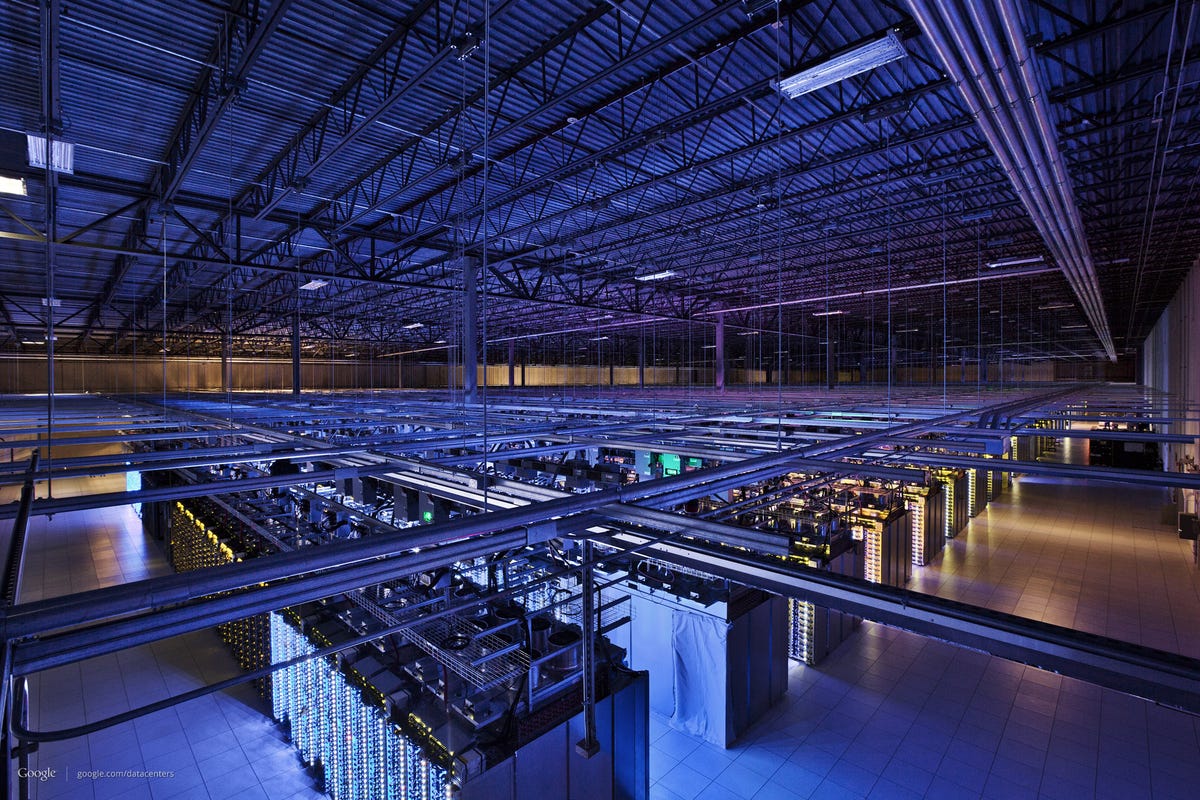
Revolutionizing Data Centers: Microsoft's Phi-4 Model and the Future of Server Efficiency
Introduction
In the dynamic world of server technology, innovation is the lifeblood that keeps the industry pulsating with new possibilities. Microsoft's latest contribution to this field, the Phi-4 reasoning model, is not just another incremental upgrade; it represents a paradigm shift in how we think about server efficiency. This model challenges the long-held belief that bigger and more powerful servers are always better, instead focusing on optimization and efficiency. This article explores the broader implications of the Phi-4 model, its potential impact on the industry, and the practical applications that could revolutionize data centers worldwide.
Main Analysis: The Shift Towards Efficiency
The Phi-4 model signifies a significant departure from traditional server design philosophies. For decades, the mantra in server technology has been "bigger is better." Companies have invested heavily in larger, more powerful servers to handle increasing data loads and processing demands. However, this approach has led to escalating operational costs and a substantial environmental footprint. Microsoft's Phi-4 model flips this script by prioritizing efficiency over size.
At the heart of the Phi-4 model are advanced algorithms that enhance processing capabilities without the need for significant hardware upgrades. This focus on software-driven optimization is a game-changer. It means that businesses can achieve the same or even better performance with less powerful hardware, leading to substantial cost savings. According to a report by the International Data Corporation (IDC), data centers worldwide consumed about 205 terawatt-hours (TWh) of electricity in 2018, roughly 1% of global electricity demand. Improvements in server efficiency could significantly reduce this consumption, aligning with global sustainability goals.
Economic and Environmental Implications
The economic implications of the Phi-4 model are profound. By reducing operational costs, the model makes high-performance server technology more accessible to small and medium-sized businesses. This democratization of technology can foster innovation and competition, driving economic growth. For large enterprises, the cost savings can be redirected towards research and development, further advancing technological progress.
Environmentally, the Phi-4 model aligns with the growing global emphasis on sustainability. Data centers are notorious for their high energy consumption and carbon emissions. According to the International Energy Agency (IEA), data centers account for about 1% of global electricity use. By improving server efficiency, the Phi-4 model can help reduce this energy consumption, contributing to a greener future. For instance, a data center using Phi-4 optimized servers could potentially reduce its energy consumption by 20-30%, translating to significant carbon emission reductions.
Practical Applications and Regional Impact
The practical applications of the Phi-4 model are vast and varied. In healthcare, more efficient servers can handle the vast amounts of data generated by electronic health records and medical imaging, improving patient care without increasing costs. In finance, optimized servers can process complex transactions and risk assessments more efficiently, enhancing market stability.
Regionally, the impact of the Phi-4 model could be transformative. In developing countries, where access to advanced technology is often limited by cost, the Phi-4 model's cost-effectiveness could bridge the digital divide. For example, in Africa, where internet penetration is still relatively low, efficient servers could support the growth of data centers, enhancing connectivity and digital services. In Europe, where environmental regulations are stringent, the Phi-4 model could help data centers meet sustainability targets without compromising performance.
Examples of Potential Implementation
To understand the real-world potential of the Phi-4 model, consider a hypothetical scenario in a large e-commerce company. Traditionally, such a company would need to invest in powerful servers to handle peak traffic during sales events. With the Phi-4 model, the company could achieve the same performance with less powerful, more efficient servers. This would not only reduce operational costs but also ensure that the company's data centers are more environmentally friendly.
Another example is a research institution dealing with big data analytics. Traditional servers might struggle with the vast amounts of data, requiring frequent upgrades and increasing costs. The Phi-4 model's advanced algorithms could optimize data processing, allowing the institution to handle larger datasets more efficiently without the need for constant hardware upgrades. This would enable more comprehensive research projects and faster data analysis, accelerating scientific discovery.
Conclusion
Microsoft's Phi-4 reasoning model is more than just a technological innovation; it is a catalyst for change in the server industry. By shifting the focus from size to efficiency, the Phi-4 model offers a pathway to more cost-effective, sustainable, and accessible server technology. The economic, environmental, and practical implications of this model are far-reaching, promising a future where high-performance servers are within reach of businesses of all sizes and regions.
As the world continues to generate unprecedented amounts of data, the need for efficient server technology has never been more pressing. The Phi-4 model represents a significant step forward in meeting this challenge. It is a testament to the power of innovation and a beacon of hope for a more sustainable and efficient digital future.