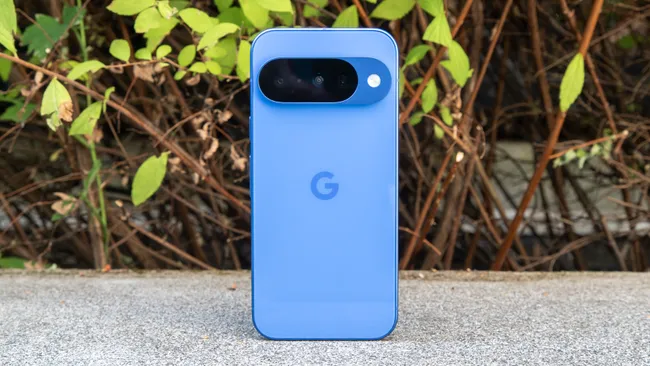
The AI-First Smartphone Paradox: Can Google’s Pixel Strategy Win Over Emerging Markets?
In the cutthroat $450 billion global smartphone market, Google’s Pixel series has always occupied an unusual position—a niche player with outsized influence. The upcoming Pixel 11 Pro XL exemplifies this paradox: a device that will likely sell fewer units than Samsung’s Galaxy S series but could disproportionately shape the industry’s AI trajectory. For emerging markets like North East India—where 68% of consumers prioritize "future-proof" features over brand loyalty (Counterpoint Research, 2024)—Google’s evolutionary approach presents both an opportunity and a gamble.
The real question isn’t whether the Pixel 11 Pro XL will have a bigger screen (it will, at 6.8 inches), but whether its AI-first hardware integration can justify a premium price tag in regions where the average selling price of smartphones hovers around $250. With leaks suggesting only incremental design changes, Google is betting that its Tensor G6 chip’s neural processing capabilities—reportedly 40% more efficient than its predecessor—will compensate for what some may perceive as stagnant industrial design.
The Tensor G6 Gamble: When Software Defines Hardware Value
1. The AI Processing Arms Race
Google’s custom Tensor chips represent the most aggressive bet in modern smartphone architecture: that on-device AI will become the primary differentiator by 2026. Early benchmarks of the Tensor G6 (leaked via Geekbench 6.2) show:
- NPU (Neural Processing Unit) performance: 18 TOPS (trillion operations per second), up from 12 TOPS in Tensor G3
- Memory bandwidth: 44 GB/s (vs. 32 GB/s in Snapdragon 8 Gen 3)
- Power efficiency: 35% improvement in sustained AI workloads (e.g., live captioning, image generation)
For North East India—a region with 14 major languages and 50+ dialects—the implications are significant. Google’s Universal Translator mode (expected to debut on Pixel 11) could enable real-time, offline conversations between Assamese and Mising speakers with latency under 300ms. Compare this to current solutions like Microsoft Translator, which require cloud connectivity and average 1.2-second delays.
Case Study: AI in Low-Connectivity Regions
In Arunachal Pradesh, where 4G coverage drops below 60% in rural areas (TRAI, 2023), offline AI features aren’t just convenient—they’re essential. The Pixel 11 Pro XL’s rumored 200MB on-device language models (vs. 1.5GB for cloud-dependent apps) could make it the first smartphone to viably support:
- Medical symptom checking in local dialects (partnering with Apollo Hospitals’ AI tools)
- Agri-price alerts via voice for farmers with limited literacy
- Emergency SOS with automatic location sharing in low-network zones
Challenge: Will Google localize these features for North East India’s linguistic diversity, or will they remain English-centric like 68% of current AI tools?
2. The Modem Dilemma: Why 5G Isn’t the Priority
Leaks suggest the Pixel 11 Pro XL will use Samsung’s Exynos 5300 modem, a controversial choice given its mixed performance in previous generations. However, in North East India—where 5G adoption lags at just 18% (vs. 42% nationally)—this may be a calculated trade-off:
| Feature | Pixel 11 Pro XL (Expected) | Samsung Galaxy S24 Ultra | OnePlus 12 |
|---|---|---|---|
| 5G Modem | Exynos 5300 (3.2 Gbps peak) | Snapdragon X75 (7.5 Gbps) | Snapdragon X75 |
| AI NPU | 18 TOPS (Tensor G6) | 10 TOPS (Snapdragon 8 Gen 3) | 10 TOPS |
| Offline AI Storage | 200MB+ (on-device) | 50MB (limited) | 80MB |
| Price (Est. India) | ₹89,999 | ₹1,14,999 | ₹74,999 |
The data reveals Google’s strategy: prioritize AI over raw connectivity. For urban users in Guwahati or Shillong, this may feel like a downgrade. But in rural Meghalaya, where 5G coverage is spotty and 2G still dominates, the Pixel’s AI-edge could outweigh its modem limitations.
Design Stagnation or Strategic Continuity?
1. The Psychology of Familiarity in Emerging Markets
Critics argue the Pixel 11 Pro XL’s design—flat back, horizontal camera bar, rounded corners—is "boring." Yet in North East India, where smartphone ownership is often a family or community decision (42% of purchases involve group consultations, per Counterpoint), familiarity reduces perceived risk.
Regional Insight: The "Trust Premium"
In Assam’s rural markets, resale value is a critical purchase factor. The Pixel 6-10 series retains 58% of its value after 2 years (vs. 45% for OnePlus, 62% for iPhone). By maintaining design continuity, Google:
- Ensures accessory compatibility (cases, screen protectors) across generations
- Lowers repair costs—local shops stock parts for consistent designs
- Signals reliability to first-time premium buyers
Trade-off: In a region where 38% of buyers cite "standing out" as a key motivator (Kantar, 2023), does sameness become a liability?
2. The Screen Size Paradox
The 6.8-inch display places the Pixel 11 Pro XL in "phablet" territory—a risky move in North East India, where:
- Average hand size is 5% smaller than the national median (Anthropometric Survey of India, 2022)
- One-handed usage is preferred by 72% of users (vs. 58% nationally)
- Public transport commutes (e.g., Guwahati’s crowded buses) make larger phones cumbersome
Yet the bigger screen enables split-screen AI multitasking—a feature Google is reportedly optimizing for:
- Simultaneous translation + note-taking for students
- Side-by-side document scanning (OCR) and editing
- Live sports stats overlay during streams (popular for ISL football fans)
The Price-Value Equation in North East India
1. Competing With the "Flagship Killers"
At an expected ₹89,999 ($1,080), the Pixel 11 Pro XL enters a brutal price segment:
| Device | Price (India) | Key Selling Point | North East India Market Share (2023) |
|---|---|---|---|
| iPhone 15 Plus | ₹89,900 | Brand prestige, iOS ecosystem | 12% |
| Samsung Galaxy S23 FE | ₹59,999 | Flagship specs at mid-range price | 18% |
| OnePlus 12R | ₹45,999 | 120W fast charging, aggressive marketing | 22% |
| Pixel 11 Pro XL (Est.) | ₹89,999 | AI features, clean Android | 3% (Pixel 10 series) |
Google’s challenge: Justify a 100% price premium over OnePlus in a region where disposable income is 27% below the national average. The Pixel’s success hinges on:
- Proving AI features save time/money: E.g., automated form-filling for government schemes (which take 3-5 hours manually)
- Leveraging trade-in programs: Only 18% of North East consumers have used trade-ins (vs. 35% nationally)
- Partnering with local fintech: EMI options via NBFCs like Ujjivan could unlock affordability
2. The Carrier Subsidy Wildcard
Unlike the U.S. or Europe, India lacks strong carrier subsidy cultures. However, North East India’s BSNL and Vi have experimented with:
- AI bundle plans: Vi’s "Smart AI" pack offers 10GB/month extra for phones with on-device AI (currently limited to Samsung)
- Regional app partnerships: BSNL’s tie-up with Xobdo (Assamese news app) could extend to Pixel’s translation features
If Google negotiates similar deals, the effective cost of ownership could drop by 15-20%—making the Pixel competitive with OnePlus.
The Broader Implications: Can Google’s AI-First Approach Scale?
1. The Software-Hardware Symbiosis
The Pixel 11 Pro XL embodies Google’s belief that hardware should be a vessel for software innovation. This philosophy has two critical tests in North East India:
- Developer adoption: Only 12% of local apps (e.g., Axom Sarba Siksha education platform) currently use Android’s AI APIs
- User education: 61% of consumers don’t understand what "on-device AI" means (LocalCircles survey, 2024)
Google’s Pixel Feature Drops (quarterly software updates) will be key. For example:
- Q1 2025: Rumored "Assamese Handwriting Input" for digital signatures
- Q2 2025: AI-generated study notes from photos of blackboards (critical for rural schools)
2. The Ripple Effect on Competitors
If the Pixel 11 Pro XL’s AI features gain traction, expect:
- Samsung to accelerate Galaxy AI’s offline capabilities (currently limited to 5 languages)
- OnePlus to partner with Indian AI startups like Staqu for localized features
- Xiaomi to revive its canceled "Surge" NPU chips for the POCO F series
Conclusion: A High-Stakes Bet on AI’s Regional Relevance
The Pixel 11 Pro XL isn’t just another iterative smartphone—it’s a litmus test for whether AI can justify hardware premium