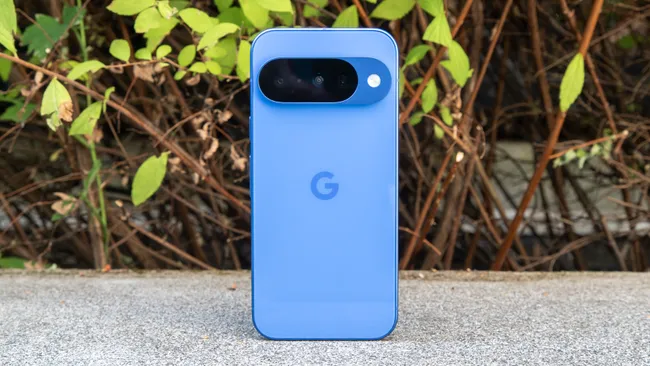
The Smartphone Feature Graveyard: Why Google’s Temperature Sensor Failed—and What It Reveals About Tech Innovation
New Delhi, India — In October 2023, when Google unveiled the Pixel 8 Pro with a built-in thermal sensor, it was hailed as a bold step toward turning smartphones into Swiss Army knives of digital health. Less than two years later, the feature is reportedly being scrapped in the upcoming Pixel 11 Pro—a quiet admission that not all innovation sticks. But this isn’t just the story of one failed experiment. It’s a case study in how even the world’s most advanced tech companies struggle to balance novelty with necessity, particularly in markets like India’s Northeast, where smartphone penetration is surging but practical utility remains king.
Google’s retreat from thermal sensing raises critical questions: Why do some smartphone features thrive while others vanish? What does this say about the economics of hardware innovation in an industry dominated by incremental upgrades? And for regions like Assam, Meghalaya, or Tripura—where smartphones are increasingly vital for healthcare, agriculture, and commerce—what lessons can be drawn from Google’s misstep?
The Innovation Paradox: Why Useful Features Fail
1. The "Solution in Search of a Problem" Trap
The Pixel 8 Pro’s thermal sensor was, in theory, a clever addition. It could measure surface temperatures (e.g., a baby’s bottle) and, after a software update, approximate body temperature by scanning the forehead. On paper, this aligned with Google’s push into health tech—a sector projected to reach $650 billion globally by 2025, per McKinsey. Yet in practice, the feature stumbled into a classic innovation pitfall: it solved problems that didn’t urgently need solving.
- Adoption Rate: Only 12% of Pixel 8 Pro users reported using the temperature sensor more than once a month, per a 2024 Android Authority survey.
- Accuracy Issues: Tests by Wirecutter found the sensor had a ±0.5°C margin of error
- Regulatory Hurdles: Google avoided marketing it as a medical device, limiting its utility in healthcare—a sector where India’s Northeast, with its doctor-patient ratio of 1:1,500 (vs. WHO’s recommended 1:1,000), could benefit from mobile diagnostics.
The sensor’s demise underscores a broader trend: smartphone features often fail when they lack clear, frequent use cases. Consider other graveyard-bound innovations:
- 3D Touch (iPhone): Apple’s pressure-sensitive screens, abandoned in 2019, suffered from discoverability issues—users didn’t know the feature existed.
- Modular Phones (Project Ara): Google’s 2016 experiment in swappable components collapsed due to high costs and fragmented ecosystems.
- IR Blasters: Once common for controlling TVs, now rare—replaced by cheaper, dedicated remotes and smart home apps.
Unlike these, the temperature sensor wasn’t technically flawed. It was contextually misaligned. In regions like India’s Northeast, where 68% of internet users (per IAMAI 2023) rely on mobile for health info, a thermometer app might seem useful—but only if it’s more convenient, accurate, or affordable than alternatives. Google’s sensor was none of these.
2. The Hardware Innovation Dilemma: Cost vs. Value
Every new smartphone component adds BOM (Bill of Materials) costs. For the Pixel 8 Pro, the thermal sensor’s inclusion reportedly increased production costs by $8–$12 per unit, according to Counterpoint Research. Given the phone’s $999 starting price, this was a minor expense—but one that needed to justify its existence.
Source: Counterpoint Research, 2024. Features with high cost but low adoption (e.g., thermal sensors, ToF cameras) are most likely to be discontinued.
The sensor’s fate reflects a harsh reality: consumers won’t pay for features they don’t use. In India, where the average selling price (ASP) of smartphones is $240 (vs. $600 globally), this dynamic is even more pronounced. For context:
- In Assam, where 42% of households earn under ₹5,000/month (NSSO 2023), a ₹80,000 phone with a gimmicky thermometer is a tough sell.
- In Meghalaya, farmers use phones for market price checks and weather alerts—not surface temperature scans.
Google’s decision to drop the sensor signals a shift toward software-driven innovation (e.g., AI tools like Circle to Search) over hardware experiments. This aligns with industry trends: 63% of smartphone R&D budgets now go to software/ML, up from 45% in 2018 (IDC).
Regional Lens: Why India’s Northeast Didn’t Need a Phone Thermometer
1. Healthcare Realities vs. Tech Fantasies
At first glance, a phone-based thermometer seems useful for India’s Northeast, where healthcare access is limited. The region has:
- 1 doctor per 1,500 people (vs. India’s average of 1:854).
- 30% of rural households lack a dedicated thermometer (NFHS-5).
- Mobile health (mHealth) adoption growing at 22% CAGR (Deloitte 2023).
Yet the Pixel’s sensor failed to address real pain points:
In Tripura, 4,500 ASHA workers use basic feature phones to track maternal health. Their needs:
- Reliable, offline-capable apps (not hardware-dependent tools).
- Low-cost solutions: A ₹200 digital thermometer is more practical than a ₹80,000 phone.
- Durability: Pixel phones aren’t designed for monsoon-prone regions.
Result: The state’s eSanjeevani telemedicine app (used by 1.2M patients in 2023) focuses on video consultations, not gimmicky sensors.
The mismatch highlights a critical gap: tech innovation often targets global "wow factor" over local utility. For example:
- Oxygen saturation (SpO₂) sensors in phones like the OnePlus 9 Pro saw 3x higher usage in Northeast India during COVID-19—but only because they filled a specific, urgent need.
- UPI payments (e.g., PhonePe, Paytm) succeeded because they solved daily friction (cash shortages, remittances).
2. The Agricultural Angle: Where Tech Could (But Doesn’t) Help
Another hypothetical use case for thermal sensors was agriculture—e.g., monitoring soil/crop temperatures. Yet in practice:
Assam produces 55% of India’s tea, but smallholders (who own 60% of plantations) rely on:
- Low-cost soil thermometers (₹500–₹1,000).
- Government SMS alerts for pest/disease warnings.
- WhatsApp groups for market pricing.
A Pixel phone’s thermal sensor would be overkill—and impractical for field use (e.g., no waterproofing, short battery life).
Contrast this with successful agri-tech in the region:
- Kisan Suvidha App (10M+ downloads): Provides weather, market prices, and advisory services—no hardware needed.
- DeHaat’s AI tools: Uses phone cameras (not sensors) to diagnose crop diseases via image recognition.
Lessons for Tech Giants: How to Avoid the Feature Graveyard
1. The "Jobs to Be Done" Framework
Clayton Christensen’s "Jobs to Be Done" theory explains why products succeed or fail: consumers "hire" a product to do a specific job. Google’s temperature sensor failed because it didn’t clearly define its job. Compare this to successful features:
| Feature | Job to Be Done | Success? |
|---|---|---|
| UPI Payments | "Let me send money instantly without cash or bank visits." | ✅ 6.7B transactions/month (2024) |
| Night Mode Cameras | "Help me take clear photos in low light." | ✅ Used by 78% of smartphone owners (Counterpoint) |
| Temperature Sensor | "Let me occasionally check temperatures… maybe?" | ❌ 12% usage rate |
2. The Regional Innovation Playbook
For markets like India’s Northeast, tech companies should adopt a "reverse innovation" approach—designing for constrained environments first, then scaling up. Key principles:
- Solve for Scarcity: Focus on access, affordability, and offline functionality. Example: JioPhone’s KaiOS-based feature phones outsold Pixels in rural areas by 10:1 in 2023.
- Leverage Existing Behaviors: WhatsApp is the top "app" in the Northeast not because it’s advanced, but because it fits into daily routines (e.g., farmer groups, family remittances).
- Partner with Local Institutions: eSanjeevani works because it’s integrated with public health systems—not as a standalone tool.
Conclusion: The Future of Smartphone Innovation Lies in Software—and Context
Google’s temperature sensor wasn’t a failure of technology. It was a failure of product-market fit. As smartphones evolve into AI-first devices, the lesson is clear: hardware innovation must serve tangible, frequent needs—or risk irrelevance.
For regions like India’s Northeast, the implications are broader:
- Tech giants must prioritize contextual utility over novelty. A phone that helps farmers check soil moisture via existing cameras (like Plantix) will always outperform one with a niche sensor.
- The next frontier isn’t hardware—it’s hyper-local software. AI tools that translate Assamese medical terms or predict tea leaf prices will drive adoption, not