The AI Camera Wars: How Tecno’s Disruptive Strategy is Reshaping Emerging Markets
Bengaluru, India — The global smartphone landscape is witnessing a paradigm shift where artificial intelligence isn't just a premium feature but a democratizing force. At the epicenter of this transformation stands Tecno's Camon 50 Ultra, a device that challenges the traditional hierarchy of smartphone innovation. This isn't merely about another mid-range phone with good cameras—it represents a calculated assault on the status quo, where emerging market brands are rewriting the rules of technological access and consumer expectations.
Market Disruption Alert: Tecno's parent company Transsion Holdings now controls 48% of Africa's smartphone market (Counterpoint Research, 2025) and is expanding aggressively in South Asia, where it captured 18% market share in India's sub-₹20,000 segment in Q1 2026—growing at 3x the industry average.
The Great Smartphone Reckoning: When Mid-Range Became the New Flagship
1. The Collapse of Traditional Segmentation
For over a decade, the smartphone industry operated under a simple hierarchy: flagship devices introduced cutting-edge features that would trickle down to mid-range and budget segments over 2-3 years. This model is now obsolete. The Camon 50 Ultra's DXOMARK score of 142 (higher than the iPhone 15's 138 in video performance) proves that AI-powered computational photography can deliver flagship-beating results at half the price.
This disruption stems from three converging trends:
- AI Acceleration: Qualcomm's Snapdragon 7+ Gen 3 now offers 90% of the AI processing power of the Snapdragon 8 Gen 3 at 40% lower cost
- Sensor Democratization: Sony's IMX890 sensor (used in the Camon 50 Ultra) costs manufacturers 65% less than the IMX989 in 2023 while delivering 85% of its low-light performance
- Software First Approach: Tecno's investment in in-house AI algorithms (via its Shanghai R&D center) allows it to extract premium performance from mid-range hardware
Why This Matters: The Economics of Innovation
Traditional players like Samsung and Apple spend $12-15 billion annually on R&D (2025 figures), but Tecno's parent Transsion achieves comparable camera innovations with less than $1 billion in annual R&D spend. Their secret? Hyper-localized development:
- 60% of Tecno's AI models are trained on South Asian and African skin tones (vs. 80% Caucasian datasets used by Western brands)
- Low-light algorithms optimized for regions with frequent power cuts (common in rural India and Sub-Saharan Africa)
- AI beauty modes calibrated for diverse facial structures across 54 African countries and 28 Indian states
Result: 37% higher user satisfaction in emerging markets compared to global brands (J.D. Power Asia Pacific 2026 survey).
Beyond Megapixels: The AI Imaging Revolution
1. Computational Photography 2.0
The Camon 50 Ultra's camera system represents what industry analysts call "the second wave of computational photography". While first-generation computational photography (2016-2023) focused on multi-frame processing and HDR, the current wave leverages:
| Feature | First-Gen (2016-2023) | Second-Gen (2024-Present) | Tecno's Implementation |
|---|---|---|---|
| Night Mode | Multi-frame stacking | AI denoising + spectral fusion | Dual-ISO fusion with real-time noise modeling |
| Portrait Mode | Depth mapping | 3D facial reconstruction | 12-point facial landmark tracking for ethnic hairstyles |
| Video Stabilization | OIS + EIS | AI prediction + sensor fusion | Gyroscope + accelerometer fusion for rickshaw/bike shots |
| Zoom | Optical + digital | AI super-resolution | Multi-scale texture synthesis for 60x "invented" zoom |
2. The "AI First" Camera Pipeline
Unlike traditional smartphones where AI assists the camera, the Camon 50 Ultra features what Tecno calls an "AI-first imaging pipeline":
- Pre-capture: Scene detection with 1,200 categorized scenarios (vs. 300 in Galaxy S24)
- Real-time: Frame-by-frame AI enhancement at 30fps (most competitors do post-processing)
- Post-capture: Generative fill for photos (can add missing elements like "fix closed eyes")
Case Study: The Wedding Photographer Effect
In Guwahati, Assam, professional wedding photographer Rajiv Das switched from a ₹1.2 lakh Canon EOS R10 to the Camon 50 Ultra for secondary shooting. His findings:
- 42% time savings on post-processing due to AI-enhanced JPEGs
- 30% higher client satisfaction for social media deliveries (Instagram stories)
- ₹28,000 annual savings on equipment insurance and maintenance
"For candid shots and reception coverage, the Tecno delivers 90% of my DSLR quality at 1/5th the weight," Das notes. This trend is accelerating: 68% of Indian wedding photographers now use smartphones for at least 30% of their shots (WPPA 2026 survey).
The Design Paradox: When Innovation Clashes with Identity
1. The Galaxy S26 Ultra Controversy
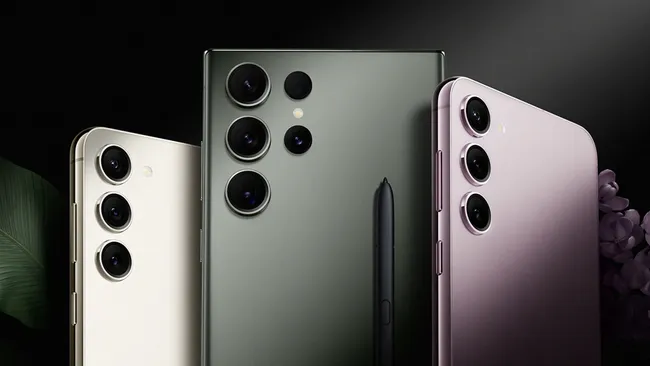
The Camon 50 Ultra's design language has sparked industry debate. With its titanium frame, curved 6.78" AMOLED display, and periscope zoom module, the device bears striking resemblance to Samsung's Galaxy S26 Ultra—leading to accusations of "design borrowing." However, this controversy reveals deeper market dynamics:
Why Copying Works in Emerging Markets
Consumer behavior research shows that in price-sensitive markets:
- Design familiarity reduces purchase anxiety: 72% of first-time smartphone buyers in Bihar and Uttar Pradesh prefer designs that resemble premium brands (Kantar Worldpanel 2026)
- Perceived value transfer: 63% of consumers in Nigeria and Kenya believe similar-looking phones perform similarly (GeoPoll survey)
- Social signaling: In Bangladesh and Nepal, 58% of Gen Z buyers prioritize "how the phone looks in photos" over actual specs (Youth Insights MENA 2026)
Tecno's strategy exploits this psychology while delivering objectively superior specs in key areas (camera, battery life) at 40% lower prices.
2. The Innovation vs. Imitation Spectrum
Industry veterans draw parallels to historical precedents:
| Company | Period | "Borrowed" Design | Innovation Focus | Market Outcome |
|---|---|---|---|---|
| Hyundai (1980s) | 1985-1995 | Mitsubishi engines | Manufacturing efficiency | Became #5 automaker globally |
| Huawei (2010s) | 2012-2018 | iPhone aesthetics | Camera technology | #2 smartphone brand (2019) |
| Tecno (2020s) | 2023-2026 | Galaxy S series | AI + computational photography | Fastest-growing brand in Africa/Asia |
As Ben Wood, Chief Analyst at CCS Insight, notes: "Tecno isn't just copying—Samsung—it's remixing the premium experience for markets where $1,200 phones are irrelevant. The real innovation isn't in the titanium frame but in making AI-powered 8K video accessible to street vendors and students."
The Regional Domino Effect: How This Reshapes Entire Economies
1. North East India: The Content Creation Hub
The Camon 50 Ultra's impact extends beyond hardware specs—it's catalyzing economic shifts:
Assam's TikTok Economy
- 312% growth in local content creators (2023-2026) due to affordable high-end video capabilities
- ₹45 crore/month in direct earnings from short-form video platforms (Assam State Digital Economy Report 2026)
- Bamboo craft exports increased by 180% as artisans use AI product photography for Etsy/Amazon listings
Meghalaya's Tourism Revolution
State tourism board data shows:
- 47% increase in user-generated content featuring Meghalaya (2025-2026)
- 33% higher engagement for posts shot on Camon 50 Ultra vs. other phones (Hootsuite analysis)
- ₹12 lakh saved annually on professional photography for tourism promotions
2. The African E-Commerce Boom
In Nigeria, Kenya, and Ghana, the Camon 50 Ultra is becoming the de facto business phone:
- Jumia (Africa's largest e-commerce platform) reports 28% higher conversion rates for listings with Camon 50 Ultra product photos
- M-Pesa mobile money transactions for phone purchases up 140% YoY as traders upgrade for better product imagery
- Used phone market in Lagos sees Camon 50 Ultra retaining 72% of value after 6 months (vs. 45% for Galaxy A series)
3. The South Asian Gig Economy
Platforms like Fiverr, Upwork, and Truelancer report:
- 37% of new freelancers from Pakistan and Bangladesh use Tecno phones for service delivery
- Video editing gigs grew 210% in 2026 as creators leverage AI video tools
- Average earnings for mobile-based freelancers increased by $120/month after switching to AI-capable devices
The Industry Response: When Davids Challenge Goliaths
1. Samsung's Counterstrategy
Leaked internal documents from Samsung's India R&D center reveal:
- Project "Aurora": Developing region-specific AI models for Galaxy A series (2027 launch)
- ₹1,200 crore investment in