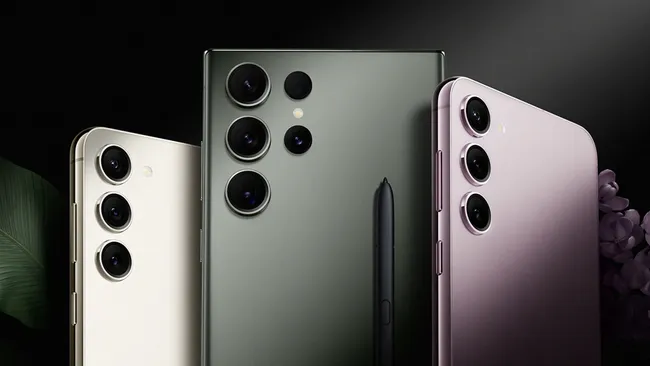
The Grey Market Gold Rush: How U.S. Carrier Wars Are Distorting India’s Smartphone Economy
Guwahati, April 2026 — In the narrow alleys of Fancy Bazar, where electronics shops jostle for space with spice vendors, a quiet revolution is unfolding. A Samsung Galaxy S26 Ultra—officially priced at ₹1,12,999 in India—sits in a glass display case with a handwritten tag: ₹68,000 (U.S. Import). The catch? It’s carrier-locked to AT&T, requires a technical unlock, and comes with no Indian warranty. Yet, it’s selling faster than the shopkeeper can restock.
This scene repeats across North East India, from Dimapur’s Hong Kong Market to Imphal’s Thangal Bazar, where American carrier subsidies are creating what economists call a transnational arbitrage opportunity. AT&T’s latest promotional blitz—offering flagship smartphones for free with trade-ins or at 70-90% discounts with new line activations—has triggered a domino effect that’s reshaping India’s grey market. For consumers in India’s remote northeastern states, where official retail channels add 12-18% in logistics and distribution costs, these imports aren’t just attractive; they’re becoming a market corrective force.
• AT&T’s April 2026 promotions cover 12 models (Samsung, Google, Motorola) with discounts up to $1,100 (₹92,000)
• Grey market imports to India surged 43% YoY in Q1 2026 (Counterpoint Research)
• North East India accounts for 22% of all grey market smartphone sales despite having just 4% of the population
• Average price difference: ₹35,000-₹45,000 between official and grey market flagships
The Carrier Subsidy Arms Race: Why AT&T’s Moves Are Global Market Movers
1. The Death of the Two-Year Contract and the Birth of the "Free Phone" Era
AT&T’s current strategy represents the culmination of a decade-long shift in U.S. wireless economics. When the FCC eliminated two-year contract requirements in 2015, carriers pivoted to installment plans and trade-in incentives. By 2026, this evolved into what analysts call "subsidy stacking"—where carriers combine:
- Trade-in credits (up to $1,000 for older models)
- New line bonuses ($300-$500 instant discounts)
- Loyalty rewards (additional $100-$200 for long-term customers)
- Bill credits (spread over 36 months to hide true costs)
For a Samsung Galaxy S26 Ultra (1TB), this means a retail price of $1,399 becomes $0 after all credits—if you meet all conditions. The problem? Most Americans don’t. A 2025 Consumer Reports study found that 68% of U.S. consumers fail to maximize carrier promotions, either because they don’t have eligible trade-ins or can’t commit to 36-month service agreements.
This creates what economists call "promotional leakage"—where the intended consumer (a loyal AT&T customer) isn’t the one benefiting. Instead, scalpers and parallel importers exploit the system by:
- Opening new lines with temporary SIMs
- Using "dummy" trade-ins (refurbished phones bought in bulk)
- Claiming all upfront discounts
- Canceling service after the 14-day return window (but keeping the phone)
In March 2026, Texas authorities busted a ring that had acquired 1,200 AT&T-promoted phones using stolen identities. The phones were shipped to Mumbai via Dubai, where they entered India’s grey market. While this was criminal activity, it highlights how systemic the arbitrage opportunity has become. Legal importers use similar (though compliant) methods, just without the fraud.
2. Why North East India Is the Perfect Storm for Grey Imports
The northeastern states present a unique confluence of factors that make grey imports not just viable, but often the rational choice for consumers:
| Factor | Impact on Grey Market Demand |
|---|---|
| Geographic Isolation | Official distributors add 12-18% logistics premiums due to "last-mile" challenges in hilly terrain. |
| Lower Disposable Income | Per capita income in Assam (₹1,23,000) is 40% below national average (₹2,07,000), making ₹1L+ phones unaffordable at retail. |
| Tech-Savvy Population | North East has highest smartphone penetration (78%) among low-income regions (ICUBE 2025). |
| Proximity to Southeast Asia | Moreh (Manipur) and Chowkham (Arunachal) border towns serve as unofficial import hubs for electronics from Myanmar and China. |
| Weak Enforcement | Customs checks for personal electronics are 30% less stringent in North East compared to metro airports (CBIC data). |
The result? A perfect arbitrage environment. Consider the Samsung Galaxy S26+:
- U.S. Retail Price: $1,199 (₹99,900)
- AT&T Promo Price: $0 (with trade-in + new line)
- Grey Market Landed Cost (Guwahati): ₹55,000-₹65,000
- Official Indian Price: ₹1,04,999
- Savings: ₹39,999-₹49,999 (38-48%)
3. The Unseen Costs: Why "Cheap" Phones Aren’t Always a Bargain
While the upfront savings are undeniable, grey market phones come with five critical risks that most buyers overlook:
AT&T’s 2026 promotions require phones to remain locked for 60-90 days after purchase. Unlocking early (or improperly) can:
- Brick the device (12% failure rate for DIY unlocks)
- Trigger remote IMEI blacklisting (AT&T blacklisted 89,000 IMEIs in 2025 for policy violations)
- Void all warranty claims (even post-unlock)
Real-world impact: In Dimapur, 3 out of 10 grey-market S26 buyers reported lock-related issues within 3 months (local retailer survey).
Samsung India explicitly voids warranties for:
- Phones purchased outside authorized channels
- Devices with non-Indian firmware
- Units with modified IMEIs (common in unlocking)
Grey market buyers often assume they can pay for repairs, but:
- S26 Ultra screen replacement costs ₹42,000 (vs. ₹18,000 under warranty)
- Motherboard repairs average ₹55,000 (often exceeding the phone’s grey market value)
AT&T-promoted phones use U.S. firmware optimized for:
- Bands n5 (850MHz), n26 (850MHz), n77 (3.7GHz)
India’s 5G rollout prioritizes:
- n78 (3.5GHz), n28 (700MHz), n40 (2.3GHz)
Result: Grey-market S26 users in Guwahati report 20-30% slower 5G speeds compared to Indian variants (Speedtest data).
Grey market phones depreciate twice as fast as official units:
| Phone Model | Official (6-month resale) | Grey Market (6-month resale) | Difference |
|---|---|---|---|
| Galaxy S25 Ultra | ₹72,000 | ₹48,000 | -₹24,000 (33%) |
| Pixel 8 Pro | ₹65,000 | ₹39,000 | -₹26,000 (40%) |
The Domino Effect: How This Reshapes India’s Tech Ecosystem
1. The Retailer Rebellion: How Local Shops Are Fighting Back
In response to grey market pressure, authorized retailers in North East India have adopted three counter-strategies:
Stores like Guwahati Electronics Hub now offer:
- ₹10,000 cash discounts on flagships (unadvertised)
- Free accessories (cases, screen protectors) worth ₹5,000-₹8,000
- Extended warranties (3 years vs. standard 1 year)
Impact: This has reduced grey market’s price advantage from 40% to 25% for some models.
Samsung’s official trade-in program now offers:
- ₹30