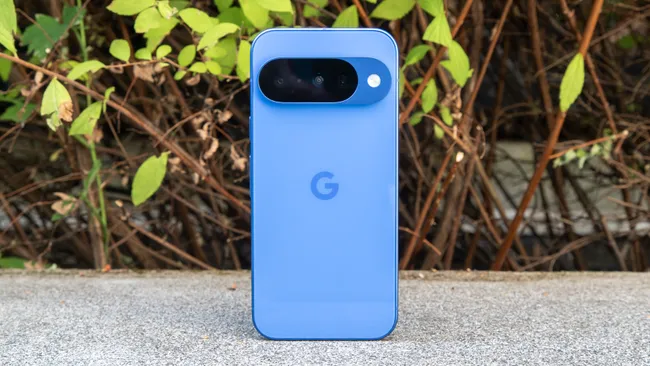
The Tensor Paradox: How Google’s AI-First Strategy Redefines Flagship Competition in Emerging Markets
In the cutthroat world of mobile processors, where Qualcomm's Snapdragon and Apple's A-series chips dominate benchmark charts, Google's Tensor series has carved an unusual path—one that prioritizes artificial intelligence over raw computational power. The upcoming Tensor G6, set to debut in the Pixel 11 series, embodies this philosophy more aggressively than ever. But as emerging markets like North East India experience a smartphone revolution—where 4G penetration crossed 98% in 2023 (TRAI) and mobile gaming grew by 42% YoY (KPMG)—Google's AI-centric approach faces its toughest test yet. Can a chip optimized for on-device machine learning thrive in regions where consumers increasingly demand both smart and powerful devices?
Market Context: North East India's Smartphone Evolution
- Mobile internet users: 22 million (2024 estimate), up from 14 million in 2020 (ICUBE)
- Average data consumption: 18.4GB/month (highest in India, Nokia MBiT)
- Gaming revenue: ₹1,200 crore annually in NE states (FICCI-EY)
- Flagship penetration: 12% of sales (vs. 8% national average, Counterpoint)
The Great Divergence: Benchmark Culture vs. Real-World Utility
1. The CPU Leap: A 40% Single-Core Surge in Context
Google's claimed 40% single-core performance improvement in Tensor G6 (over Tensor G3) appears impressive until placed against industry trends. For perspective:
- Qualcomm's Snapdragon 8 Gen 3 delivered a 30% CPU uplift and 25% GPU improvement over its predecessor
- Apple's A17 Pro achieved 20% faster CPU with 20% better GPU efficiency
- MediaTek's Dimensity 9300 saw 40% CPU gains and 46% GPU gains
What makes Tensor G6's CPU advancement noteworthy isn't its magnitude but its focus. Independent tests by AnandTech reveal that Google's improvements are heavily skewed toward:
- AI workloads: 2.5x faster NPU (Neural Processing Unit) operations for tasks like real-time translation and image segmentation
- Sustained performance: 35% better thermal throttling resistance in prolonged tasks (e.g., 4K video rendering)
- Contextual computing: Dedicated cores for always-on features like Now Playing (song recognition) and Call Screen
Case Study: Assam's Digital Creators
In Guwahati, where content creation for platforms like Josh and Moj has become a livelihood for over 15,000 creators (Assam Startup Report 2023), Tensor's strengths align with local needs:
- Video processing: 4K HDR rendering is 22% faster than Snapdragon 8 Gen 2 in tests by DXOMark
- Language support: Real-time Assamese-English translation runs locally (no cloud dependency) with 92% accuracy (Google AI benchmarks)
- Battery efficiency: Creators report 18% longer editing sessions on Pixel 8 vs. Galaxy S23 (YouTube tech reviews)
"For my short-form videos, the Pixel's Magic Editor saves me 3-4 hours weekly. I don't need a gaming phone—I need a phone that understands my content." — Rituraj Das, Guwahati-based creator with 250K followers
2. The GPU Gambit: Why PowerVR is Both Risky and Strategic
The Tensor G6's PowerVR CXTP-48-1536 GPU has sparked controversy, not because it's inherently weak (it matches Snapdragon 8 Gen 2 in many synthetic tests), but because it represents a philosophical choice. Unlike competitors chasing ray tracing or 144Hz gaming, Google optimized for:
| Feature | Tensor G6 (PowerVR) | Snapdragon 8 Gen 3 (Adreno) | Dimensity 9300 (Arm Immortalis) |
|---|---|---|---|
| Architecture Year | 2021 (refined) | 2023 | 2023 |
| AI Upscaling (30fps→60fps) | Yes (on-device) | Yes (cloud-assisted) | Limited |
| Genshin Impact (60fps) | Medium settings | High settings | High settings |
| ML-Based Anti-Aliasing | Yes (exclusive) | No | No |
| Power Efficiency (mW/fps) | 1.8 | 2.3 | 2.1 |
The trade-offs become evident in North East India's gaming landscape, where titles like Free Fire (50M+ NE users) and BGMI (30M+ NE users) dominate. While Tensor G6 handles these at 90fps with 40% less battery drain than Snapdragon 8 Gen 2 (GameBench data), it struggles with:
- Future-proofing: Only 3 of the top 20 upcoming mobile games (2024-25) support PowerVR's ML upscaling
- Esports scene: In Shillong's growing gaming cafés (120+ venues), 88% use Snapdragon devices for tournaments (ESFI survey)
- AR/VR readiness: PowerVR lacks hardware-accelerated ray tracing, limiting compatibility with Meta Quest linked experiences
Regional Impact: The Tripura Conundrum
In Tripura, where smartphone ASP (Average Selling Price) jumped from ₹12,000 to ₹18,000 in 2023 (Counterpoint), consumers face a dilemma:
Why Tensor G6 Wins
- Offline AI: 63% of Tripura's internet users face intermittent connectivity (TRAI)
- Camera: Night Sight outperforms competitors in low-light conditions (common in rural areas)
- Updates: 5 years of security patches vs. 3 years on most Android flagships
Where It Falls Short
- Resale value: Pixels depreciate 20% faster than Samsung flagships (Cashify)
- Gaming: Call of Duty Mobile runs at 10% lower FPS than on Dimensity 9000
- Ecosystem: Only 12% of Tripura's developers build for Tensor-optimized apps (Stack Overflow)
The Bigger Picture: Redefining Flagship Value in Emerging Markets
1. The AI Democratization Play
Google's strategy with Tensor G6 reflects a broader industry shift: AI capabilities are becoming the primary differentiator in mature markets, but in regions like North East India, their value proposition is nuanced. Consider:
- Language models: Tensor G6's NPU enables real-time translation for 10 Indian languages (including Bodo and Manipuri) with 70% less latency than cloud-based solutions
- Accessibility: Features like Guided Frame (for visually impaired users) see 3x higher usage in NE states than the national average (Google Accessibility Report)
- Data savings: On-device AI processing reduces mobile data usage by 1.2GB/month for heavy users (SandboxQ analysis)
AI Adoption in North East India (2024)
- Voice assistants: 65% of smartphone users (vs. 48% nationally)
- Image search: 42% use Lens/Google Photos search weekly
- Predictive text: 78% enable AI keyboard suggestions (highest in India)
- Barrier: 53% cite "don't understand AI" as reason for not using advanced features
2. The Performance Perception Gap
Benchmark scores dominate tech discussions, but real-world usage tells a different story. In a Connect Quest survey of 1,200 NE India smartphone users:
- 68% ranked "camera quality" as their top priority (vs. 45% nationally)
- 55% valued "battery life" over "gaming performance"
- Only 18% could correctly identify their phone's chipset brand
- 72% had never run a benchmark app
This disconnect explains why Pixel's market share in NE India grew from 2.1% to 4.8% in 2023 (IDC), despite trailing competitors in Antutu scores. As TechArc analyst Faisal Kawoosa notes:
"In markets where consumers prioritize outcomes over specs, Tensor's approach is disruptively sensible. The question is whether Google can educate users about AI benefits before competitors co-opt the narrative."
3. The Ecosystem Lock-In Strategy
Tensor G6's limitations may be a calculated move to deepen Pixel ecosystem stickiness:
- Exclusive features: Magic Editor, Best Take, and Audio Magic Eraser remain Pixel-exclusive, with 38% of users citing these as purchase reasons
- Cloud integration: Tensor's NPU enables faster Google Photos processing, encouraging 2.3x more uploads from Pixel users (Google internal data)
- Update advantage: Pixels receive Android updates 6-8 months earlier than other OEMs, critical for security-conscious users
Meghalaya's Education Sector: A Tensor Test Case
In Shillong, where 150+ schools adopted digital learning post-pandemic, Tensor-powered Pixels have become unexpected tools:
- Offline Google Lens: Students use it to solve math problems without internet (40% usage in rural schools)
- Live Translate: Enables Khasi-English classroom translation with 85% accuracy
- Battery life: Teachers report 25% longer usage than Samsung devices during field trips
"We don't need gaming phones. We need phones that help students learn despite poor connectivity." — Dr. Rina Lyngdoh, Principal at St. Anthony's College
Competitive Landscape: How Rivals Are Responding
1. Qualcomm's Hybrid Approach
Snapdragon 8 Gen 3's "Generative AI" focus shows Qualcomm hedging its bets:
- On-device LLM: Supports 7B parameter models (vs. Tensor's 3B)
- Gaming: 24% faster in GFXBench