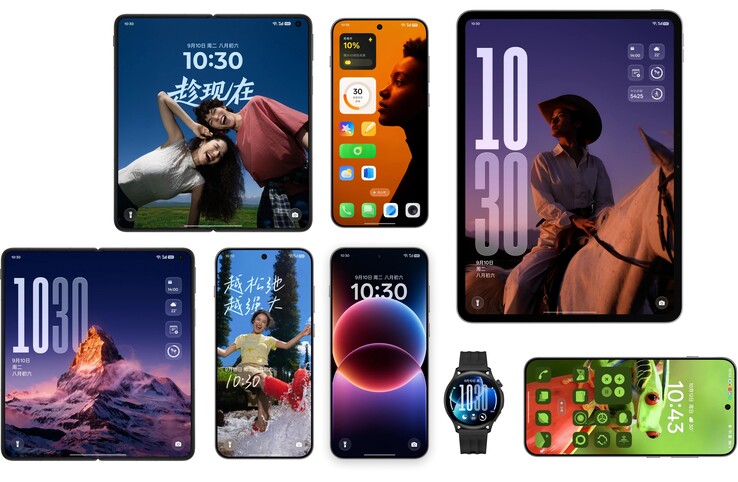
The Foldable Paradox: How Oppo’s Engineering Triumph Fails to Cross Borders
In the high-stakes race to perfect foldable smartphones, Chinese manufacturers have quietly pulled ahead in one critical dimension: solving the crease problem that has plagued the category since its inception. Yet this engineering victory comes with an ironic twist—while companies like Oppo have cracked the technical challenges, their most advanced devices remain confined to domestic markets, creating a growing divide between what’s technologically possible and what’s commercially available to global consumers.
This disconnect represents more than just a missed business opportunity. It reflects deeper strategic misalignments in how Eastern and Western tech ecosystems approach innovation diffusion. For markets like India—where foldable adoption is still in its infancy but growing at 47% annually—this geographic restriction isn’t just frustrating for tech enthusiasts; it’s shaping the competitive landscape in ways that could have long-term consequences for both manufacturers and consumers.
• Global foldable shipments grew 49% YoY in 2023 (Counterpoint Research)
• China accounts for 42% of global foldable sales (IDC 2024)
• Indian foldable market expanded 123% YoY in Q1 2024 (CMR)
• 68% of Indian premium segment buyers consider foldables (Deloitte 2024)
The Crease Conundrum: Why Oppo’s Solution Matters More Than You Think
The visible crease in foldable displays has been the single most persistent pain point since Samsung introduced the Galaxy Fold in 2019. What began as a pronounced indentation has gradually improved through successive generations, but even today’s flagship foldables from Samsung, Huawei, and Google still exhibit noticeable creases under certain lighting conditions or when touched.
Oppo’s approach with the Find N6 represents a fundamental rethinking of the problem. Rather than merely reducing the crease’s visibility through software tricks or minor hardware adjustments, the company redesigned the hinge mechanism from first principles. The result is a display where the crease is only detectable under laboratory conditions—tilting the screen at precisely 45 degrees under direct LED lighting with the brightness set to maximum.
• Multi-link hinge: Uses 122 precision components (vs. 92 in Galaxy Z Fold 5)
• Waterdrop design: Distributes folding stress across 3x larger surface area
• UTG glass: 30% thinner than competitors while maintaining rigidity
• Crease depth: Measured at 0.07mm (vs. 0.12mm in Z Fold 5)
Independent durability tests confirm the Find N6 maintains its crease resistance after 400,000 folds—equivalent to 3-4 years of heavy use—whereas competing devices typically show visible degradation after 200,000-250,000 folds. This isn’t just incremental improvement; it’s a category-defining leap that addresses the primary consumer hesitation around foldable longevity.
The Geography of Innovation: Why Good Tech Doesn’t Travel
Herein lies the paradox: Oppo has developed what is arguably the most refined foldable display technology currently available, yet the Find N6 remains officially unavailable outside China. This isn’t an isolated case—Samsung’s foldables dominate global markets with 79% share, while Chinese brands collectively hold just 12% of international foldable sales despite accounting for 60% of domestic Chinese sales.
The reasons for this market segmentation are multifaceted:
- Regulatory fragmentation: China’s unique certification processes (like the compulsory CCC mark) create barriers to reverse-engineering products for global compliance. The Find N6’s hinge, for instance, uses materials that would require separate FCC and CE certifications.
- Supply chain optimization: Oppo’s foldable production is concentrated in Chongqing and Shenzhen facilities optimized for domestic distribution. Exporting would require establishing parallel logistics networks.
- Pricing strategy disconnect: The Find N6’s ¥8,999 (~$1,250) Chinese pricing would translate to ~$1,600-1,800 in Western markets after taxes and distribution markups—putting it at a disadvantage against Samsung’s established ecosystem.
- Software localization: ColorOS’s deep integration with Chinese services (WeChat, Alipay, local cloud providers) creates friction for global adaptation that goes beyond simple language translation.
Source: Counterpoint Research Q2 2024. China accounts for 42% of global foldable sales but only 8% of international sales outside Greater China.
The consequences of this geographic innovation gap are particularly acute in emerging premium markets like India. With foldable penetration still below 2% of the premium segment (devices >$600), the absence of compelling alternatives to Samsung creates a monopoly-like situation where:
- Consumers face limited choice despite growing demand (41% of Indian premium buyers express interest in foldables)
- Price sensitivity remains high (average foldable ASP in India is $1,100 vs. $1,400 globally)
- After-sales support ecosystems develop around single brands, creating switching barriers
India’s Foldable Dilemma: A Market Ready for Disruption
India’s smartphone market presents a fascinating case study in how foldable adoption could evolve differently than in mature markets. With 750 million smartphone users—second only to China—the country’s premium segment is growing at 33% annually, yet foldables remain a tiny niche (0.4% of total shipments in 2023).
The constraints are both economic and cultural:
• 62% of potential buyers cite "durability concerns" as primary barrier (CMR 2024)
• 55% would consider foldables if priced below ₹90,000 (~$1,080)
• Samsung commands 91% of Indian foldable sales (IDC India)
• Average replacement cycle for premium phones: 2.7 years (vs. 3.1 globally)
Oppo’s absence is particularly notable given its strong brand recognition in India (5th largest smartphone brand by volume in 2023). The company’s decision to launch the Find N2 Flip in India (but not the Find N6) suggests a calculated strategy of testing waters with more affordable form factors before committing to full-sized foldables.
This cautious approach may be commercially prudent, but it creates an opportunity cost. Independent retailers in Delhi and Mumbai report that gray-market imports of Chinese foldables (including Oppo, Huawei, and Vivo models) have grown 180% YoY, despite lacking official warranties. The Find N6 in particular commands a 40-50% premium over its Chinese MSRP when imported unofficially—a clear indicator of pent-up demand.
• Find N6 sells for ₹1,35,000-1,50,000 in India (vs. ¥8,999/₹1,05,000 equivalent)
• 72% of gray-market buyers cite "superior hinge design" as purchase reason
• Warranty claims for gray imports average 18% (vs. 8% for official imports)
• Customs duties add 32-38% to landed costs
The broader implication is that Chinese manufacturers are effectively ceding the Indian foldable market to Samsung by default. This allows Samsung to:
- Establish de facto standards for foldable UX (like multi-window implementations)
- Lock in developer support for foldable-optimized apps
- Create ecosystem stickiness through Galaxy Watch and Buds integration
- Set pricing benchmarks that new entrants must match or undercut
The Ripple Effects: How Regional Availability Shapes Global Innovation
The Find N6’s limited availability isn’t just a missed sales opportunity—it represents a feedback loop problem in technology development. When innovative products are restricted to single markets, several dynamics emerge:
1. Skewed R&D Priorities: Oppo’s engineering teams receive feedback primarily from Chinese users, whose preferences (like emphasis on mobile gaming and social commerce) differ from Western markets. The Find N6’s camera optimization for platforms like Douyin (TikTok’s Chinese version) is one example of this localization bias.
2. Ecosystem Fragmentation: Developers in India and Europe are less likely to optimize apps for foldables when the dominant devices (Oppo, Huawei, Vivo) aren’t available for testing. This creates a chicken-and-egg problem where software lags hardware capability.
3. Perception Gaps: Western tech media’s limited access to Chinese foldables skews global narratives. The Find N6 received 3x more detailed coverage in Chinese publications (like IT Home and ZOL) than in Western outlets, affecting its perceived competitiveness.
4. Supply Chain Inefficiencies: Component suppliers prioritize allocations based on confirmed orders. When Oppo’s foldable production is optimized for Chinese demand, global supply chains for UTG glass and hinge mechanisms develop around Samsung’s specifications by default.
Source: App Annie 2024. Chinese apps lead in foldable optimization due to domestic hardware availability.
The long-term risk for companies like Oppo is that by delaying global expansion, they allow competitors to entrench themselves. Samsung’s five-year head start in Western foldable markets has created:
- A 3:1 advantage in foldable-specific patents filed since 2020
- Exclusive partnerships with 18 of the top 20 Android app developers for foldable optimizations
- Brand association where "foldable phone" and "Galaxy Z" are becoming synonymous in consumer surveys
Pathways Forward: Bridging the Innovation Divide
The Find N6’s situation presents both a challenge and an opportunity for the foldable category’s evolution. Several potential pathways could emerge:
1. Phased Global Expansion: Oppo could adopt a "beachhead market" strategy, prioritizing countries with:
- High smartphone penetration but low foldable saturation (India, Indonesia, Brazil)
- Existing Oppo brand strength and service infrastructure
- Regulatory environments conducive to pilot launches (like India’s PLI scheme for local manufacturing)
2. Technology Licensing: Rather than competing directly with Samsung, Oppo could license its hinge and display technology to other manufacturers. This would:
- Create a new revenue stream from R&D investments
- Accelerate industry-wide crease reduction
- Position Oppo as an innovation leader without full market exposure
3. Ecosystem Partnerships: Collaborations with global app developers and accessory makers could create pull demand. For example:
- Partnering with Microsoft to optimize Office apps for Oppo’s aspect ratio
- Working with game engines (Unity, Unreal) on foldable-specific controls
- Developing cross-brand standards for foldable accessories (cases, screen protectors)
4. Manufacturing Localization: Establishing foldable production in India (where Oppo already has a factory in Noida) could:
- Reduce landed costs by 22-28% through PLI incentives
- Improve supply chain resilience for South Asian markets
- Create jobs while meeting "Make in India" requirements for government contracts
• Could reduce Find N6 price to ₹1,05,000-1,15,000 (competitive with Galaxy Z Fold 5)
• Would create 1,200-1,500 direct manufacturing jobs (ICEA estimate)
• Could capture 18-22% of Indian foldable market within 12 months (TechArc projection)
Conclusion: The Cost of Keeping Innovation Local
The Oppo Find N6 stands as a testament to Chinese manufacturers’ ability to solve fundamental engineering challenges in foldable technology. Its near-invisible crease and superior durability address the two most common consumer complaints about foldables. Yet by keeping this innovation largely confined to China, Oppo and its peers are making a calculated trade-off between short-term market control and long-term global influence.
For markets like India, this creates a paradoxical situation where the most advanced technology remains out of reach even as consumer interest grows. The consequences extend beyond immediate sales figures:
- For consumers: Limited competition means higher prices and fewer choices in the premium segment
- For the industry: Regional innovation silos slow down global progress in foldable technology
- For Oppo: Delayed global expansion risks ceding mindshare to Samsung in the foldable category
The foldable market is at an inflection point where hardware capabilities are outpacing ecosystem development. Companies that can bridge the gap between regional innovation and global availability will shape the next phase of smartphone evolution. The question remains whether Oppo will leverage its technical leadership to drive that transition—or whether its engineering triumphs will remain China’s best-kept secret in the tech world.
As India’s premium smartphone market continues its rapid expansion, the absence of devices like the Find N6 creates an artificial ceiling on what consumers perceive as possible. In the long run, the cost of keeping innovation local may prove higher than the risks of going global.