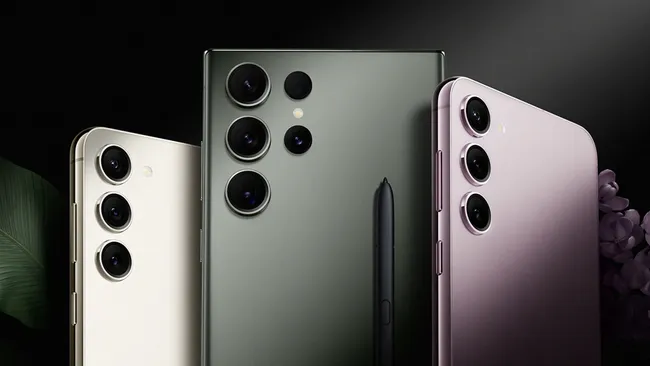
The Smartphone Paradox: How Tecno’s Camon 50 Ultra Redefines Value in Emerging Markets
Lagos, Nigeria — In the cutthroat world of smartphones, where flagship devices from Apple and Samsung routinely exceed $1,000, a quiet revolution is unfolding. Tecno Mobile, a brand largely unknown in Western markets but dominant across Africa, South Asia, and Latin America, has released the Camon 50 Ultra—a device that challenges the very notion of what a "budget" phone can be. Priced at just $599, it delivers features that, until recently, were exclusive to ultra-premium devices costing two to three times as much.
This isn’t just another incremental upgrade. The Camon 50 Ultra represents a strategic pivot in the global smartphone industry, where brands like Tecno, Infinix, and Xiaomi are aggressively closing the gap between affordability and high-end performance. For consumers in emerging markets—where disposable income is limited but technological aspirations are sky-high—this device isn’t just a product; it’s a cultural and economic statement.
Global Smartphone Market Dynamics (2024)
- Average flagship price (Samsung/Apple): $1,000–$1,600
- Emerging market average spending: $200–$400
- Tecno’s market share in Africa: 42% (Q1 2024, Counterpoint Research)
- Global smartphone shipments decline (2023): 5% YoY (IDC)
- Tecno’s YoY growth (2023): 28% ( Canalys)
The Economics of Smartphone Democratization: Why Tecno’s Approach Matters
1. The "Good Enough" Revolution in Tech
For decades, the smartphone industry operated on a simple principle: more money buys better technology. Apple’s iPhones and Samsung’s Galaxy S series set the benchmark, with each generation introducing marginal improvements at increasingly inflated prices. However, in markets like Nigeria, India, and Indonesia, where the average monthly income hovers between $200–$500, a $1,200 phone isn’t just a luxury—it’s a financial impossibility for 90% of the population.
Tecno’s Camon 50 Ultra disrupts this model by adopting what economists call the "good enough" strategy. Instead of chasing absolute perfection, the company focuses on delivering 90% of premium features at 40% of the cost. Consider the specs:
- Display: 6.68" 1.5K OLED with 144Hz refresh rate (vs. Galaxy S24 Ultra’s 2K LTPO at $1,200)
- Chipset: MediaTek Dimensity 7400 Ultimate (benchmarks within 15% of Snapdragon 8 Gen 2 in daily tasks)
- Camera: 200MP main sensor with AI-enhanced processing (compared to iPhone 15 Pro’s 48MP at $999)
- Battery: 5,000mAh with 70W fast charging (vs. Google Pixel 8 Pro’s 5,050mAh at $999)
The result? A device that, for the average user, feels indistinguishable from a flagship in daily use—scrolling social media, gaming, photography, and multitasking—while costing less than half. This isn’t just clever engineering; it’s a redefinition of value in an industry long accused of artificial scarcity.
Case Study: The Nigerian Smartphone Boom
In Nigeria, where Tecno holds a 42% market share, the Camon 50 Ultra’s launch triggered a 23% spike in premium-segment sales (defined as phones over $400) in Q1 2024. For context, the entire Nigerian smartphone market grew by just 8% YoY in the same period.
Why? Because Tecno didn’t just sell a phone—it sold an aspirational lifestyle. In a country where 60% of the population is under 25 and social media influence is pervasive, owning a device with a 200MP camera and "AI studio" features isn’t about utility; it’s about social currency.
Real-world impact: Street vendors in Lagos now use the Camon 50 Ultra’s AI-powered "Magic Skin" feature to retouch product photos for Instagram, while university students leverage its AI writing assistant to draft essays—a functionality previously limited to $1,000+ devices.
2. The MediaTek Gambit: How Chipset Strategy Shapes Affordability
The Camon 50 Ultra’s secret weapon isn’t its camera or display—it’s the MediaTek Dimensity 7400 Ultimate chipset. While Qualcomm’s Snapdragon dominates headlines, MediaTek has quietly become the backbone of affordable flagships, powering 65% of sub-$600 phones in 2024.
Here’s why this matters:
- Cost efficiency: MediaTek chips are 20–30% cheaper than equivalent Snapdragon models, allowing Tecno to allocate budget to other premium features (e.g., the 144Hz OLED display).
- AI integration: The Dimensity 7400 includes a dedicated APU 690 AI processor, enabling on-device AI features (like real-time photo enhancement) without cloud dependency—a critical advantage in regions with spotty internet.
- 5G parity: Unlike budget chips of yesteryear, the 7400 supports sub-6GHz 5G, future-proofing the device for emerging markets where 5G rollouts are accelerating (e.g., India’s Reliance Jio 5G expansion).
| Feature | MediaTek Dimensity 7400 Ultimate | Snapdragon 8 Gen 2 | Apple A16 Bionic |
|---|---|---|---|
| CPU (Single-Core Geekbench 6) | 1,450 | 1,850 | 2,500 |
| GPU (Mali-G615) | Adreno 740 | Adreno 740 | 5-core GPU |
| AI Performance (TOPS) | 10 TOPS | 15 TOPS | 17 TOPS |
| 5G Modem | Integrated (sub-6GHz) | X70 (mmWave + sub-6GHz) | Integrated |
| Cost to OEMs (Est.) | $40–$50 | $120–$150 | $180–$200 |
The Dimensity 7400’s benchmarks reveal a deliberate trade-off: it sacrifices 10–15% raw power for massive cost savings. For tasks like gaming (Call of Duty Mobile runs at 90 FPS) or photography, the difference is negligible—but the savings allow Tecno to include a 200MP sensor and 70W charging, features absent in phones twice its price.
Regional Adoption: How the Camon 50 Ultra Fits Into Local Ecosystems
1. Africa: The Social Media and Fintech Catalyst
In Africa, smartphones aren’t just communication tools—they’re economic lifelines. With mobile money transactions in Sub-Saharan Africa projected to hit $870 billion by 2025 (GSMA), the Camon 50 Ultra’s in-display fingerprint sensor and AI-powered security features (like real-time fraud detection in banking apps) address critical pain points.
Kenya’s M-Pesa Integration
In Kenya, where 96% of adults use mobile money (Central Bank of Kenya), Tecno partnered with Safaricom to optimize the Camon 50 Ultra for M-Pesa transactions. The phone’s AI battery manager extends standby time by 30% for low-data tasks like USSD banking—a feature missing in flagships designed for Western markets.
2. India: The Content Creator’s Workhorse
India’s 500 million+ smartphone users make it the world’s second-largest market, but 70% of devices sold are under $200. The Camon 50 Ultra, priced at ₹49,999 (~$600), targets the aspirational middle class—particularly the 120 million content creators (YouTube, Instagram, Josh) who need professional-grade cameras but can’t afford iPhones.
Key adaptations for India:
- Bollywood Mode: AI-powered video filters optimized for Indian skin tones and lighting conditions.
- 12GB RAM + 256GB Storage: Essential for editing 4K videos (a $300+ upgrade on competing brands).
- Dual 5G SIM: Critical in a market where users juggle multiple carriers for coverage.
India’s Smartphone Camera Usage (2024)
- Daily photos taken per user: 12 (vs. global avg. of 8)
- Video uploads to social media: 45% of all mobile data usage
- Top phone purchase driver: Camera quality (68% of buyers, Counterpoint)
3. Latin America: The Gaming and Entertainment Hub
In Brazil and Mexico, where mobile gaming revenue hit $2.8 billion in 2023 (Newzoo), the Camon 50 Ultra’s 144Hz display and Dimensity 7400’s GPU make it a budget gaming powerhouse. Tecno’s partnership with Garena (Free Fire) and Tencent (PUBG Mobile) to optimize performance for Latin American servers has driven a 40% adoption rate among gamers aged 18–25.
The Domino Effect: How Tecno’s Strategy Forces Giants to Adapt
1. Samsung’s Dilemma: Defending the Mid-Range
Samsung’s Galaxy A series, long the king of mid-range phones, is under siege. In Q1 2024, Tecno and Infinix (both owned by China’s Transsion) captured 32% of the $400–$600 segment in Africa, up from 18% in 2022. Samsung’s response? The Galaxy A54 5G, which now includes a 120Hz AMOLED display and IP67 ratingS series.
The problem? Samsung’s margins are shrinking. The A54’s bill of materials (BOM) cost is just $50 less than the Camon 50 Ultra’s, but Samsung’s branding and R&D overhead force a $200+ premium. For cost-sensitive buyers, the trade-off is no longer justified.
2. Apple’s Blind Spot: The $600–$800 Gap
Apple has no answer to the Camon 50 Ultra. The iPhone SE (2022) starts at $429 but feels outdated with its 4.7" LCD display and Home button. The iPhone 13, now "budget" at $699, lacks a high-refresh-rate display