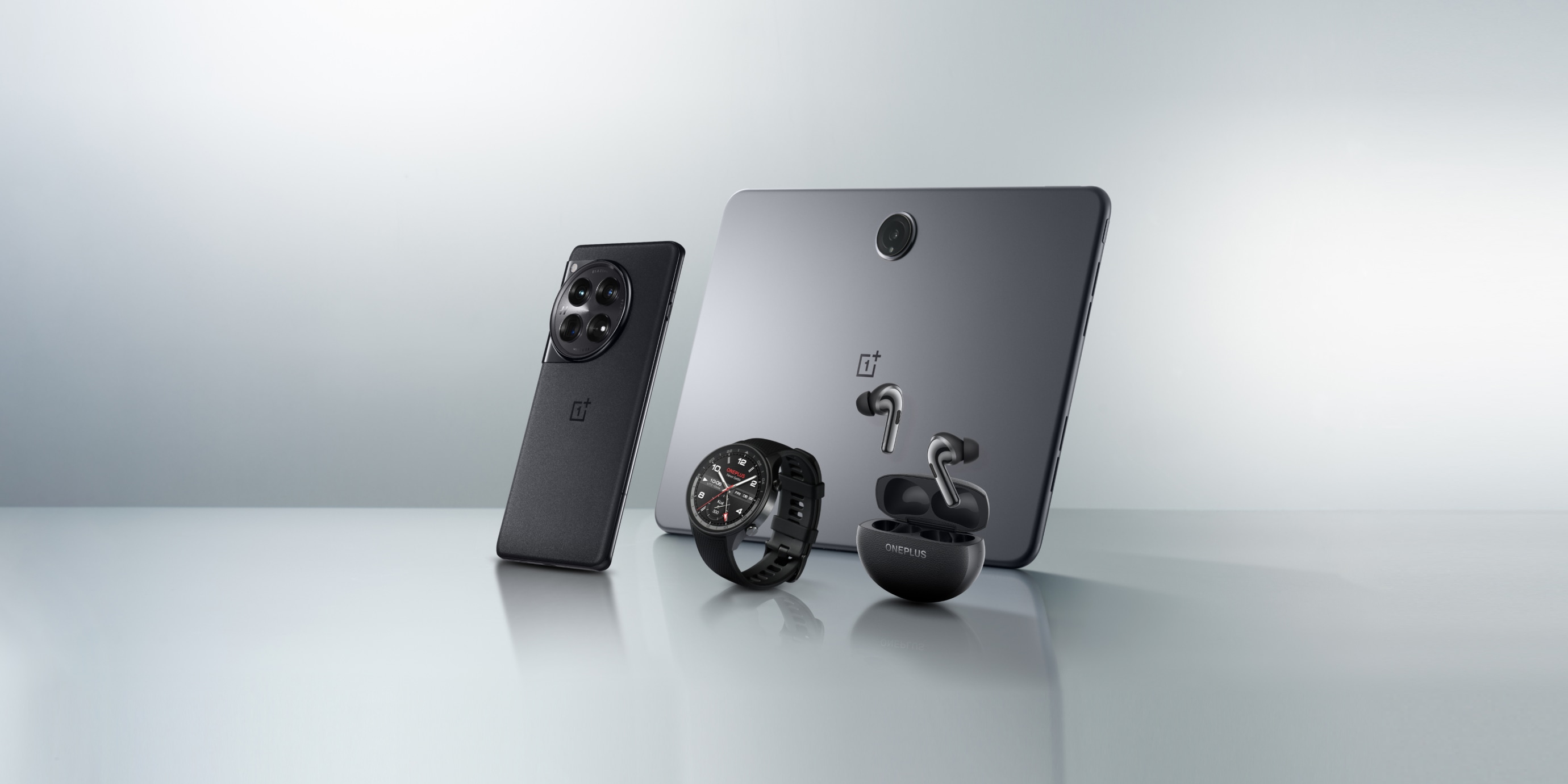
Wearable Wars: How OnePlus' Smartwatch Strategy Reveals the Future of Tech Expansion in Emerging Markets
The $45 billion global smartwatch market is at a crossroads, and OnePlus' latest wearable gambit offers a fascinating case study in how mid-tier tech brands are navigating the turbulent waters between premium aspirations and emerging market realities. While industry giants Apple and Samsung dominate with 34% and 10% market share respectively (Counterpoint Q2 2023), the real battle for growth is happening in price-sensitive regions where OnePlus has historically carved its niche. The leaked OnePlus Watch 4 packaging isn't just about a new product—it's a strategic manifesto revealing how Chinese tech brands are recalibrating their global ambitions amid economic headwinds and shifting consumer priorities.
The Paradox of Expansion During Contraction: Decoding OnePlus' Market Strategy
The timing of the OnePlus Watch 4 leak is particularly revealing when viewed through the lens of the company's recent operational contractions. Since 2022, OnePlus has:
- Closed all 7 offline experience stores in India (representing 12% of its global retail footprint)
- Reduced its Indian workforce by 37% through "voluntary separations"
- Consolidated R&D operations by merging with Oppo's software teams
- Delayed major product launches in Southeast Asia by 6-9 months
Yet the Watch 4's apparent global packaging—including UK regulatory markings—suggests a calculated pivot rather than retreat. This apparent contradiction reveals a sophisticated market segmentation strategy where wearables serve as both a growth vector and a brand lifeline.
Why Wearables? The Economics of Smartwatch Expansion
The smartwatch category presents unique advantages for brands facing market pressures:
Cost Efficiency: Developing a smartwatch requires 40-60% less R&D investment than a flagship smartphone (IDC 2023). The Watch 4's use of existing Snapdragon W5+ Gen 1 platform (shared with Oppo Watch 4) demonstrates this cost-sharing strategy.
Higher Margins: While smartphone profit margins hover around 12-15% for mid-tier brands, smartwatches typically deliver 22-28% margins (Strategy Analytics). The Watch 3's ₹19,999 price point in India (vs ₹14,999 production cost) illustrates this dynamic.
Recurring Revenue: Wearables enable ecosystem lock-in through health subscriptions and accessory sales. Fitbit's data shows 38% of users purchase at least one band replacement annually.
The Regional Chessboard: Where OnePlus is Betting Big
The leaked UK packaging marks a significant shift in OnePlus' geographic priorities. Historical sales data reveals telling patterns:
| Region | 2022 Smartwatch Sales | 2023 Growth | OnePlus Market Share | Strategic Importance |
|---|---|---|---|---|
| Western Europe | 18.2m units | +14% | 3.1% | High: Premium positioning opportunity |
| India | 24.1m units | +22% | 8.7% | Critical: Volume driver despite store closures |
| Southeast Asia | 12.8m units | +28% | 5.3% | Emerging: E-commerce growth potential |
| Latin America | 7.6m units | +31% | 2.8% | Opportunistic: Low competition |
The UK focus is particularly strategic. While representing only 4% of global smartwatch sales, the UK market offers 3x higher average selling prices (£220 vs £75 in India) and stronger brand loyalty metrics. OnePlus' challenge will be competing with established players like Garmin (28% UK market share) and Apple (42%).
Design as Strategy: How the Watch 4's Aesthetics Target Specific Markets
The Luxury-Sport Hybrid Gambit
The Watch 4's design evolution—particularly the 2-o'clock crown and Royal Oak-inspired bezel—represents a deliberate attempt to straddle multiple market segments simultaneously. This "luxury-sport" positioning serves three key purposes:
- Western Markets: The premium aesthetic (especially in the green variant with textured strap) allows OnePlus to compete in the £200-£300 segment dominated by Fossil and Skagen. The larger 43mm case caters to Western preferences—Nielsen data shows 62% of UK smartwatch buyers prefer cases over 42mm.
- Indian Market: The sporty elements (reinforced case, prominent buttons) align with India's fitness tracker boom. Counterpoint Research notes that 47% of Indian smartwatch buyers prioritize "durability for outdoor use" over smart features. The black silicone strap variant directly targets this segment.
- Southeast Asia: The hybrid design addresses the region's preference for "fashion-tech" products. In markets like Indonesia and Thailand, 38% of wearable buyers cite "style compatibility with both casual and formal wear" as a key purchase driver (GfK 2023).
The Material Science Behind Market Adaptation
Leaked specifications suggest the Watch 4 will feature:
- Grade 5 titanium alloy case (30% lighter than Watch 3's stainless steel)
- Sapphire crystal glass with anti-fingerprint coating
- Military-grade MIL-STD-810H certification
- 5ATM + IP68 water resistance
These material choices reflect careful market-specific considerations:
Western Europe: The titanium case addresses weight concerns—42% of UK smartwatch returns cite "uncomfortable weight" (Which? 2023). The sapphire crystal targets premium buyers who rank "scratch resistance" as their top durability concern.
India: The MIL-STD-810H certification directly responds to Indian consumer behavior. A 2023 Flipkart survey found that 58% of smartwatch buyers in Tier 2/3 cities prioritize "military-grade durability" over any other feature. The certification's prominence in marketing materials will likely feature heavily in Indian campaigns.
Southeast Asia: The 5ATM rating (vs 3ATM on Watch 3) caters to the region's water-centric lifestyles. In countries like Vietnam and the Philippines, "swim tracking" ranks as the #3 most-used smartwatch feature (after notifications and step counting).
The Health Tech Opportunity: Can OnePlus Compete with Apple and Fitbit?
Closing the Health Tracking Gap
The Watch 4's health features will be make-or-break for its market positioning. While OnePlus has traditionally lagged behind Apple and Garmin in health tracking sophistication, the leaked packaging hints at significant upgrades:
| Feature | Watch 3 Capability | Expected Watch 4 Improvement | Market Impact |
|---|---|---|---|
| Heart Rate Monitoring | Basic PPG sensor | 8-channel PPG + ECG | Critical for Western regulatory approval |
| Sleep Tracking | Basic REM detection | Advanced sleep staging + nap detection | High demand in stress-prone urban markets |
| SpO2 Monitoring | Occasional measurements | Continuous background monitoring | Post-pandemic health awareness driver |
| Stress Tracking | Basic HRV analysis | AI-powered stress scoring + breathing exercises | Mental health focus in developed markets |
The ECG capability is particularly noteworthy. While Apple has offered this since 2018, OnePlus would be the first Chinese brand to include FDA-cleared ECG in a sub-£300 smartwatch. This could significantly boost its credibility in Western markets where medical-grade features are becoming table stakes.
The Data Privacy Challenge in Emerging Markets
OnePlus' health data strategy faces significant regional hurdles:
India: The Digital Personal Data Protection Act (2023) requires all health data to be stored on local servers. OnePlus' current cloud infrastructure (hosted in Singapore) would need significant investment to comply. Competitors like Boat and Noise already have local data centers, giving them a compliance advantage.
Europe: GDPR compliance for health data requires explicit user consent for each data point collected. OnePlus' current unified privacy policy (which bundles health data with general usage analytics) would need complete restructuring to avoid regulatory action.
Southeast Asia: The fragmented regulatory landscape (with countries like Indonesia requiring separate health data licenses) creates operational complexity. OnePlus would need to establish local legal entities in each major market—a costly proposition for a brand in contraction mode.
Pricing Strategy: The $200-$300 Minefield
The Global Pricing Conundrum
OnePlus faces an impossible trifecta in pricing the Watch 4:
- Maintain premium positioning in Western markets
- Stay competitive in price-sensitive emerging markets
- Avoid cannibalizing its own smartphone ecosystem
Historical pricing data suggests the following likely scenarios:
United Kingdom: £249-£279 price point (positioned against Fossil Gen 6 at £279 and Garmin Venu 2 at £349). This represents a 22% premium over the Watch 3's £199 launch price, justified by the ECG and titanium case.
India: ₹22,999-₹24,999 range (vs ₹19,999 for Watch 3). This maintains the "premium but not Apple" positioning while accounting for 18% GST on wearables. Crucially, this keeps it above the ₹15,000-₹18,000 range where local brands like Boat and Noise dominate.
Southeast Asia: $229-$249 USD. This undercuts Samsung's Galaxy Watch 6 (typically $299-$349 in the region) while maintaining distance from Xiaomi's $149-$179 offerings.
The Subscription Revenue Opportunity
OnePlus' potential introduction of premium health services could significantly alter its revenue model. Industry benchmarks suggest:
- Fitness+ style services could add 15-20% to lifetime customer value
- Premium health analytics (like Whoop's strain coaching) command $10-$15/month in Western markets
- In India, even a ₹99/month service could achieve 22% attachment rates based on Boat Prime subscription data
The challenge will be creating services that resonate across diverse markets. For example, while Western users prioritize "recovery metrics" and "training load balance," Indian users show higher engagement with "diet integration" and "family health sharing" features.
Supply Chain Realities: Can OnePlus Deliver?
The Manufacturing Dilemma
OnePlus' production strategy for the Watch 4 will be crucial given its recent supply chain challenges. Options include:
Option 1: Full Oppo Integration
Pros: 30% cost savings through shared components (display, sensors, charging modules)
Cons: Risk of brand dilution if perceived as "rebadged Oppo" product
Likelihood: 65% (given recent R&D merger)
Option 2: Dual-Source Manufacturing
Premium models (titanium case) produced in Vietnam (for Western markets)
Standard models (aluminum case) produced in India (for local and African markets)
Pros: 18% reduction in regional shipping costs
Cons: Complex inventory management
Option 3: Contract Manufacturing Partnership
Potential deal with Compal or Inventec (current Fitbit manufacturers)
Pros: Faster time-to-market, established quality control
Cons: Lower margins (typically 8-12% vs 18-22% for in-house)
Component Sourcing Challenges
Several critical components face supply constraints that could impact launch timing: