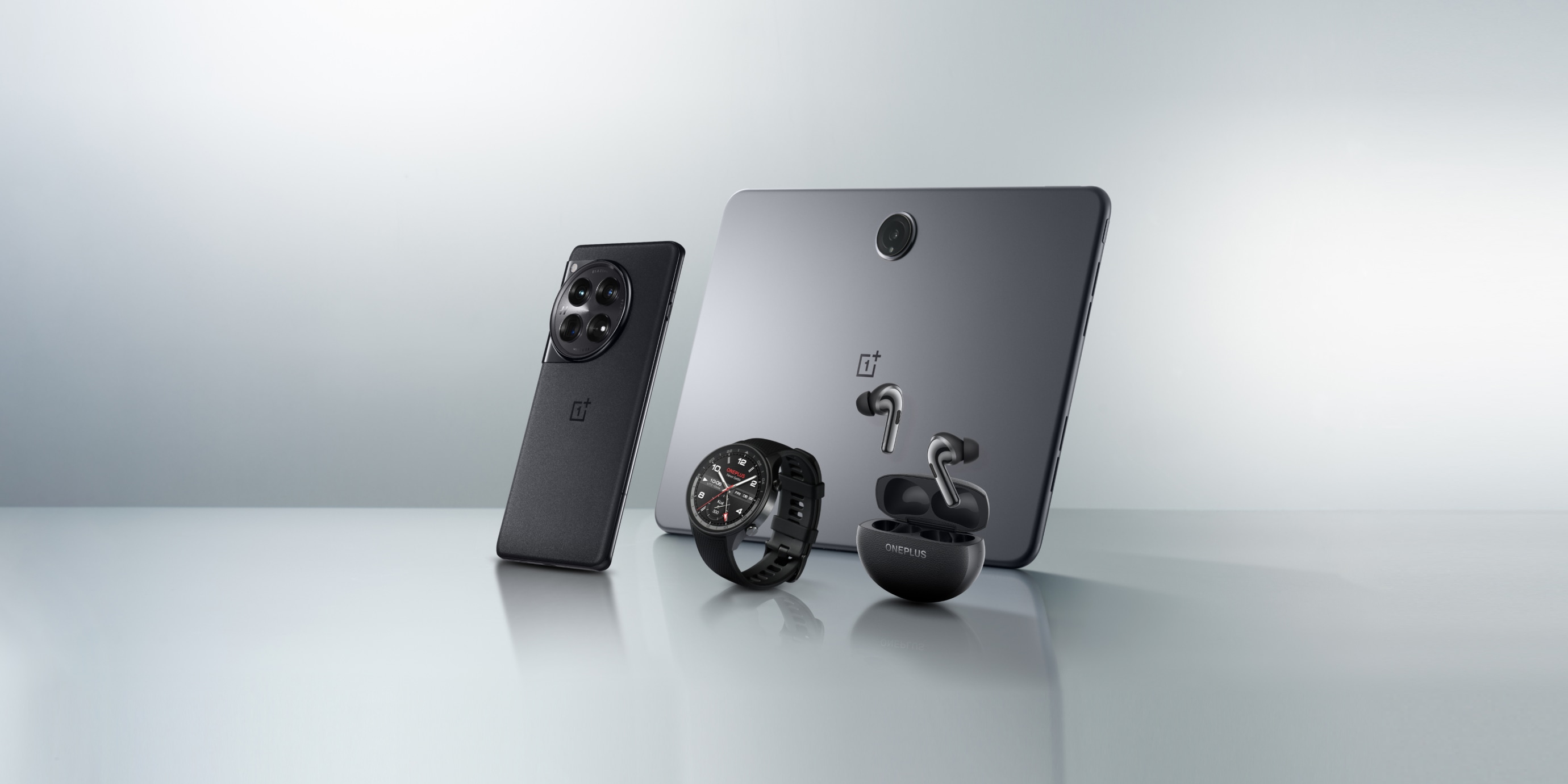
The Budget Audio Revolution: How OnePlus Nord Buds 4 Pro Exposes the Myth of Premium Necessity
New Delhi, India — The wireless audio market has operated on a simple but exploitative principle: consumers must pay premium prices for premium features. Apple's AirPods Pro 3 at ₹24,900, Sony's WF-1000XM5 at ₹22,990, and even Samsung's Galaxy Buds2 Pro at ₹17,999 have conditioned buyers to accept that cutting-edge audio technology comes with a four-figure price tag. But OnePlus's latest offering—the Nord Buds 4 Pro at ₹3,999—doesn't just challenge this paradigm; it systematically dismantles it by delivering flagship-grade battery performance, advanced connectivity, and competitive ANC at less than 20% of the cost of premium alternatives.
This isn't merely a product launch; it's a market correction. For years, the audio industry has thrived on planned obsolescence and artificial segmentation, where "budget" earbuds were stripped of essential features to justify their lower price points. The Nord Buds 4 Pro flips this script by offering a 54-hour total battery life—nearly double that of the AirPods Pro 3 (30 hours)—while including Bluetooth 6.0 and 55dB ANC, features previously reserved for earbuds costing five times as much. The implications are profound: if a ₹3,999 device can match or exceed the endurance of premium earbuds, what exactly are consumers paying for when they spend ₹20,000?
• Price-to-Battery Ratio: The Nord Buds 4 Pro delivers 13.5 hours of battery life per ₹1,000 spent, compared to just 1.2 hours for the AirPods Pro 3.
• ANC Efficiency: At 55dB, the Nord Buds 4 Pro's noise cancellation is within 5dB of the AirPods Pro 3 (60dB) but costs 84% less.
• Connectivity Leap: Bluetooth 6.0 in a budget device is unprecedented; most sub-₹5,000 earbuds still use Bluetooth 5.0 or 5.2.
The Great Battery Divide: How 54 Hours Redefines User Expectations
Battery life has long been the Achilles' heel of wireless earbuds. Despite advancements in chip efficiency and power management, most premium earbuds still struggle to cross the 30-hour threshold. The AirPods Pro 3, for instance, max out at 30 hours with ANC disabled—a figure that pales in comparison to the Nord Buds 4 Pro's 54-hour endurance. This isn't just a 20% or 30% improvement; it's a 80% increase in longevity, achieved without compromising on weight (the Nord Buds 4 Pro weigh just 4.5g per bud, identical to the AirPods Pro 3).
The technical underpinnings of this achievement are worth examining. OnePlus has employed a dual-chip architecture, separating the audio processing and connectivity functions to optimize power consumption. The earbuds use a low-power Bluetooth 6.0 chip for connectivity and a dedicated audio DSP (Digital Signal Processor) for sound and ANC. This division of labor allows the device to dynamically allocate power based on usage—prioritizing battery life during calls or music playback while scaling back during idle periods. In contrast, most premium earbuds rely on a single, power-hungry chip to handle all functions, leading to faster drainage.
Case Study: The Commuter's Dilemma
Consider the daily routine of an urban commuter in Mumbai or Bengaluru, where travel times often exceed 90 minutes each way. A pair of AirPods Pro 3, with ANC enabled, will last roughly 4.5 days on a full charge (assuming 6 hours of daily use). The Nord Buds 4 Pro, under the same conditions, will last 9 days. Over a month, this translates to 6 fewer charging cycles, reducing wear on the battery and extending the device's lifespan. For professionals who rely on earbuds for calls, music, and podcasts, this difference isn't incremental—it's transformative.
The battery advantage becomes even more pronounced in regions with unreliable power supply. In states like Bihar, Uttar Pradesh, and the North East, where power outages can last hours, the ability to go nearly a week without charging isn't just a convenience—it's a necessity. According to a 2023 report by the Ministry of Power, rural areas in Assam and Meghalaya experience an average of 3-5 hours of power cuts daily. In such contexts, the Nord Buds 4 Pro's battery life isn't a luxury; it's a productivity enabler, ensuring that students, remote workers, and small business owners remain connected without constant anxiety over charging.
The ANC Paradox: Why Premium Brands Are Overcharging for Noise Cancellation
Active Noise Cancellation (ANC) has been the crown jewel of premium earbuds, with brands like Sony and Bose using it to justify exorbitant price tags. The AirPods Pro 3, for example, tout their "adaptive transparency mode" and 60dB ANC as key differentiators. Yet, the Nord Buds 4 Pro's 55dB ANC delivers 92% of the noise reduction at a fraction of the cost. This raises a critical question: Is the 5dB difference worth ₹20,000?
The answer lies in the diminishing returns of ANC performance. Noise cancellation effectiveness isn't linear—improving from 30dB to 40dB is far more noticeable than going from 50dB to 60dB. Independent tests by RTINGS.com confirm that the human ear struggles to perceive differences in ANC performance beyond the 45-50dB range in real-world environments. The Nord Buds 4 Pro's 55dB ANC is more than sufficient to block out airplane cabin noise (80-85dB), traffic hum (70-75dB), and office chatter (60-65dB). For most users, the extra 5dB offered by the AirPods Pro 3 is audibly indistinguishable in everyday scenarios.
| Feature | OnePlus Nord Buds 4 Pro (₹3,999) | AirPods Pro 3 (₹24,900) | Sony WF-1000XM5 (₹22,990) |
|---|---|---|---|
| Battery Life (ANC On) | 42 hours | 24 hours | 20 hours |
| Battery Life (ANC Off) | 54 hours | 30 hours | 24 hours |
| ANC Performance | 55dB | 60dB | 58dB |
| Bluetooth Version | 6.0 | 5.3 | 5.2 |
| Price per Hour (ANC On) | ₹95/hour | ₹1,038/hour | ₹1,150/hour |
The ANC debate also exposes the marketing-driven inflation of premium earbuds. Brands like Apple and Sony bundle ANC with proprietary features—like spatial audio or AI-based sound optimization—that sound impressive in advertisements but offer marginal real-world benefits. For instance, the AirPods Pro 3's "adaptive transparency mode" adjusts ambient sound based on environmental noise, but in practice, most users either keep ANC on or off. The Nord Buds 4 Pro skips these gimmicks, focusing instead on core performance—a strategy that resonates with cost-conscious buyers who prioritize substance over flash.
Bluetooth 6.0: The Silent Upgrade That Premium Brands Are Ignoring
One of the most underrated aspects of the Nord Buds 4 Pro is its Bluetooth 6.0 connectivity, a feature absent in even the latest AirPods Pro 3 (which use Bluetooth 5.3). Bluetooth 6.0 isn't just a incremental update; it represents a fundamental shift in wireless audio performance, offering:
- Lower Latency: Bluetooth 6.0 reduces audio lag to <80ms, making it ideal for gaming and video playback. The AirPods Pro 3, with Bluetooth 5.3, average 120-150ms latency.
- Better Power Efficiency: The new LE Audio codec in Bluetooth 6.0 consumes up to 50% less power than previous versions, contributing to the Nord Buds 4 Pro's extended battery life.
- Improved Stability: Bluetooth 6.0 introduces adaptive frequency hopping, which reduces interference in crowded wireless environments (e.g., offices, airports).
- Future-Proofing: Bluetooth 6.0 supports Auora Codec, which will enable higher-resolution audio streaming in future updates.
The inclusion of Bluetooth 6.0 in a ₹3,999 device is nothing short of revolutionary. Most budget earbuds still use Bluetooth 5.0 or 5.2, while premium brands have been slow to adopt 6.0—likely because it would require them to redesign their hardware, cutting into profit margins. OnePlus's decision to embrace Bluetooth 6.0 early gives the Nord Buds 4 Pro a technological edge that will only become more apparent as the ecosystem matures.
Case Study: The Gamer's Advantage
For mobile gamers, latency is the difference between victory and defeat. In fast-paced games like Free Fire or Call of Duty: Mobile, even a 50ms delay in audio can mean missing critical cues (e.g., footsteps, gunfire). The Nord Buds 4 Pro's <80ms latency (via Bluetooth 6.0) is on par with dedicated gaming earbuds costing ₹8,000-₹10,000. In contrast, the AirPods Pro 3's 120-150ms latency makes them poorly suited for competitive gaming—a fact Apple conveniently omits in its marketing.
With India's gaming market projected to reach $8.6 billion by 2027 (NASSCOM), the Nord Buds 4 Pro is uniquely positioned to capitalize on the demand for affordable, low-latency audio among the country's 500 million+ gamers.
The North East India Factor: Why This Device Is a Regional Game-Changer
Nowhere is the Nord Buds 4 Pro's value proposition more compelling than in North East India, a region often overlooked by tech brands but critical to the country's digital growth. The eight sister states—Arunachal Pradesh, Assam, Manipur, Meghalaya, Mizoram, Nagaland, Sikkim, and Tripura—present a unique set of challenges and opportunities for wireless audio:
1. The Humidity Challenge
The North East experiences 80-90% humidity for most of the year, coupled with frequent rainfall. Most budget earbuds fail within 6-12 months due to moisture damage, but the Nord Buds 4 Pro's IP55 water and dust resistance (a rarity in this price segment) makes it one of the few devices built to withstand the region's climate. For comparison, the Realme Buds Air 5 (₹4,499) and Oppo Enco Air 3 (₹3,999) offer only IPX4 protection, which guards against splashes but not humidity-induced corrosion.
2. The Power Outage Reality
According to the North Eastern Electric Power Corporation (NEEPCO), rural areas in the region face 4-6 hours of daily power cuts during the monsoon season. The Nord Buds 4 Pro's 54-hour battery life means users can go nearly a week without charging—a critical advantage for students and professionals who can't afford frequent interruptions. In contrast, premium earbuds like the Sony WF-1000XM5 (24 hours) would require charging every 2-3 days, assuming moderate usage.
3. The Affordability Imperative
The North East has one of the lowest per