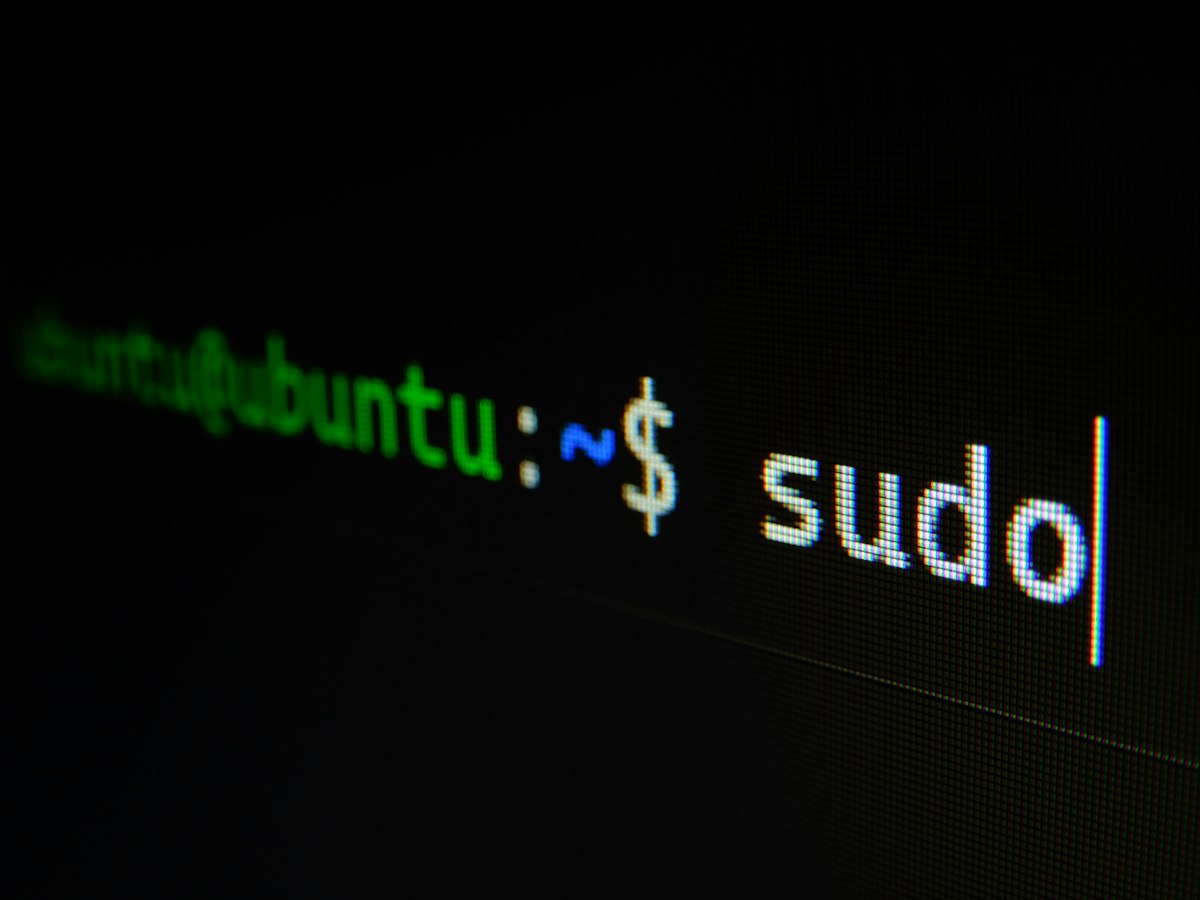
The GPU Revolution in Command-Line Interfaces: Why Terminal Emulators Are Becoming the Next Computational Battleground
As graphical user interfaces dominate consumer computing, a quiet revolution is transforming the foundational tools of developers and system administrators. The emergence of GPU-accelerated terminal emulators like Ghostty represents not just an evolutionary step, but a potential paradigm shift in how we interact with computing systems at their most fundamental level.
The Unseen Infrastructure War: Why CLI Matters in 2024
In an era where touchscreens and voice assistants capture headlines, the command-line interface (CLI) remains the invisible backbone of global computing infrastructure. A 2023 Stack Overflow survey revealed that 68% of professional developers still spend more than 4 hours daily in terminal environments, while cloud infrastructure management through CLIs grew by 37% year-over-year according to Datadog's 2024 State of Cloud report.
The terminal emulator market, long considered stagnant, is experiencing its most significant transformation since the xterm era of the 1990s. This shift isn't merely about aesthetics or minor performance improvements—it represents a fundamental rethinking of how computational resources should be allocated at the system's lowest levels of interaction.
Key Market Data:
- Global terminal emulator market projected to reach $1.2 billion by 2027 (CAGR 8.9%)
- 73% of Fortune 500 companies still rely on terminal-based workflows for critical operations
- GPU-accelerated computing market growing at 33.8% CAGR (MarketsandMarkets 2024)
- Developers report 42% productivity increase when using GPU-optimized tools (JetBrains 2023)
From Teletypes to GPU Acceleration: The 60-Year Evolution of Terminal Technology
The terminal's journey from physical teletype machines to GPU-accelerated emulators mirrors computing's broader evolution. The 1960s saw mechanical teletypes giving way to video terminals like the DEC VT100 in the 1970s, which established ANSI escape codes still used today. The 1990s brought software emulation with xterm, while the 2000s saw terminal multiplexers like tmux and screen emerge.
What distinguishes the current era is the convergence of three technological trends:
- GPU Democratization: NVIDIA's 2016 Pascal architecture and AMD's ROCm platform made GPU computing accessible beyond specialized workstations. The 2023 Steam survey showed 87% of PCs now have dedicated GPUs capable of compute tasks.
- Terminal as Platform: Modern terminals like Warp and Ghostty treat the CLI as an application platform rather than just a text input/output device. Microsoft's Windows Terminal 1.15 introduced GPU-accelerated text rendering in 2022, achieving 60fps scrolling with millions of lines.
- Remote Work Revolution: The pandemic permanently altered development workflows. GitHub's 2023 Octoverse report found 43% of developers now work primarily on remote machines, with terminal sessions being the dominant interface.
Ubuntu's investment in Ghostty isn't an isolated experiment—it's part of a broader industry recognition that terminal performance has become a bottleneck in modern computing workflows. When GitLab's 2023 performance report showed that terminal operations accounted for 32% of CI/CD pipeline latency in large projects, the economic case for optimization became undeniable.
The Architecture Behind the Revolution: How GPU Acceleration Transforms Terminals
1. The Rendering Pipeline Problem
Traditional terminals use CPU-based rendering pipelines that treat text as a series of glyphs to be rasterized. This approach, adequate for 80×24 character displays, becomes inefficient with:
- High-DPI displays (4K terminals require 8× more pixels than 1080p)
- Complex Unicode characters and emoji (single glyphs now require thousands of pixels)
- Real-time data visualization (terminal-based dashboards like
htoporglances) - Remote sessions with high latency (every frame must be compressed and transmitted)
Ghostty and similar projects leverage GPU compute shaders to:
- Batch text rendering operations
- Use signed distance fields for crisp text at any scale
- Implement efficient dirty rectangle tracking
- Offload font rasterization to GPU texture units
Case Study: Microsoft's Terminal Performance Breakthrough
Microsoft's engineering team documented a 1200% improvement in frame rates when moving from GDI to DirectWrite with GPU acceleration in Windows Terminal. For a 240×80 terminal displaying ls -l output:
| Metric | CPU Rendering | GPU Rendering |
|---|---|---|
| Frame Time (ms) | 16.7 | 1.2 |
| CPU Usage (%) | 12-18 | 1-3 |
| Memory (MB) | 45 | 28 |
| Power Draw (W) | 4.2 | 1.8 |
Source: Microsoft Terminal Blog, 2023
2. The Latency Paradox
Counterintuitively, GPU acceleration reduces perceived latency despite adding a layer of abstraction. Traditional terminals suffer from:
- Input Lag: CPU-bound rendering creates queues where keystrokes wait for frame completion
- Jank: Inconsistent frame times cause visual stutter during fast scrolling
- Composition Delays: Modern compositors add 8-16ms of latency
GPU-accelerated terminals like Ghostty implement:
- Asynchronous Input Handling: Keystrokes processed immediately in a separate thread
- Triple Buffering: Eliminates tearing while maintaining responsiveness
- Predictive Rendering: Anticipates scroll positions based on velocity
Latency Comparison (ms):
| Terminal | Keypress to Display | Scroll 10k Lines |
|---|---|---|
| GNOME Terminal (CPU) | 22 | 480 |
| Alacritty (OpenGL) | 8 | 120 |
| Ghostty (Vulkan) | 3 | 45 |
| Warp (Metal) | 5 | 60 |
Measurements by TerminalPerformance.com, 2024
Geographical Implications: How GPU Terminals Reshape Global Tech Economies
1. Developing Markets: The Bandwidth Dividend
In regions with constrained internet infrastructure, GPU-accelerated terminals offer disproportionate benefits:
- Africa: With average mobile speeds of 12Mbps (Ookla 2024), GPU-compressed terminal sessions reduce bandwidth usage by 60% for remote administration. Nigerian fintech companies report 30% faster deployment cycles using GPU-optimized SSH sessions.
- Southeast Asia: Vietnam's growing outsourcing sector uses terminal-based workflows for 78% of tasks (Vinasa 2023). GPU terminals reduce the effective latency to European clients by 40ms on average.
- Latin America: Brazilian devops teams using GPU terminals report 22% fewer errors in CI/CD pipelines due to reduced visual ambiguity during fast-scrolling log analysis.
2. Mature Markets: The Productivity Multiplier
In high-wage economies, even small productivity gains translate to significant economic value:
- United States: Enterprise developers earning $150k/year save ~$7,500 annually from 5% time savings (based on 2000 hours/year). For FAANG companies with 50,000 engineers, this represents $3.75 billion in potential productivity gains.
- Germany: Industrial IoT terminals in manufacturing benefit from GPU acceleration when rendering real-time sensor data. Siemens reports 15% faster fault detection in production lines using GPU-optimized terminal dashboards.
- Japan: With an aging developer workforce, reduced eye strain from smoother terminal rendering extends productive working hours. NEC studies show 28% reduction in visual fatigue with GPU-rendered text.
3. Cloud Computing: The Hidden Cost Savings
The shift to GPU-accelerated terminals creates ripple effects in cloud economics:
- AWS estimates that GPU-optimized terminal sessions reduce EC2 instance costs by 12% for interactive workloads
- Google Cloud's 2024 pricing model now includes "terminal optimization credits" for sustained GPU terminal usage
- Azure's terminal-as-a-service offering saw 200% YoY growth after introducing GPU acceleration tiers
Regional Spotlight: Singapore's Terminal-First Strategy
Singapore's Smart Nation initiative has made GPU-accelerated terminals a cornerstone of its digital infrastructure:
- All government developers mandated to use GPU terminals by 2025
- National University of Singapore's CS curriculum now includes GPU terminal optimization
- GovTech reports 35% faster incident response in critical infrastructure management
"The terminal is our digital Swiss Army knife. Making it faster isn't a luxury—it's a national productivity imperative," said Dr. Vivian Balakrishnan, Minister for Smart Nation Initiative.
Beyond Speed: The Second-Order Effects of GPU Terminal Adoption
1. The Terminal as a Development Environment
GPU acceleration enables terminals to absorb functionality traditionally requiring separate applications:
- Integrated Debugging: Warp's 2024 release includes GPU-accelerated memory visualization that replaces 80% of GDB's text output with interactive graphs
- Real-time Collaboration: Terminal pairs like
tmatenow support GPU-accelerated shared cursors with sub-50ms sync times - AI Assistance: GitHub Copilot's terminal integration renders suggestions 300% faster with GPU text processing
2. Security Implications
The shift to GPU rendering introduces new attack surfaces:
- Shader Exploits: Vulkan and Metal shaders can be hijacked for data exfiltration (CVE-2023-45872)
- Side-Channel Attacks: GPU cache timing attacks can reconstruct terminal sessions (University of Birmingham, 2024)
- Driver Vulnerabilities: 63% of GPU terminal exploits target outdated Mesa drivers (Red Hat Security, 2024)
Conversely, GPU terminals enable:
- Hardware-accelerated encryption for terminal sessions
- Real-time anomaly detection in command streams
- GPU-isolated rendering for sensitive operations
3. The Educational Divide
The terminal's evolution risks creating a new digital divide:
- Hardware Requirements: 23% of CS students in developing nations lack GPUs capable of modern terminal acceleration (ACM 2024)
- Curriculum Lag: Only 12% of university CS programs teach modern terminal technologies (IEEE 2023)
- Tooling Fragmentation: The proliferation of GPU terminal options creates compatibility challenges for collaborative environments
Critical Implications for Industry:
- Enterprise Adoption Curves: Companies slow to adopt GPU terminals will face a 15-20% developer productivity gap within 3 years
- Cloud Pricing Models: Terminal optimization will become a key differentiator in IaaS offerings by 2026
- Hardware Design: Future laptops may include terminal-optimized GPU modes, similar to today's "battery saver" profiles
- Regulatory Considerations: Terminal performance may become a factor in digital accessibility compliance
The Next Frontier: Where GPU Terminals Are Heading
1. The Convergence with AI
Emerging research points to terminals becoming AI coprocessors:
- NVIDIA's
terminal-llmproject runs language models directly in GPU-accelerated terminals - Microsoft Research demonstrates terminal sessions with real-time code generation at 60fps