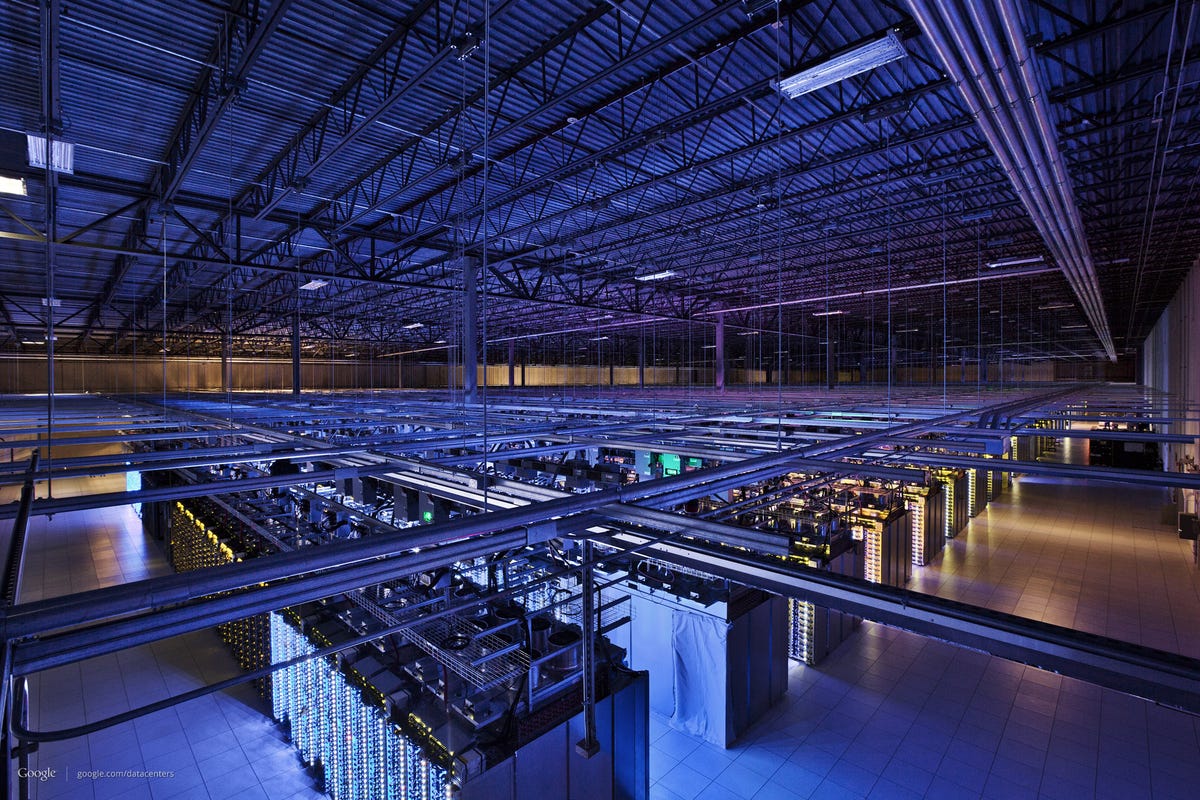
The Server Sovereignty Paradox: How Data Infrastructure Redefines National Power in the 21st Century
Beyond technical infrastructure, the global battle for digital autonomy exposes fundamental tensions between economic interdependence and national security imperatives
The Silent Revolution: When Servers Became Strategic Assets
The 21st century's most consequential geopolitical battles aren't being fought with tanks or aircraft carriers, but in climate-controlled data centers where rows of blinking servers process exabytes of information. What began as a technical consideration—where to physically locate digital infrastructure—has metamorphosed into a core pillar of national sovereignty, reshaping global power dynamics with implications that extend far beyond cybersecurity protocols.
Consider this paradox: while globalization promised a borderless digital economy, nations are erecting the most sophisticated digital borders in history. The global data center market, valued at $215.8 billion in 2022 (Statista), now represents not just commercial real estate but strategic territory—as vital to modern statecraft as ports were during the age of empire. This transformation reflects a fundamental shift: data infrastructure has become critical national infrastructure, on par with energy grids and transportation networks.
Key Market Indicators (2023)
- Global data center IP traffic: 20.6 zettabytes annually (Cisco)
- Hyperscale operator spending: $227 billion in 2023 (Synergy Research)
- Data localization laws: 144 countries have implemented some form (UNCTAD)
- Cross-border data flow restrictions: Increased 70% since 2017 (European Centre for International Political Economy)
The server sovereignty movement represents more than technical autonomy—it's a reassertion of Westphalian principles in cyberspace, where nations demand the same absolute control over digital territory that they've historically claimed over physical land. Yet this digital mercantilism creates profound tensions with the inherent borderless nature of information technology, forcing policymakers to navigate what scholars call "the sovereignty-interdependence paradox."
From Mainframes to Megatrends: The Evolution of Digital Territoriality
The concept of server sovereignty didn't emerge fully formed—it evolved through distinct technological and geopolitical phases:
Phase 1: The Mainframe Era (1960s-1980s)
During the Cold War, computing power was concentrated in government and corporate mainframes, with physical control equating to data control. The U.S. COCOM export controls (Coordinating Committee for Multilateral Export Controls) restricted supercomputer exports to Soviet bloc countries, establishing an early precedent for treating computing infrastructure as a strategic asset. However, with most systems operating in isolation, sovereignty concerns were limited to physical security rather than data flows.
Phase 2: The Internet Expansion (1990s-2000s)
The commercialization of the internet created the first sovereignty challenges. The 1998 U.S. Framework for Global Electronic Commerce explicitly rejected data localization, advocating for free cross-border data flows. This period saw the rise of jurisdictional arbitrage, where companies like Yahoo and Google exploited favorable legal regimes (e.g., Ireland's low corporate taxes and light-touch data protection) to optimize operations—often at the expense of other nations' regulatory authority.
The Yahoo! France Case (2000)
A French court ordered Yahoo! to block French users from accessing Nazi memorabilia auctions hosted on U.S. servers, asserting French law should apply to content accessible in France regardless of server location. The case established the principle that digital content could be subject to multiple jurisdictions simultaneously, foreshadowing today's sovereignty conflicts.
Phase 3: The Cloud Computing Revolution (2010s-Present)
The advent of cloud computing transformed sovereignty from a theoretical concern to an existential one. When Amazon Web Services launched its GovCloud region in 2011, specifically designed to meet U.S. government compliance requirements, it marked the first time a commercial provider explicitly segmented its infrastructure by sovereignty considerations. This era saw:
- The rise of "data nationalism" policies (e.g., Russia's 2014 data localization law)
- Proliferation of sovereign cloud offerings (Alibaba's "Moon" cloud for Chinese government clients)
- Emergence of digital trade blocs (EU's GDPR as a de facto standard)
Phase 4: The Hyperscale Geopolitics Era (2020s)
Today's landscape is defined by infrastructure-as-geopolitics, where the physical location of data centers determines:
- Intelligence access: The 2020 Schrems II ruling invalidated EU-U.S. data transfers over surveillance concerns
- Economic leverage: China's 2021 Data Security Law requires foreign companies to localize "important data"
- Technological autonomy: The EU's Gaia-X project aims to create a federated data infrastructure to reduce dependence on U.S. and Chinese providers
The Three Dimensions of Server Sovereignty
Server sovereignty operates across three interconnected dimensions, each with distinct implications for global governance and economic competition:
1. Jurisdictional Sovereignty: The Law of the Land (Where Data Resides)
The foundational principle that data stored within a nation's borders falls under its jurisdiction has created a patchwork of conflicting legal regimes. The 2018 CLOUD Act exemplifies this tension:
The Microsoft Ireland Case (2014-2018)
When U.S. law enforcement sought emails stored on Microsoft's Irish servers, the company resisted, arguing Irish law governed the data. The Supreme Court case was rendered moot when Congress passed the CLOUD Act, asserting U.S. jurisdiction over data controlled by U.S. companies regardless of physical location. This legislation:
- Created extraterritorial enforcement capabilities for U.S. agencies
- Triggered reciprocal legislation in other countries (e.g., Australia's 2018 Assistance and Access Act)
- Accelerated the fragmentation of global data storage as companies sought to avoid conflicting obligations
Result: By 2023, 68% of Fortune 500 companies reported maintaining separate data storage by jurisdiction to comply with conflicting laws (PwC).
| Region | Key Legislation | Scope | Enforcement Mechanism |
|---|---|---|---|
| European Union | GDPR (2018) | Personal data of EU residents | Fines up to 4% of global revenue |
| Russia | Federal Law No. 242-FZ (2014) | All personal data of Russian citizens | Website blocking, license revocation |
| China | Data Security Law (2021) | "Important data" across all sectors | Criminal liability for executives |
| India | Personal Data Protection Bill (2023) | Sensitive personal data | Data localization requirements |
| Brazil | LGPD (2020) | Personal data processed in Brazil | Fines up to 2% of revenue |
2. Operational Sovereignty: The Control Imperative
Beyond legal jurisdiction, nations demand operational control over critical data infrastructure. This manifests in:
- Ownership requirements: Vietnam's 2018 cybersecurity law mandates that foreign tech firms store data locally and establish local offices
- Access controls: Australia's 2021 Critical Infrastructure Bill grants government access to private data centers during "national emergencies"
- Technology standards: China's 2022 regulations require government data centers to use "secure and controllable" (i.e., domestic) hardware
The Cost of Operational Sovereignty
McKinsey estimates that full data localization could:
- Increase IT costs by 30-60% for multinational corporations
- Reduce global GDP by 1.1-1.7% due to reduced efficiency
- Create $130-170 billion in additional compliance costs annually
Yet 72% of governments surveyed by the OECD in 2023 cited "national security" as justification for these measures, despite the economic trade-offs.
3. Technological Sovereignty: The Innovation Arms Race
The most profound long-term implication is the balkanization of technological ecosystems. Nations are no longer content to regulate foreign technology—they're building parallel stacks:
- Europe: The European Processor Initiative (2018) aims to develop EU-made microprocessors to reduce dependence on U.S. (Intel) and Asian (TSMC) suppliers
- China: The "East Data, West Computing" project (2022) is building 10 national data center hubs connected via domestic fiber networks
- Russia: Following Western sanctions, the government mandated replacement of foreign software in critical infrastructure with domestic alternatives by 2025
This technological nationalism extends to undersea cable infrastructure, the physical backbone of global data flows. China's PEACE cable (Pakistan & East Africa Connecting Europe) and the U.S.-backed Blue-Raman cable represent competing visions of digital connectivity, with each route designed to avoid the other's spheres of influence.
Geopolitical Fault Lines: How Server Sovereignty Reshapes Global Alliances
The Transatlantic Divide: EU vs. U.S. Digital Models
The EU-U.S. relationship exemplifies the sovereignty dilemma. While sharing democratic values, their approaches to digital governance diverge fundamentally:
The EU-U.S. Data Privacy Framework (2023)
After two previous agreements (Safe Harbor and Privacy Shield) were invalidated by the EU Court of Justice, the 2023 framework attempts to reconcile:
- EU priorities: Strong data protection as a fundamental right
- U.S. priorities: National security surveillance capabilities
Critical flaw: The framework doesn't address the core issue—U.S. FISA Section 702 surveillance authorities that enabled previous data access. European privacy advocates have already filed challenges, suggesting this agreement may suffer the same fate as its predecessors.
The economic stakes are enormous: transatlantic data flows underpin $7.1 trillion in annual commercial activity (U.S. Chamber of Commerce). Yet the sovereignty tensions persist, with EU Commission President Ursula von der Leyen stating in 2023: "Data is the lifeblood of our economies, but it must flow within clear rules that protect our citizens and our values."
The Sino-Centric Digital Ecosystem
China's approach represents the most comprehensive sovereignty model, characterized by:
- Legal: The 2021 Data Security Law and Personal Information Protection Law create a "data classification" system where different types of data face varying restrictions
- Technical: The Great Firewall now extends to data localization enforcement, with cross-border data transfer assessments required for any data leaving China
- Industrial: The "New Infrastructure" initiative (2020) allocates $1.4 trillion to domestic 5G, data centers, and AI capabilities
China's Digital Infrastructure Investment (2020-2025)
- Data center capacity: Projected to grow from 5.2 million racks (2020) to 13.5 million (2025)
- Domestic cloud market share: Chinese providers (Alibaba, Tencent, Baidu) control 80% of the market
- Undersea cable control: China Telecom and China Unicom now operate 15% of global submarine cable capacity
This ecosystem creates a "digital iron curtain" where foreign firms must:
- Partner with Chinese entities (e.g., Tesla's Shanghai data center operated with a local partner)