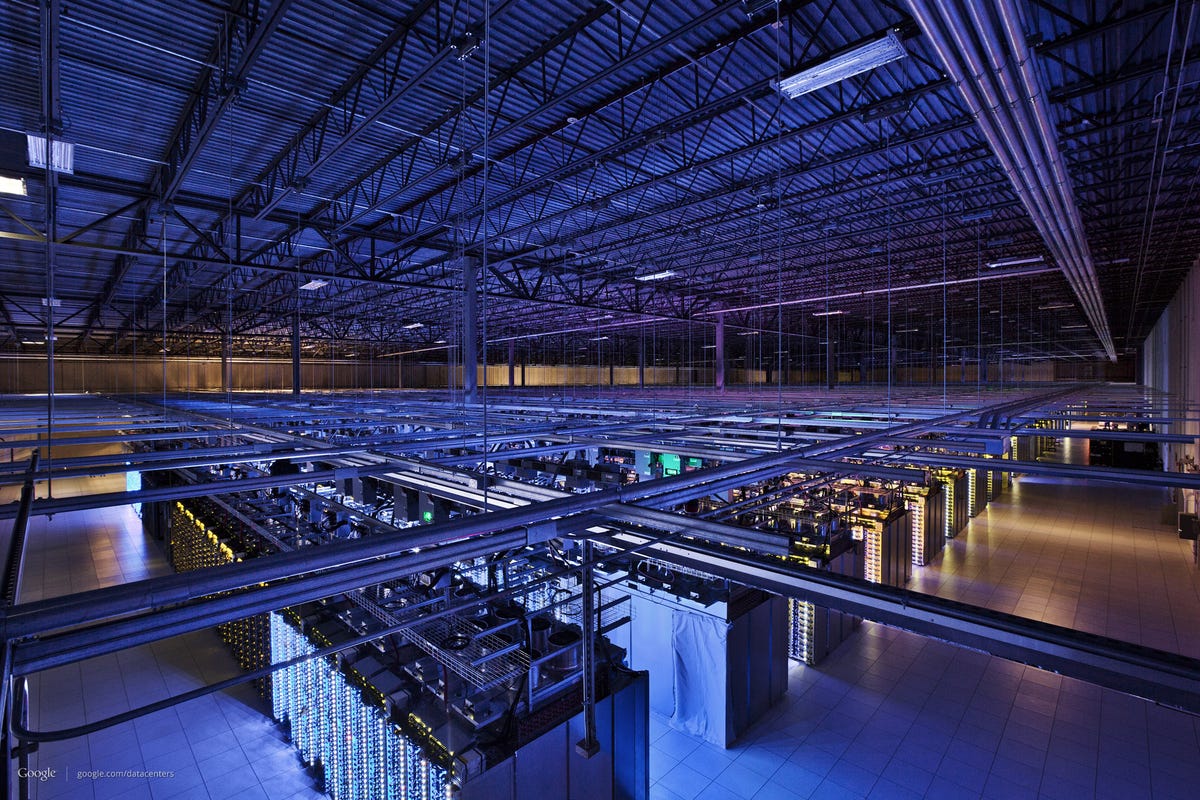
The Silent Revolution: How Intelligent Server Automation Is Reshaping Global Infrastructure
Beyond efficiency gains, AI-powered server automation is creating fundamental shifts in how enterprises operate, compete, and innovate across regions
The Invisible Backbone of Digital Transformation
While consumer-facing AI applications dominate headlines, a quieter but equally transformative revolution is occurring in data centers worldwide. Intelligent server automation—where machine learning algorithms continuously optimize infrastructure operations—has evolved from a cost-saving measure to a strategic differentiator that determines enterprise agility, regional competitiveness, and even national technological sovereignty.
The global server automation market, valued at $5.2 billion in 2023 according to Gartner, is projected to grow at a 19.7% CAGR through 2030—nearly double the growth rate of traditional IT infrastructure spending. This acceleration isn't merely about doing existing tasks faster; it represents a fundamental reimagining of how computational resources are allocated, secured, and leveraged for competitive advantage.
From Scripted Tasks to Cognitive Infrastructure
The evolution of server automation mirrors broader technological paradigms:
Phase 1: The Scripting Era (1990s-2000s)
Early automation relied on static scripts (Bash, Perl, PowerShell) that performed repetitive tasks like backups or patch deployments. These were brittle systems—any deviation from expected conditions required manual intervention. A 2005 study by the Uptime Institute found that 60% of data center outages were caused by human error during routine maintenance—errors that basic automation could have prevented.
Phase 2: Configuration Management (2010s)
Tools like Puppet, Chef, and Ansible introduced declarative state management, allowing administrators to define "desired states" rather than procedural steps. This reduced configuration drift but still operated on fixed rules. The 2016 State of DevOps Report showed that high-performing IT organizations using these tools deployed code 200x more frequently with 100x faster lead times than their peers.
Phase 3: AI-Augmented Automation (2020s-Present)
Modern systems like IBM's Watson AIOps or VMware's Aria use reinforcement learning to dynamically adjust resource allocation, predict hardware failures (with 92% accuracy in Google's DeepMind trials), and even self-remediate security vulnerabilities. Unlike previous generations, these systems improve continuously—Google reported a 30% reduction in cooling costs across its data centers after implementing DeepMind's ML recommendations.
Figure 1: The three eras of server automation and their impact on operational metrics
The Strategic Implications of Cognitive Infrastructure
1. The End of "Break-Fix" IT Operations
Traditional IT operations followed a reactive "break-fix" model where teams responded to incidents after they occurred. AI-powered automation inverts this paradigm:
- Predictive Failure Analysis: HPE's InfoSight platform analyzes 1.5 trillion data points daily to predict hardware failures with 85% accuracy, reducing unplanned downtime by 78% (HPE 2023 Impact Report)
- Autonomous Remediation: ServiceNow's AIOps can automatically resolve 40% of common incidents without human intervention, freeing IT staff for strategic work
- Continuous Optimization: AWS's Compute Optimizer service has saved customers $3.5 billion annually by right-sizing instances based on usage patterns
2. The Rise of "Infrastructure as Competitive Weapon"
What was once a back-office function has become a boardroom priority. Consider:
- Retail: Walmart's AI-driven infrastructure automation enables 20,000 price changes per month across 10,000 stores—each change requiring coordinated updates across 200+ backend systems. Their automation platform reduces the time for global price updates from 24 hours to 5 minutes.
- Financial Services: JPMorgan Chase's LOXM (Learning Optimization eXecution Machine) automates 90% of its trade settlement processes, handling $6 trillion in transactions annually with zero errors since 2020.
- Manufacturing: Siemens' MindSphere IoT platform uses server automation to optimize factory operations, reducing energy consumption by 25% across 72 global plants.
3. The Geopolitical Dimension: Automation as Technological Sovereignty
The concentration of advanced automation capabilities in a few tech giants has created new dependencies:
- The EU's 2023 Digital Sovereignty Act identifies "autonomous infrastructure management" as a critical capability, leading to €1.2 billion in funding for European automation startups
- China's 14th Five-Year Plan mandates that 80% of government data centers achieve "Level 4 autonomy" (self-optimizing with minimal human oversight) by 2025
- India's National AI Strategy includes a $400 million fund to develop indigenous server automation tools to reduce reliance on Western providers
Regional Adoption Patterns and Economic Implications
North America: The Innovation Hub
With 47% of global hyperscale data centers (Synergy Research), the U.S. leads in automation adoption but faces talent shortages. The average salary for automation engineers in Silicon Valley reached $215,000 in 2023—a 38% increase from 2020. This has accelerated the development of "no-code automation" platforms like Tines and Torq, which reduce the barrier to entry.
Case Study: Capital One's AI-driven infrastructure automation handles 100 million customer transactions daily while maintaining 99.999% uptime, contributing to a 24% reduction in IT operational costs since 2021.
Europe: Regulation as Accelerator
GDPR and the EU AI Act have paradoxically accelerated automation adoption by mandating strict data handling protocols that are impractical to enforce manually. German automaker BMW reduced its GDPR-related compliance costs by 60% using automated data classification and retention policies.
Case Study: The UK's National Health Service (NHS) uses automation to process 1.2 million patient records daily across 1,200 facilities, reducing administrative costs by £300 million annually while improving data accuracy.
Asia-Pacific: The Scale Challenge
With data center capacity growing at 28% annually (Cushman & Wakefield), APAC faces unique scale challenges. Singapore's government mandates that all new data centers achieve PUE (Power Usage Effectiveness) below 1.3—only possible with advanced automation. Alibaba's AI-driven cooling system in its Zhangbei data center reduced energy consumption by 34%, saving $11 million annually.
Case Study: Tokyo's MUFG Bank uses automation to process ¥800 trillion ($5.5 trillion) in transactions annually with 99.9999% accuracy, supporting Japan's cashless society initiative.
Latin America: The Leapfrog Opportunity
With less legacy infrastructure, countries like Brazil and Mexico are adopting automation to compete with global players. Mercado Libre's AI-driven infrastructure handles 600 million API calls daily across 18 countries, supporting its rapid expansion without proportional IT staff growth.
Case Study: Brazil's Itaú Unibanco reduced its data center footprint by 40% through automation, saving R$250 million annually while improving service reliability.
The Hidden Costs of Hyper-Automation
1. The Skills Paradox
While automation reduces routine tasks, it creates demand for higher-order skills. The World Economic Forum estimates that by 2025, 50% of all employees will need reskilling due to AI augmentation. The gap is particularly acute in server automation:
- 42% of IT leaders report difficulty finding professionals who understand both infrastructure and AI/ML (Harvey Nash Group)
- The average time-to-fill for automation engineer positions is 68 days—30% longer than other IT roles
- Companies are responding by creating "automation centers of excellence" that combine infrastructure, data science, and business strategy teams
2. The Black Box Problem
As systems become more autonomous, explaining their decisions becomes challenging. When Google's DeepMind recommended counterintuitive cooling strategies that reduced energy use by 40%, engineers couldn't initially explain why the approach worked. This "explainability gap" has led to:
- New "AI auditing" roles emerging in 38% of Fortune 500 companies
- Regulatory proposals in the EU requiring "right to explanation" for automated infrastructure decisions affecting public services
- Development of "glass box" automation tools that provide visualizations of decision-making processes
3. The Security Dilemma
Automated systems become high-value targets. The 2022 attack on a Ukrainian energy provider's automation systems caused $100 million in damages by manipulating automated load-balancing algorithms. Security implications include:
- Automated lateral movement: Attackers using legitimate automation tools to propagate through networks (seen in 37% of major breaches in 2023, according to Mandiant)
- Model poisoning: Compromising the training data for ML-driven automation (demonstrated in MIT research where altered performance data caused 23% efficiency loss)
- New defense paradigms: "Automation immune systems" that use AI to detect anomalous automation behavior, being deployed by 18% of financial services firms
The Next Frontier: Autonomous Enterprise Infrastructure
The convergence of several technologies will define the next phase:
1. Self-Designing Architectures
Emerging tools like IBM's Project CodeNet and Microsoft's Azure Automanage can generate optimal infrastructure designs based on workload patterns. Early adopters report:
- 35% faster time-to-market for new services (Accenture)
- 28% reduction in architectural debt (McKinsey)
- Automated compliance mapping to regulatory requirements in real-time
2. Federated Automation Ecosystems
The future lies in interconnected automation systems that span hybrid and multi-cloud environments. The Linux Foundation's OpenAutomation project (launched 2023) aims to create vendor-neutral standards for:
- Cross-platform automation workflows
- Shared threat intelligence for automated systems
- Portable skills certification frameworks
3. The Rise of "Infrastructure Economists"
A new C-level role is emerging—the Chief Infrastructure Economist—who treats computational resources as a dynamic asset class. Their responsibilities include:
- Real-time resource arbitrage across global data centers based on cost, latency, and carbon intensity
- Automated capacity futures trading (already practiced by 12% of hyperscalers)
- Infrastructure-as-an-investment strategies where unused capacity is monetized through automated spot markets
Beyond Efficiency: The Strategic Imperative
Intelligent server automation represents more than technological progress—it's a fundamental redefinition of how enterprises create value through infrastructure. The organizations that will thrive in this new era are those that:
- Treat automation as a core competency: Not just an IT concern but a board-level strategic priority that drives business model innovation
- Invest in "full-stack" automation talent: Professionals who understand the intersection of infrastructure, AI, and business strategy
- Develop ethical automation frameworks: Proactive governance that addresses explainability, bias, and security in automated systems
- Participate in ecosystem development: Engaging with open standards bodies to avoid vendor lock-in and ensure interoperability
- Measure what matters: Moving beyond cost savings to track automation's impact on agility, innovation velocity, and customer experience
The silent revolution in server automation is creating a new class of "infrastructure-native" enterprises that will dominate their industries. The question for business leaders is no longer whether to automate, but how quickly they can transform their infrastructure from a cost center into a cognitive platform that drives continuous reinvention.
Spotify's Automation Flywheel
Spotify's AI-driven infrastructure automation doesn't just support its business—it defines it. Their system:
- Automatically scales 1,500 microservices across