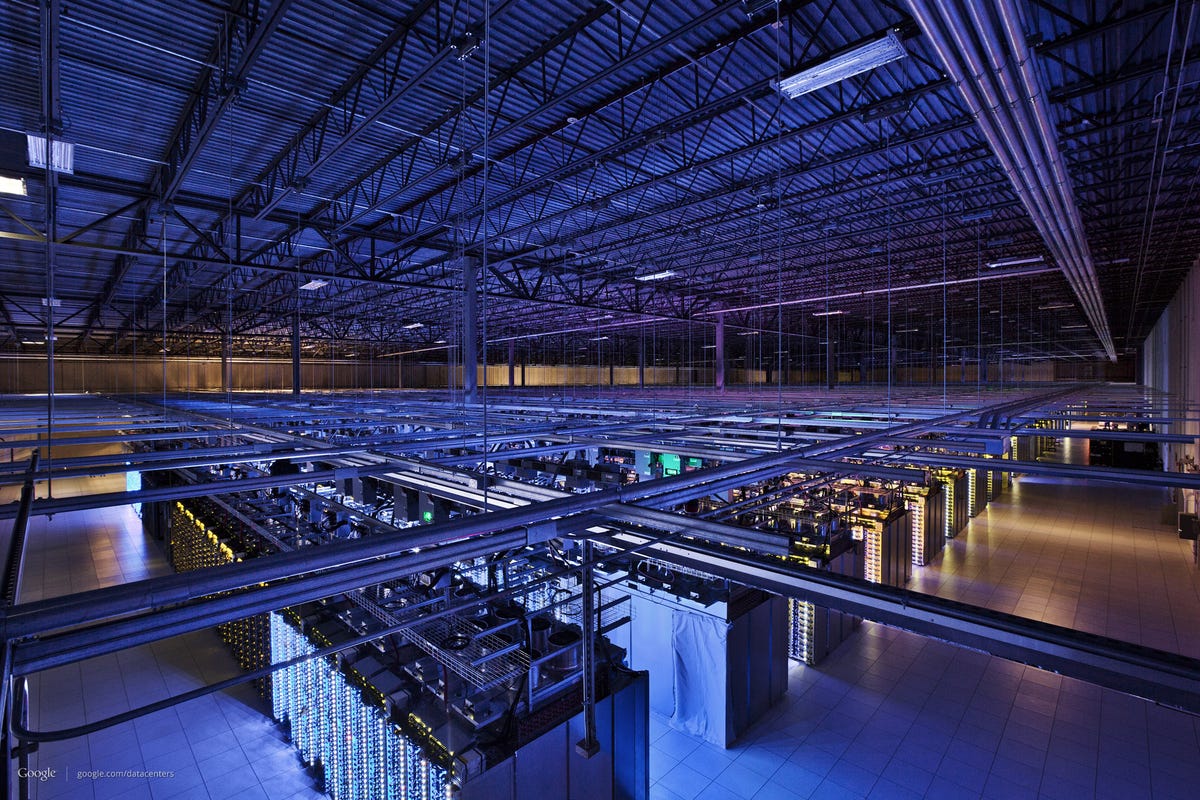
The Server Revolution: How Cloud-Native Infrastructure is Redefining Enterprise Computing in 2026
By 2026, the global cloud-native computing market will surpass $21.5 billion, growing at a compound annual rate of 26.7% since 2021. This explosive growth isn't just about new tools—it represents a fundamental shift in how organizations conceive, deploy, and manage server infrastructure. The traditional data center model, with its monolithic servers and static workloads, is giving way to a dynamic, containerized ecosystem where infrastructure adapts in real-time to application demands.
At the heart of this transformation lies a paradox: as cloud-native technologies mature, the physical server—once considered a commoditized relic—has re-emerged as a strategic differentiator. The 2026 edition of KubeCon + CloudNativeCon Europe in Amsterdam isn't merely showcasing incremental improvements; it's revealing how forward-thinking enterprises are rearchitecting their entire computing foundations to leverage this new paradigm.
The Death and Rebirth of the Enterprise Server
From Monoliths to Microservices: A Historical Perspective
To understand today's server revolution, we must first examine how we arrived here. The enterprise server market has undergone three distinct eras since the 1990s:
- 1990s-2000s: The Rise of Standardization - Organizations consolidated workloads onto powerful but rigid Unix/Linux servers from vendors like Sun Microsystems and IBM. Virtualization (VMware, 2001) began the process of abstracting workloads from hardware.
- 2010-2018: The Cloud Disruption - Public cloud providers (AWS, 2006; Azure, 2010) made infrastructure programmable. The focus shifted from owning servers to renting compute capacity by the hour.
- 2019-Present: The Cloud-Native Renaissance - Containers (popularized by Docker, 2013) and Kubernetes (Google open-sourced it in 2014) enabled portable workloads that could run anywhere—cloud, on-premises, or edge—while service meshes (Istio, Linkerd) handled complex networking.
Gartner's 2025 prediction (now realized in 2026) that 85% of organizations would embrace a cloud-first principle has proven conservative. The actual figure stands at 92% among enterprises with >1,000 employees, with 68% now operating hybrid cloud environments that require sophisticated on-premises server strategies.
The New Server Imperatives
Modern enterprise servers must satisfy five critical requirements that didn't exist a decade ago:
- Kubernetes-Native Design: Hardware must optimize for container density (measured in pods per core) rather than traditional VM performance. AMD's 4th-gen EPYC processors (2023) with 96 cores/192 threads per socket demonstrated this shift, achieving 30% higher pod density than previous generations in benchmark tests.
- Edge Compatibility: With 75% of enterprise-generated data now created outside traditional data centers (IDC, 2025), servers must operate in remote locations with minimal maintenance. Dell's Project Alpine (2024) and HPE's Edgeline systems represent this new category of ruggedized, low-power servers.
- Security-by-Default: The SolarWinds (2020) and Log4j (2021) incidents forced a reckoning. Modern servers incorporate hardware root of trust (Intel TDX, AMD SEV-ES) and immutable infrastructure patterns where servers are never updated—instead, entire nodes are replaced via automated pipelines.
- Sustainability Metrics: Energy costs now represent 40% of TCO for large data centers. Liquid cooling (immersion and direct-to-chip) has moved from niche to mainstream, with companies like LiquidStack reporting 95% cooling energy reductions in production deployments.
- GPU Acceleration Readiness: AI/ML workloads now consume 35% of enterprise compute cycles (up from 5% in 2020). NVIDIA's DGX systems and AMD's Instinct MI300 series have forced a rethink of server architecture to accommodate 800W+ GPUs alongside traditional CPUs.
The Hidden Economics of Cloud-Native Servers
Beyond Sticker Price: Total Cost of Ownership in 2026
The traditional server procurement model—where organizations compared upfront capital expenditures—has collapsed. In its place emerges a complex TCO calculation that accounts for:
Case Study: Deutsche Bank's Infrastructure Transformation
When Deutsche Bank began migrating 80% of its applications to cloud-native architectures in 2023, they discovered that:
- Legacy servers (2018 vintage) cost €1.2M/year in power/cooling for their Frankfurt data center
- First-gen cloud-native servers (2021) reduced this to €850K/year through better power management
- Current-gen (2025) servers with AMD EPYC 9004 series and liquid cooling dropped costs to €520K/year while handling 40% more workloads
- Developer productivity improved by 28% due to standardized Kubernetes environments across cloud and on-prem
Result: The bank achieved payback on their €47M server refresh in just 18 months through operational savings.
The Rise of "Server-as-Code"
One of the most significant shifts in server management is the emergence of declarative infrastructure provisioning. Tools like:
- Tinkerbell (open-source bare metal provisioning from Equinix Metal)
- Metal³ (Kubernetes-native bare metal host management)
- OpenShift Assisted Installer (Red Hat's opinionated server deployment tool)
...have enabled organizations to treat physical servers with the same GitOps principles previously reserved for cloud resources. At ING Group, this approach reduced server deployment times from 48 hours to 17 minutes while eliminating configuration drift.
A 2025 survey of Fortune 500 infrastructure leaders revealed that:
- 72% now use infrastructure-as-code for on-premises servers
- 58% have eliminated manual server configuration entirely
- 43% report that their server teams now spend more time writing YAML than racking hardware
Regional Implications: How Europe's Server Strategy Differs
The Sovereignty Imperative
European organizations face unique server infrastructure challenges due to:
- Data Localization Laws: GDPR and the 2024 EU Data Act require certain workloads to remain within national borders. This has spawned a wave of "sovereign cloud" providers like:
- OVHcloud (France) - Building 15 new data centers across Europe by 2026
- PlusServer (Germany) - Specializing in Schrems II-compliant hosting
- Aruba (Italy) - Offering "data residency guarantees" with legally binding SLAs
- Energy Cost Volatility: The 2022 energy crisis forced European data centers to innovate. Nordic countries now host 42% of Europe's hyperscale facilities, up from 25% in 2020, due to abundant hydroelectric power and cool climates.
- Chip Independence Initiatives: The EU Chips Act (2023) has catalyzed €43 billion in semiconductor investments. European server manufacturers like:
- Bull/Atos (France) - Developing ARM-based servers using European-designed chips
- Eurotech (Italy) - Specializing in edge servers for industrial IoT
- T-Systems (Germany) - Building sovereign cloud hardware stacks
Spotlight: The Dutch Server Innovation Hub
The Netherlands has emerged as Europe's de facto cloud-native server testing ground due to:
- AMS-IX: The world's largest internet exchange (8+ Tbps peak traffic) creates ideal conditions for testing distributed systems
- Green IT Initiatives: Dutch data centers must meet 1.2 PUE targets by 2027, driving liquid cooling adoption
- Startups like StackHPC (Kubernetes for HPC) and Kubermatic (multi-cloud Kubernetes) calling Amsterdam home
At the 2026 KubeCon, Dutch hosting provider Leaseweb will demonstrate their new "Carbon-Aware Kubernetes Scheduler" that routes workloads to data centers based on real-time renewable energy availability—reducing scope 2 emissions by 37% in pilot tests.
The Server Skills Crisis: Preparing the Next Generation
From Sysadmins to Site Reliability Engineers
The cloud-native era has created a profound skills gap. Traditional server administration skills (manual provisioning, scripted maintenance) are becoming obsolete, while demand for Kubernetes-native server operations expertise has exploded:
LinkedIn data shows:
- Job postings for "Kubernetes Administrator" grew 840% from 2020-2025
- "Cloud-Native Infrastructure Engineer" is the #3 fastest-growing tech job title in Europe
- Salaries for senior SREs with server automation skills average €118K in Amsterdam (vs. €82K for traditional sysadmins)
Europe's Education Response
Recognizing this shift, European institutions have launched specialized programs:
- TU Delft (Netherlands): MSc in Cloud-Native Computing with hands-on server automation labs
- ETH Zurich (Switzerland): "Kubernetes and Modern Infrastructure" professional certificate
- 42 School (France): Free, peer-to-peer cloud-native operations training with server provisioning projects
- Fraunhofer IAO (Germany): Researching "self-healing server architectures" that auto-remediate hardware faults
At KubeCon 2026, the Cloud Native Computing Foundation will unveil its new "Server Operator" certification track, designed to validate skills in:
- Bare metal Kubernetes cluster provisioning
- Hardware lifecycle management via GitOps
- Energy-aware workload scheduling
- Sovereign cloud compliance configurations
What Comes Next: The Server's Evolutionary Path
Five Emerging Trends to Watch
- AI-Optimized Servers: NVIDIA's 2025 "Eos" platform and AMD's MI400 series are blurring the line between CPU and GPU servers. By 2027, 60% of new enterprise servers will include dedicated AI acceleration hardware.
- Composable Infrastructure 2.0: HPE's Synergy and Dell's PowerOne systems now allow dynamic reconfiguration of server resources (CPU, GPU, memory, storage) via software. The next generation will support sub-second reconfiguration for real-time workload optimization.
- Quantum-Ready Servers: While practical quantum computing remains years away, IBM and Intel are already designing servers with quantum co-processors. The Dutch quantum network (Quantum Delta NL) will showcase the first Kubernetes-managed quantum server nodes at KubeCon.
- Circular Economy Servers: With e-waste regulations tightening, manufacturers are exploring:
- Modular servers where only failed components are replaced
- Refurbished server marketplaces (e.g., Amazon's "Second Life" program)
- Biodegradable server chassis materials
- Serverless Servers: The ultimate abstraction—where organizations consume server capacity without managing any hardware. AWS Outposts and Azure Stack HCI are early examples, but true serverless on-premises infrastructure remains the holy grail.
The Geopolitical Factor
Server infrastructure has become a geopolitical battleground. The 2024 US export controls on advanced semiconductors to China and Russia's 2025 "digital sovereignty" laws have forced multinational corporations to:
- Maintain