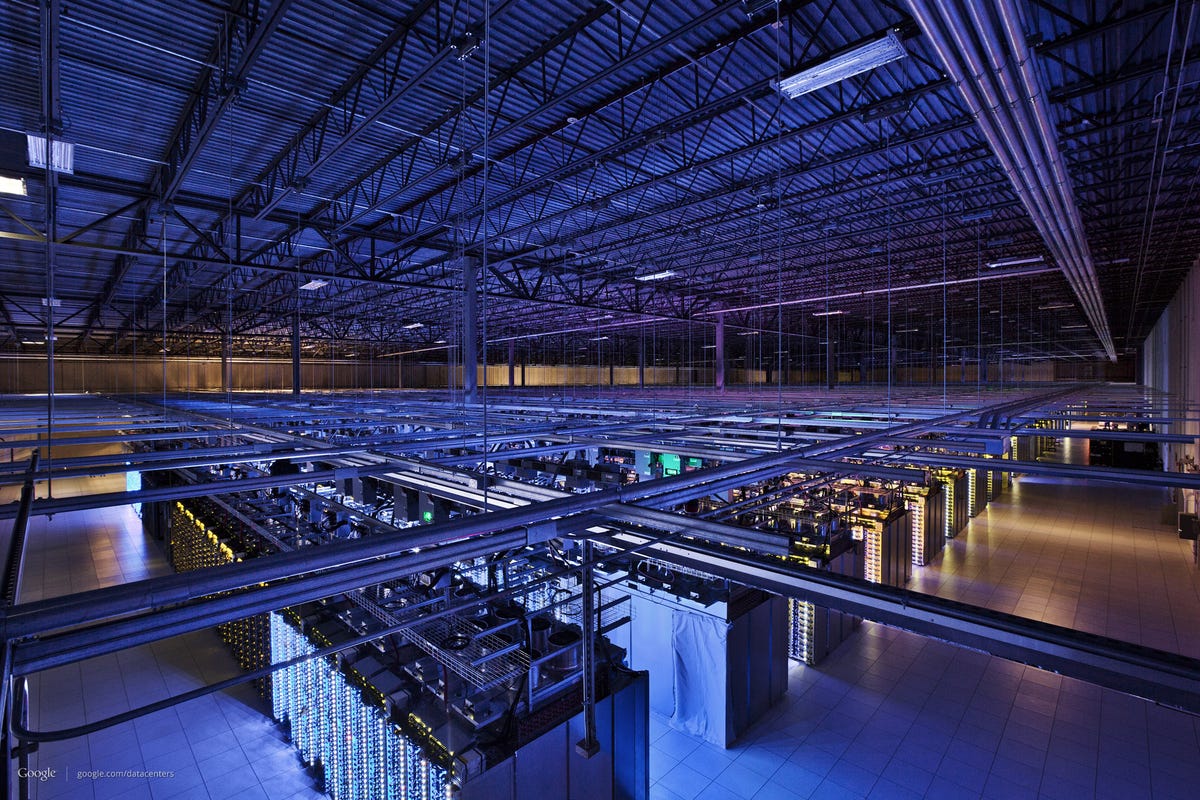
The Backbone of AI: How Server Infrastructure Shapes Business Transformation
Introduction
The rapid advancement of Artificial Intelligence (AI) has ushered in a new era of business transformation, promising unprecedented efficiencies and innovative solutions across various sectors. However, the true potential of AI is not solely determined by the sophistication of its algorithms but by the robustness of the infrastructure that supports it. Servers, often overlooked in the discourse on AI, are the unsung heroes that enable AI systems to function effectively. This article explores the critical role of server infrastructure in AI-driven business transformation, highlighting the practical applications, regional impacts, and the broader implications of investing in high-performance servers.
Main Analysis: The Infrastructure Imperative
The effectiveness of AI solutions is intrinsically linked to the underlying server infrastructure. High-performance servers are essential for handling the massive datasets and complex computations required by AI models. According to a recent study by Gartner, businesses that invest in advanced server technologies experience a 30% increase in AI operational efficiency. This efficiency translates into faster processing times, reduced latency, and improved accuracy, all of which are critical for business success.
The scalability of server infrastructure is another crucial factor. As businesses grow and their data needs expand, the ability to scale server capacity becomes paramount. A report by IDC indicates that companies with scalable server infrastructures are 40% more likely to successfully implement AI solutions compared to those with rigid, outdated systems. This scalability ensures that AI applications can handle increased workloads without compromising performance, thereby supporting business growth and innovation.
Additionally, the reliability of server infrastructure is vital for maintaining the continuity of AI operations. Downtime can be costly, both in terms of financial losses and reputational damage. A study by the Ponemon Institute found that the average cost of IT downtime is $5,600 per minute. Investing in reliable server infrastructure can mitigate these risks, ensuring that AI systems operate seamlessly and consistently.
Examples of Regional Impact
The impact of robust server infrastructure on AI-driven business transformation is evident across different regions. In North America, for instance, the adoption of high-performance servers has enabled companies to leverage AI for predictive analytics, enhancing decision-making processes. According to a survey by Deloitte, 65% of North American businesses using advanced server technologies reported significant improvements in their analytical capabilities.
In Europe, the focus on data privacy and security has driven the demand for secure server infrastructures. The General Data Protection Regulation (GDPR) has compelled businesses to invest in servers that comply with stringent data protection standards. A report by the European Commission highlights that companies adhering to GDPR guidelines through robust server infrastructures have seen a 25% increase in customer trust and loyalty.
In Asia, the rapid digitalization of economies has led to a surge in AI adoption. Countries like China and India are investing heavily in server infrastructure to support their AI initiatives. A study by the Asia-Pacific Economic Cooperation (APEC) reveals that businesses in these regions with advanced server technologies are 35% more likely to achieve their digital transformation goals.
Broader Implications and Future Prospects
The broader implications of investing in server infrastructure extend beyond immediate business benefits. It fosters a competitive edge in the global market, drives innovation, and supports sustainable growth. As AI continues to evolve, the demand for high-performance servers will only increase, making it imperative for businesses to prioritize their server infrastructure.
The future of AI-driven business transformation lies in the integration of advanced server technologies with emerging innovations such as edge computing and quantum computing. Edge computing, for instance, brings AI processing closer to the data source, reducing latency and improving real-time decision-making. A report by MarketsandMarkets projects that the edge computing market will grow to $15.4 billion by 2025, highlighting its potential to revolutionize AI applications.
Quantum computing, on the other hand, promises to exponentially increase the processing power of AI systems. While still in its infancy, quantum computing has the potential to solve complex problems that are currently beyond the reach of classical computers. Investing in server infrastructure that can support quantum computing will be crucial for businesses aiming to stay ahead of the curve.
Conclusion
In conclusion, the true power of AI lies not just in its algorithms but in the infrastructure that supports it. High-performance servers are the backbone of AI systems, enabling businesses to achieve operational efficiency, scalability, and reliability. The regional impacts of robust server infrastructure are evident, with businesses in North America, Europe, and Asia reaping the benefits of advanced server technologies. As AI continues to evolve, the demand for high-performance servers will only increase, making it imperative for businesses to prioritize their server infrastructure. By investing in advanced server technologies, businesses can unlock the full potential of AI, driving innovation, fostering growth, and gaining a competitive edge in the global market.