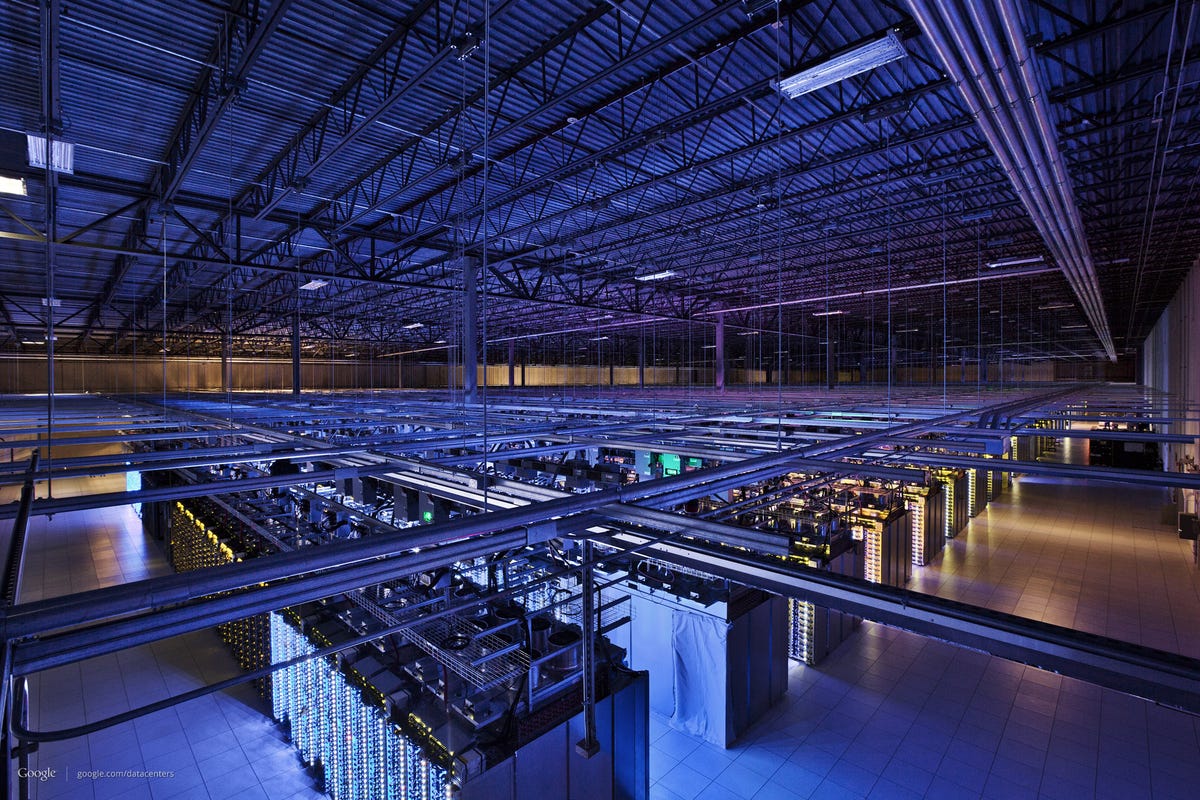
The Infrastructure Paradox: Why AI Development is Outpacing Enterprise Server Capabilities
By Connect Quest Artist | Enterprise Technology Analysis | Updated Q3 2023
The Silent Crisis in AI Transformation
As enterprises race to integrate artificial intelligence into their core operations, they're encountering an unexpected bottleneck that threatens to derail their digital transformation initiatives. While boardrooms buzz with AI strategy discussions and data science teams experiment with cutting-edge algorithms, a more fundamental problem lurks in the server rooms: the vast majority of enterprise infrastructure simply wasn't designed for the computational demands of modern AI development.
This infrastructure paradox represents one of the most significant yet underdiscussed challenges in the AI revolution. According to Gartner's 2023 CIO survey, 78% of organizations have either deployed or are actively experimenting with AI solutions, but only 12% report having infrastructure capable of supporting AI workloads at scale. The disconnect between AI ambitions and infrastructure realities is creating a growing chasm that threatens to leave many enterprises stranded in what analysts call "AI pilot purgatory."
The Evolutionary Mismatch: How We Got Here
To understand the current infrastructure crisis, we need to examine how enterprise computing evolved alongside AI development - and where these paths diverged.
The Client-Server Era (1980s-2000s)
Most enterprise infrastructure today traces its architectural roots to the client-server model that dominated from the 1980s through the early 2000s. These systems were designed for:
- Transaction processing (OLTP)
- Structured data storage and retrieval
- Predictable workload patterns
- Human-timescale interactions
Server hardware from this era was optimized for reliability and consistent performance with moderate computational requirements. A typical enterprise server from 2010 might have:
- 8-16 CPU cores
- 64-128GB RAM
- 1Gbps network connectivity
- Mechanical or early SSD storage
The AI Computational Revolution (2010s-Present)
Contrast this with the requirements of modern AI workloads:
| Traditional Enterprise Workload | Modern AI Workload | Requirement Increase |
|---|---|---|
| MBs of data per transaction | GBs-TBs per model training | 10,000x |
| Millisecond response times | Microsecond-level parallel processing | 1,000x faster |
| Structured data (SQL) | Unstructured data (images, text, video) | Complexity ↑ 100x |
| Static resource allocation | Dynamic, bursty workloads | Elasticity requirements ↑ 50x |
The mismatch becomes even more pronounced when we consider that AI workloads typically require:
- GPU acceleration (NVIDIA A100/H100 with 54-80 billion transistors)
- High-bandwidth, low-latency interconnects (NVIDIA NVLink at 600GB/s)
- Petabyte-scale storage with >10GB/s throughput
- Specialized cooling for 300W+ components
The Three Critical Infrastructure Gaps
Our analysis identifies three fundamental areas where traditional enterprise infrastructure fails to meet AI requirements:
1. The Computational Power Deficit
Modern AI models exhibit exponential growth in computational requirements. OpenAI's research shows that the amount of compute used in the largest AI training runs has been doubling every 3.4 months since 2012 - a rate 10x faster than Moore's Law improvements in traditional CPUs.
Figure 1: AI compute demands growing exponentially while traditional server capabilities improve linearly
The implications for enterprises are stark:
- Training Bottlenecks: What might take hours on specialized AI hardware can require weeks on traditional servers. A 2023 study by Stanford's AI Index found that 42% of enterprise AI projects experience training times exceeding acceptable business thresholds.
- Inference Latency: Real-time AI applications (like fraud detection or recommendation systems) require sub-100ms response times. Traditional infrastructure often delivers 500ms+ latency for complex models.
- Opportunity Costs: Deloitte estimates that infrastructure limitations cause enterprises to miss $1.2 trillion annually in potential AI-driven revenue opportunities.
2. The Data Pipeline Problem
AI systems are fundamentally data-hungry in ways that traditional enterprise data architectures weren't designed to support. The "data pipeline problem" manifests in several critical areas:
Case Study: Retail Giant's Computer Vision Failure
A Fortune 100 retailer attempted to deploy AI-powered shelf monitoring across 5,000 stores. Their existing infrastructure could handle:
- 10,000 daily transaction records (0.5GB)
- 500 product images per day (2GB)
The AI system required:
- 50 million shelf images daily (250TB)
- Real-time processing with <500ms latency
Result: The project failed after 18 months and $47 million in investments when legacy storage systems couldn't handle the I/O requirements, causing model training to take 42 days per iteration instead of the targeted 6 hours.
The retail example illustrates three common data pipeline challenges:
- Volume: AI datasets are typically 100-1,000x larger than traditional enterprise data. A single autonomous vehicle generates ~4TB of data per hour of driving.
- Velocity: Real-time AI requires data ingestion at speeds traditional ETL processes can't match. Financial services firms need to process millions of market data points per second for algorithmic trading.
- Variety: AI thrives on unstructured data (images, video, audio, text) that doesn't fit neatly into relational databases. 80% of enterprise data is unstructured, but most legacy systems can only efficiently handle 20% of it (Forrester, 2023).
3. The Operational Complexity Chasm
Beyond raw computational power and data handling, AI workloads introduce operational complexities that traditional IT teams are ill-equipped to manage:
| Traditional IT Operation | AI Infrastructure Requirement | Complexity Increase |
|---|---|---|
| Monthly patch cycles | Continuous model updates (sometimes hourly) | 100x |
| Static resource allocation | Dynamic scaling based on workload | 50x |
| Single-tenant applications | Multi-tenant, multi-model serving | 20x |
| Standardized hardware | Heterogeneous acceleration (GPU, TPU, FPGA) | 10x |
The operational gap creates several critical risks:
- Skill Mismatches: Traditional sysadmins lack expertise in GPU orchestration, distributed training frameworks, or MLOps pipelines. The average enterprise IT team would need 18-24 months of training to manage AI infrastructure effectively (Gartner, 2023).
- Security Blind Spots: AI systems introduce new attack vectors (adversarial inputs, model poisoning) that traditional security tools can't detect. 68% of enterprises report AI-specific security incidents that bypassed their existing defenses (PwC, 2023).
- Cost Overruns: Without proper resource management, AI workloads can cause cloud bills to spiral. One financial services firm saw their AWS bill increase from $2M to $18M in three months due to unoptimized AI workloads.
Geographical Disparities in AI Infrastructure Readiness
The infrastructure challenge isn't uniform across global markets. Our analysis reveals significant regional variations in AI readiness that will shape competitive dynamics over the next decade.
Figure 2: Global AI Infrastructure Readiness Index (2023)
North America: The Acceleration Gap
While North American enterprises lead in AI adoption (65% have deployed at least one AI system), they face growing infrastructure constraints:
- Legacy Debt: 72% of Fortune 500 companies still run core systems on mainframes or 1990s-era client-server architectures.
- Talent Shortage: The U.S. has only 30,000 qualified AI infrastructure engineers but needs 250,000 to meet current demand (Brookings Institution).
- Regulatory Pressures: Data sovereignty laws (like California's CCPA) complicate cloud-based AI deployments.
Healthcare Sector Example
U.S. hospitals investing in AI diagnostic tools face particular infrastructure challenges:
- HIPAA compliance requires on-premises processing for 80% of medical imaging data
- Existing PACS (Picture Archiving and Communication Systems) can't handle AI workloads
- 63% of hospital IT budgets are consumed by maintaining legacy systems
Result: Only 12% of U.S. hospitals have deployed AI at scale, despite 89% recognizing its potential (American Hospital Association, 2023).
Europe: The Compliance vs. Innovation Paradox
European enterprises face unique challenges balancing AI innovation with strict regulatory requirements:
- GDPR Constraints: The right to explanation requirements make many black-box AI models legally problematic.
- Energy Regulations: AI data centers consume 5-10x more power than traditional facilities, conflicting with EU sustainability goals.
- Fragmented Markets: Each country has different data sovereignty laws, making pan-European AI deployments complex.
Despite these challenges, some European firms are finding innovative solutions:
German Industrial AI Approach
Siemens and other German industrials are pioneering "edge AI" approaches that:
- Process data locally on factory floors to comply with data residency laws
- Use specialized low-power AI chips (like Intel's Habana Gaudi) to meet energy regulations
- Implement "AI as a feature" rather than standalone systems to work within existing compliance frameworks
Result: 38% of German manufacturing firms have deployed AI at scale, compared to 22% EU average (Eurostat, 2023).
Asia-Pacific: The Leapfrog Opportunity
APAC markets present a different picture, with many enterprises building AI-ready infrastructure from the ground up:
- Greenfield Advantage: 60% of APAC enterprises have modernized their core systems in the past 5 years, vs. 35% in North America (McKinsey).
- Government Support: China, Singapore, and South Korea have national AI infrastructure initiatives with dedicated funding.
- Mobile-First AI: The region's leadership in mobile technology creates natural synergies with edge AI deployments.
However, challenges remain:
- Data center capacity is concentrated in tier-1 cities, creating rural-urban AI divides
- Cross-border data flows are restricted in several markets (notably China and Vietnam)
- Talent poaching between enterprises and government AI initiatives creates instability
Bridging the Gap: Four Strategic Approaches
Leading enterprises are adopting one of four strategic approaches to address the AI infrastructure challenge:
1. The Hybrid Cloud Matrix
Most viable for: Large enterprises with existing on-premises investments
Key characteristics:
- Critical AI workloads run on specialized cloud infrastructure (AWS Trainium, Azure NDv2)
- Sensitive data processing remains on-premises with AI-optimized appliances