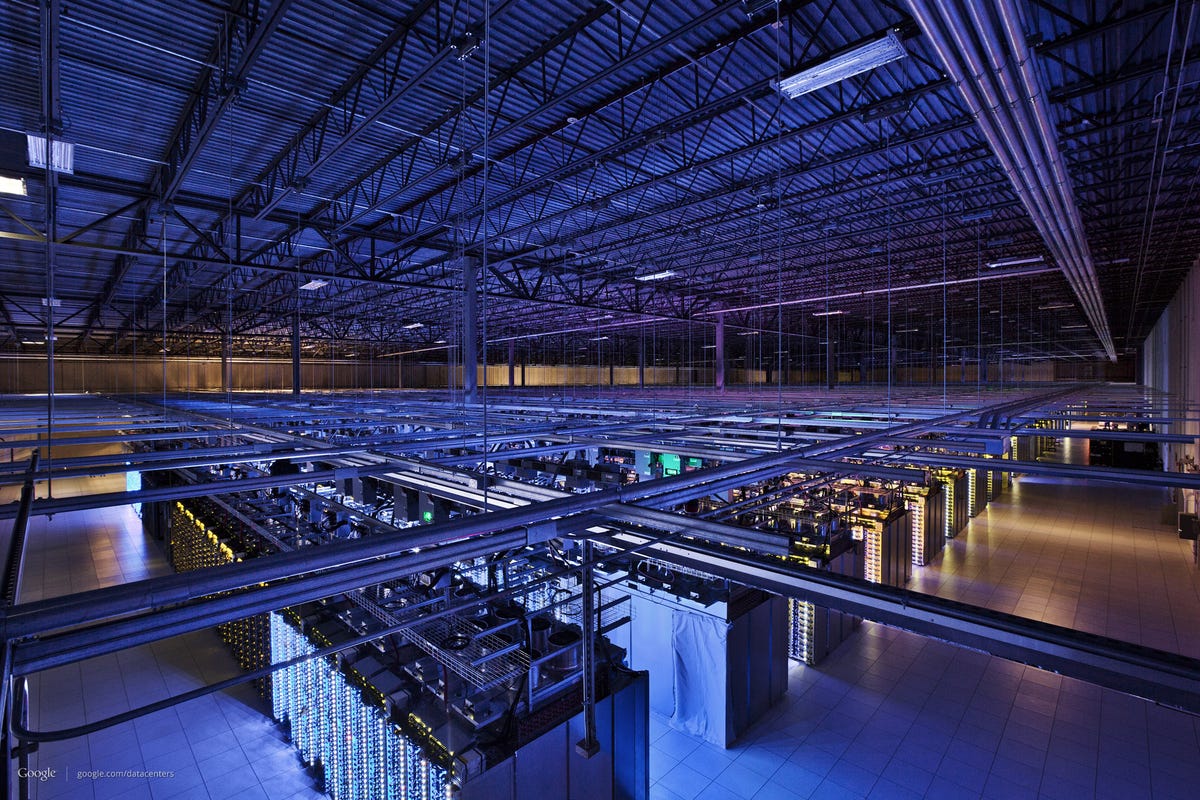
Bridging the AI Productivity Gap: The Pivotal Role of Server Infrastructure
Introduction
In the rapidly evolving landscape of technology, Artificial Intelligence (AI) has emerged as a transformative force, revolutionizing industries from healthcare to finance. However, the promise of AI—to significantly enhance productivity and innovation—is often curtailed by a critical yet overlooked factor: server infrastructure. This article delves into the intricate relationship between server infrastructure and AI productivity, exploring how optimized server environments can bridge the gap between AI's potential and its practical applications.
Main Analysis: The Nexus of AI and Server Infrastructure
AI workloads are inherently demanding, requiring robust computational resources to process vast amounts of data, train complex models, and deploy solutions at scale. High-Performance Computing (HPC) is essential for these tasks, but traditional server infrastructures often fall short in meeting AI's unique requirements. The gap between AI's computational needs and the capabilities of existing server infrastructure is a significant bottleneck that hinders productivity and innovation.
The Evolution of Server Architectures
Historically, server architectures were designed for general-purpose computing tasks, focusing on reliability and scalability. However, AI introduces new challenges that demand specialized hardware and software solutions. Modern server infrastructures must be flexible, scalable, and capable of handling the dynamic workloads characteristic of AI applications. This evolution has led to the development of specialized AI accelerators, such as Graphics Processing Units (GPUs) and Tensor Processing Units (TPUs), which are designed to handle the parallel processing requirements of AI tasks.
The Role of Scalability and Flexibility
Scalability and flexibility are crucial for supporting AI applications. AI workloads can vary significantly in terms of computational demand, requiring infrastructures that can scale up or down as needed. Cloud-based solutions have emerged as a popular choice, offering on-demand scalability and the ability to leverage powerful computing resources without significant upfront investment. For instance, companies like Amazon Web Services (AWS) and Microsoft Azure provide scalable cloud infrastructure tailored for AI workloads, enabling organizations to optimize their server environments dynamically.
Examples: Success Stories in Bridging the AI Productivity Gap
Several companies have successfully bridged the AI productivity gap through strategic investments in server infrastructure. For example, Google's use of TPUs has significantly accelerated its AI research and development. TPUs are specialized hardware designed to handle the intensive computations required for deep learning, enabling Google to train models more efficiently and deploy AI solutions at scale. Similarly, NVIDIA's GPUs have become a staple in AI research, powering data centers and enabling breakthroughs in various AI applications, from autonomous vehicles to natural language processing.
Practical Recommendations for Optimizing Server Infrastructure
For organizations looking to optimize their server infrastructure for AI, several practical recommendations can be considered:
- Invest in Specialized Hardware: Leverage AI accelerators like GPUs and TPUs to handle the computational demands of AI workloads.
- Embrace Cloud Solutions: Utilize cloud-based infrastructure to benefit from on-demand scalability and cost-effective resource management.
- Implement High-Performance Storage: Ensure that storage solutions can handle the high-throughput data requirements of AI applications.
- Optimize Network Infrastructure: Invest in high-speed networking solutions to facilitate efficient data transfer and communication between servers.
- Leverage Containerization: Use containerization technologies like Docker and Kubernetes to manage and deploy AI applications efficiently.
Conclusion: The Future of AI and Server Infrastructure
The future of AI is intrinsically linked to the evolution of server infrastructure. As AI applications become more complex and data-intensive, the demand for robust, scalable, and flexible server environments will only increase. Organizations that invest in optimizing their server infrastructure will be better positioned to harness the full potential of AI, driving innovation and productivity gains across various industries. By bridging the AI productivity gap, we can unlock new possibilities and accelerate the pace of technological advancement.