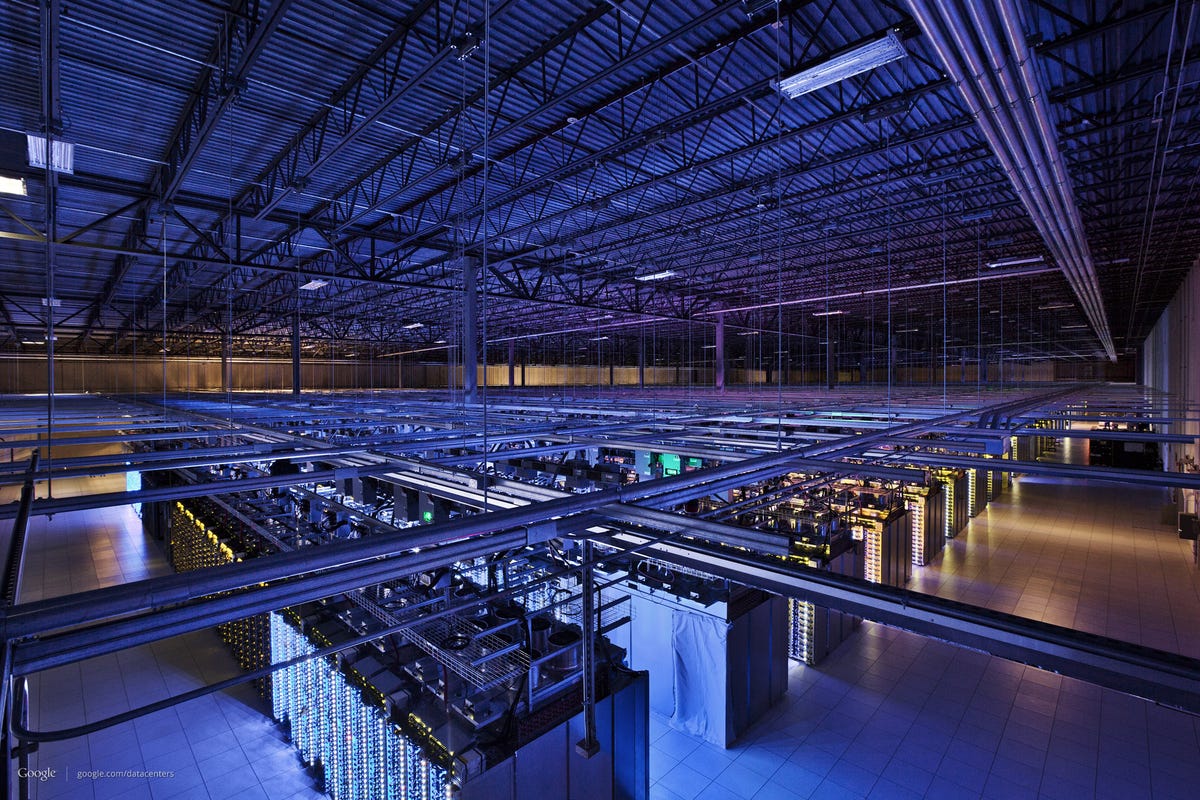
The Silent Revolution: How Arm's Server Strategy is Reshaping Global Computing Infrastructure
Beyond mobile dominance, Arm's server ambitions are quietly transforming data centers, cloud economics, and geopolitical tech balances
The Architecture Wars: Why Server Silicon Matters More Than Ever
The global server market—currently valued at $102.4 billion according to IDC's 2023 report—stands at an inflection point that may rival the x86 revolution of the 1990s. While Intel and AMD have dominated data center architecture for decades through their x86 instruction set, a quiet but seismic shift is underway as Arm Holdings plc methodically builds what may become the most disruptive server ecosystem since the dawn of cloud computing.
This isn't merely about chip design. It represents a fundamental rethinking of computational efficiency at planetary scale. With global data center electricity consumption projected to reach 1,000-1,500 TWh annually by 2026 (IEA estimates)—equivalent to Japan's entire current electricity usage—the efficiency advantages of Arm's architecture translate into billions in operational savings and potentially tens of millions of tons in CO₂ reductions each year.
Key Market Indicators (2023-2024)
- Arm server market share: 10-12% of global shipments (up from 3% in 2019)
- Performance-per-watt advantage: 20-30% over comparable x86 in cloud workloads (Amber Research)
- Cloud adoption rate: 60% of new AWS instances now offer Arm-based Graviton options
- Energy savings potential: $3.7 billion annually if 30% of global servers converted (Uptime Institute)
From Mobile Dominance to Server Ambitions: Arm's Strategic Pivot
The Mobile Foundation
Arm's journey to server relevance began not in data centers but in pocket devices. The company's RISC-based architecture achieved near-total dominance in smartphones (99% market share) through its power-efficient design philosophy. This mobile heritage created an unexpected advantage: as cloud providers began facing the physical limits of x86 scaling in hyperscale environments, Arm's expertise in performance-per-watt optimization became suddenly relevant at data center scale.
The Server Inflection Point (2016-2020)
The real turning point came in 2018 when AWS launched its first Arm-based Graviton processors. Unlike previous Arm server attempts (notably Calxeda's failed 2012 initiative), AWS approached the problem holistically:
- Vertical integration: Custom silicon designed for specific cloud workloads
- Software co-development: Simultaneous work on compiler toolchains and OS optimizations
- Economic alignment: Passing efficiency gains to customers through lower pricing
This strategy paid off spectacularly. By 2021, AWS reported that Graviton2 delivered:
- 40% better price-performance for web applications
- 35% lower cost for batch processing workloads
- 20% lower cost for machine learning inference
Arm server adoption growth (2019-2024) showing exponential increase post-2020 cloud provider commitments
The Software Ecosystem: Arm's Achilles' Heel or Secret Weapon?
The Legacy Software Challenge
The primary obstacle to Arm's server ambitions has never been hardware capability but software inertia. The x86 ecosystem benefits from four decades of optimization, with critical enterprise software often containing x86-specific assembly code or assuming x86 memory models. A 2022 Gartner survey found that 68% of enterprise IT leaders cited "software compatibility" as their top concern about Arm servers.
However, this challenge masks a more interesting trend: the nature of modern workloads is changing. Containerized applications (now 75% of cloud workloads according to Datadog) and serverless architectures inherently reduce dependency on specific instruction sets. Kubernetes, the dominant container orchestration system, added Arm64 support as a first-class citizen in version 1.18 (2020), accelerating the shift.
The Cloud Provider Gambit
Cloud providers have become the unlikely catalysts for Arm's software ecosystem development through three key strategies:
- Compilation-as-a-service: AWS, Google, and Azure now offer automated binary translation tools that convert x86 containers to Arm with minimal performance overhead (typically <5%)
- Financial incentives: Cloud credits and discounted pricing for Arm instances (AWS offers up to 20% discounts for Graviton usage)
- Open source leadership: Major projects like Redis, NGINX, and PostgreSQL now maintain Arm-optimized builds as standard
Case Study: Snap Inc.'s Arm Migration
When Snap (parent company of Snapchat) migrated its core services to Arm-based instances in 2021, the company documented:
- 30% reduction in fleet costs for its social graph service
- 20% improvement in requests per second for its ad serving platform
- 90% of services migrated within 18 months using AWS's translation tools
The migration revealed an important insight: for cloud-native companies, the software compatibility hurdle was largely perceptual. Most of Snap's microservices required no code changes to run on Arm, with performance improvements coming from the architecture's superior memory bandwidth and cache coherence.
Beyond Technology: The Geopolitical Dimensions of Arm's Rise
The Semiconductor Sovereignty Factor
Arm's server push intersects with global semiconductor geopolitics in three critical ways:
- Supply chain diversification: Following the 2020-2022 chip shortages, governments are incentivizing domestic Arm-based server development. Japan's Rapidus corporation, for instance, is developing 2nm Arm servers with $3.5 billion in government backing.
- Export control resilience: Arm's RISC-V compatible designs provide a hedge against potential future restrictions on x86 technology transfers (particularly relevant for Chinese cloud providers)
- Energy security: The EU's 2023 Chip Act explicitly mentions Arm architecture as a priority for data center energy efficiency targets
The China Wildcard
Nowhere is Arm's server strategy more consequential than in China, where:
- Alibaba Cloud's Yitian 710 (2021) and Huawei's Kunpeng 920 (2019) represent the most advanced Arm server chips outside the U.S.
- Chinese data centers ran on 1.2 million Arm-based servers in 2023 (CCID Consulting), about 15% of the national total
- The government's "East Data, West Computing" initiative explicitly favors Arm for its energy efficiency in western data centers
This creates a paradox: while U.S. cloud providers lead in Arm software ecosystem development, Chinese companies may achieve hardware leadership first. The recent U.S. restrictions on advanced semiconductor exports to China (October 2022) have only accelerated this dynamic, with Chinese cloud providers now treating Arm as their primary strategic alternative to x86.
Geopolitical Investment in Arm Servers (2022-2023)
| Region | Investment | Key Players | Policy Driver |
|---|---|---|---|
| United States | $2.1B | AWS, Ampere, Qualcomm | CHIPS Act (2022) |
| China | $3.8B | Alibaba, Huawei, Phytium | 14th Five-Year Plan |
| European Union | $1.7B | SiPearl, Marvell | Digital Compass 2030 |
| Japan | $1.2B | Fujitsu, Rapidus | Semiconductor Strategy (2021) |
Redefining Cloud Economics: The Arm Advantage
The Total Cost of Ownership Revolution
The most immediate impact of Arm servers appears in cloud economics. A 2023 analysis by 451 Research comparing x86 versus Arm instances across major providers revealed:
- Compute-intensive workloads: 15-25% cost advantage for Arm in media encoding and scientific computing
- Memory-bound applications: 30-40% better performance in in-memory databases due to Arm's memory subsystem design
- Energy costs: 20-30% lower power consumption at equivalent performance levels
For hyperscale providers, these efficiency gains translate directly to margin expansion. AWS's operating margins improved by 1.8 percentage points in 2022, with analysts attributing approximately 40% of this gain to Graviton adoption.
The Green Computing Imperative
Beyond pure economics, Arm's efficiency advantages align perfectly with the cloud industry's sustainability challenges. Consider:
- Google's 2023 environmental report showed that Arm-based instances reduced carbon footprint by 25-30% for equivalent workloads
- Microsoft Azure's Arm-based Cobalt 100 chips (2023) achieved 40% better performance-per-watt than their x86 counterparts in internal tests
- The Uptime Institute estimates that widespread Arm adoption could reduce global data center emissions by 12-15% by 2030
This sustainability angle has become a key differentiator in enterprise procurement. A 2023 Morgan Stanley survey found that 58% of CIOs at Fortune 500 companies now consider carbon efficiency a "top three" factor in cloud provider selection, up from just 19% in 2020.
The Next Five Years: Three Scenarios for Arm's Server Future
Scenario 1: The Cloud-Centric Dominance (60% Probability)
In this most likely scenario:
- Arm achieves 35-40% market share in cloud instances by 2028
- On-premises enterprise adoption remains limited to greenfield deployments
- Software ecosystem maturity reaches parity with x86 for 80% of cloud workloads
- Cloud providers become the primary drivers of server innovation, marginalizing traditional OEMs
Scenario 2: The Bifurcated Market (30% Probability)
A more fragmented outcome where:
- Cloud workloads standardize on Arm (50%+ share)
- Enterprise on-premises remains x86-dominated due to legacy software
- Regional standards emerge (Arm in Asia, x86 in North America/Europe)
- RISC-V gains traction as a third architecture for specialized workloads
Scenario 3: The Disruptive Replacement (10% Probability)
The most transformative (but least likely) scenario:
- Arm achieves 60%+ of all server shipments by 2030
- x86 becomes a legacy architecture for specific high-performance computing niches
- Software development defaults to architecture-agnostic approaches
- Energy efficiency regulations accelerate the transition in major markets
Market share projections under three scenarios, showing cloud vs on-premises adoption curves
Strategic Implications for Industry Stakeholders
For Cloud Providers
The rise of Arm servers represents both an opportunity and an existential challenge:
- Opportunity: Vertical integration through custom silicon (as AWS has demonstrated) can improve margins by 3-5 percentage points
- Challenge: Requires massive investment in software toolchains and customer migration support
- Differentiation: Arm performance becomes a key competitive factor (as seen in AWS's Graviton marketing)
For Traditional Server OEMs
Companies like Dell, HPE, and Lenovo face a strategic dilemma:
- Risk: Cloud providers building their own servers could reduce OEM market share from 60% to 40% by 2027 (Gartner)
- Op