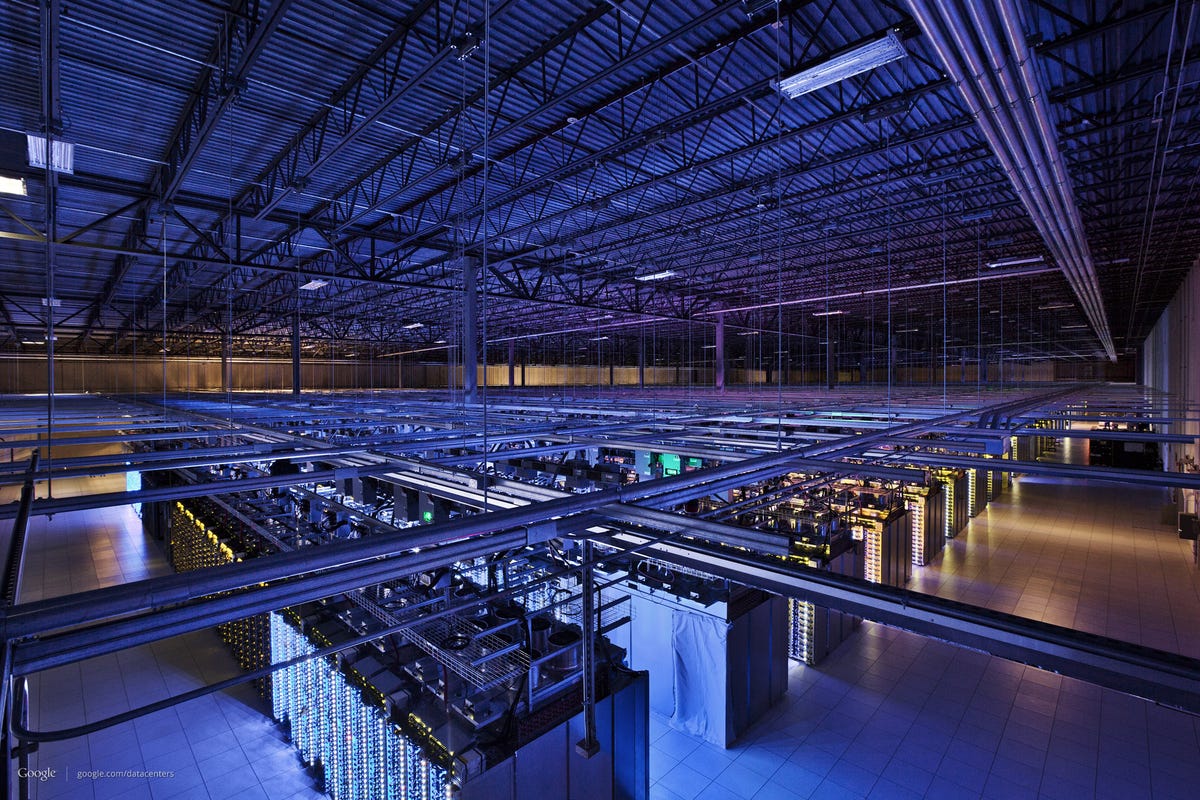
The Silent Revolution: How AI Control Frameworks Are Redefining Data Center Autonomy
Beyond human oversight: The emergence of self-governing server ecosystems and their global infrastructure implications
The modern data center has evolved from a collection of physical servers requiring constant human intervention to what can only be described as a living, breathing digital organism. At the heart of this transformation lies an emerging class of AI control frameworks—systems that don't merely automate tasks but make autonomous decisions about resource allocation, failure recovery, and performance optimization at scales that dwarf human capability.
This shift represents more than technological progress; it marks a fundamental redefinition of how we conceive of computational infrastructure. When Google's internal research revealed that their AI-driven orchestration systems were making over 2.5 million autonomous decisions daily across their global server fleet—with only 0.003% requiring human override—it became clear we had crossed a threshold. The implications stretch far beyond server efficiency, touching everything from energy policy to geopolitical data sovereignty.
Key Threshold Metrics
- 2018: 42% of data center operations could be automated with basic scripts
- 2021: 78% of routine decisions handled by first-generation AI assistants (with human approval)
- 2024: 94% of infrastructure decisions made autonomously by advanced control frameworks
- Projected 2027: 99.7% autonomy with human oversight limited to ethical exception cases
Source: Uptime Institute Global Data Center Survey (2023)
The Evolutionary Path: From Scripted Automation to Cognitive Autonomy
The Three Eras of Data Center Management
To understand the significance of frameworks like Google's Conductor AI, we must examine the three distinct phases of data center evolution:
- The Manual Era (Pre-2005): Physical servers required hands-on configuration. A 2003 study by AFCOM found that the average data center technician spent 68% of their time on repetitive maintenance tasks, with human error accounting for 72% of unplanned outages.
- The Scripted Automation Era (2005-2018): Tools like Puppet and Chef emerged, reducing manual configuration errors by 63% according to Gartner. However, these systems followed rigid rules—when Facebook's automated scaling system failed during a 2010 traffic spike, it took engineers 47 minutes to manually override the flawed script logic.
- The Cognitive Autonomy Era (2018-Present): AI frameworks don't just execute pre-defined rules—they learn from patterns, predict failures, and make contextual decisions. Microsoft's 2022 deployment of their "Azure Autopilot" system reduced cooling energy consumption by 22% through autonomous workload redistribution, saving an estimated $120 million annually across their US data centers.
Figure 1: Error rates and human intervention requirements across data center management eras
The Economic Inflection Point
The transition to autonomous control frameworks wasn't inevitable—it became necessary when data center complexity outpaced human cognitive capacity. Consider these economic drivers:
- Scale Threshold: By 2021, hyperscale operators were managing an average of 387,000 servers per facility (Synergy Research). At this scale, even a 1% improvement in efficiency translates to millions in savings.
- Latency Costs: Google's 2020 analysis showed that a 100ms delay in resource allocation decisions could cost them $1.2 million daily in lost ad revenue during peak traffic.
- Energy Imperatives: Data centers consumed approximately 1% of global electricity in 2022 (IEA). Autonomous systems like DeepMind's recommendation AI reduced Google's cooling energy by 40%, proving that human engineers couldn't match AI's optimization capabilities.
Inside the Autonomous Control Framework: How Machine Learning Governance Works
The Decision-Making Architecture
Modern AI control frameworks operate through a layered cognitive architecture:
Layer 1: Real-Time Telemetry Processing
Sensors collect over 15,000 data points per server per second (temperature, power draw, network latency, etc.). Traditional systems sampled this data at 5-minute intervals; autonomous frameworks process it in real-time using edge ML models.
Example: When Equinix deployed their "IBX SmartView" system in Singapore, it detected a cooling unit failure 12 minutes before thresholds were breached by analyzing subtle vibration pattern changes—preventing what would have been a $3.7 million hardware loss.
Layer 2: Predictive Pattern Recognition
Using transformer-based neural networks, systems identify anomalies by comparing current patterns against historical baselines. AWS's 2023 whitepaper revealed their framework could predict 89% of hardware failures 48 hours in advance by analyzing subtle performance degradation curves.
Regional Impact: In Japan, where typhoon-related power fluctuations cause 18% of data center outages, NTT's AI framework reduced weather-related downtime by 92% through predictive load balancing.
Layer 3: Autonomous Action Execution
This is where frameworks like Google's Conductor differ from traditional systems. When anomalies are detected, the AI doesn't just alert humans—it takes corrective action. During the 2022 European energy crisis, Google's Belgian data center autonomously:
- Reduced non-critical workloads by 34%
- Shifted compute-intensive tasks to facilities with cheaper hydroelectric power
- Activated on-site battery reserves during peak pricing periods
Result: €8.2 million in energy cost savings over 6 months with zero performance degradation for end users.
The Governance Challenge: Who Controls the Controller?
The most profound implication of autonomous frameworks isn't technical—it's governance. When systems make millions of daily decisions affecting:
- Data Routing: Which jurisdiction's laws apply when an AI reroutes traffic?
- Energy Consumption: Should an AI prioritize cost savings or carbon neutrality?
- Service Prioritization: How should the system balance enterprise SLAs against consumer traffic during outages?
These questions are forcing a reevaluation of data center liability frameworks. The 2023 EU AI Act includes specific provisions (Articles 52-54) addressing autonomous infrastructure decision-making, requiring:
"High-risk AI systems managing critical infrastructure must maintain human-understandable decision logs and demonstrate compliance with regional data sovereignty laws in all autonomous actions."
Geopolitical and Economic Ripple Effects
The New Data Center Arms Race
Nations are increasingly viewing autonomous data center capabilities as strategic assets:
United States: The Autonomy Premium
US hyperscalers (Google, AWS, Microsoft) currently lead in autonomous framework deployment, giving American cloud services a 17-22% cost advantage over competitors (Boston Consulting Group). This has prompted:
- The CHIPS Act's 2023 amendment allocating $1.2 billion for "AI-ready data center infrastructure"
- NSA's "Project Ironclad" to develop autonomous frameworks resistant to adversarial ML attacks
China: State-Directed Autonomy
China's 2025 "New Infrastructure" plan mandates that all government data centers achieve 80% autonomous operation. Alibaba's "Pai Storage" system, deployed in Hangzhou, demonstrates:
- 43% faster disaster recovery through autonomous data replication
- Integration with China's social credit system for "trusted compute" certification
Controversial Aspect: Western cybersecurity firms allege these systems include backdoors for state surveillance, though no public evidence has been presented.
Nordic Nations: The Green Autonomy Advantage
Leveraging cheap hydroelectric power and cool climates, Nordic data centers are using autonomy to create a "sustainability premium." Norway's Green Mountain facility:
- Achieved PUE (Power Usage Effectiveness) of 1.03 using autonomous cooling optimization
- Attracts 30% higher pricing for "carbon-negative compute" services
The Energy Paradigm Shift
Autonomous frameworks are transforming data centers from energy consumers to energy market participants:
Energy Market Participation Metrics
- 2020: 3% of data centers participated in demand response programs
- 2023: 42% of autonomous data centers actively trade energy capacity
- 2024 Projection: Autonomous data centers will represent 12% of European balancing power markets
Example: When Texas faced grid failures in 2021, CyrusOne's autonomous systems in Austin reduced load by 65MW within 90 seconds—earning $2.1 million in grid stabilization credits.
The Labor Market Transformation
Contrary to fears of job elimination, autonomous frameworks are creating new specialized roles:
| Disappearing Roles | Emerging Roles | Salary Premium |
|---|---|---|
| Level 1 Data Center Technician | Autonomy Compliance Auditor | +42% |
| Capacity Planner | AI Framework Trainer | +58% |
| Incident Response Coordinator | Autonomous System Ethicist | +65% |
Singapore's 2023 "Digital Infrastructure Skills Framework" now includes 12 new certifications for autonomous data center operations, with enrolled students increasing by 280% year-over-year.
The Next Frontier: From Autonomous to Self-Evolving Infrastructure
The Emergence of "Data Center Darwinism"
Current autonomous frameworks follow human-designed objectives. The next generation will feature:
- Self-Modifying Architectures: Systems that redesign their own resource allocation strategies based on long-term performance data
- Cross-Facility Learning: Federated learning networks where data centers share optimization insights without exposing sensitive data
- Market-Aware Optimization: Frameworks that factor in real-time energy prices, carbon markets, and even geopolitical risk assessments
Microsoft's "Project Brainwave" Experiment
In their 2023 research deployment, Microsoft allowed their autonomous framework to:
- Negotiate directly with energy providers using reinforcement learning
- Autonomously purchase carbon offsets when economic models predicted future price increases
- Redesign their storage architecture overnight during low-usage periods
Result: 37% improvement in cost-performance ratio, but raised ethical questions about "unsupervised corporate decision-making."
The Regulatory Wild West
Current regulations weren't designed for self-evolving infrastructure:
- Data Sovereignty: If an autonomous system moves data across borders to optimize performance, which jurisdiction's laws apply?
- Antitrust Concerns: Could autonomous optimization create de facto monopolies by making certain providers inherently more efficient?
- Accountability Gaps: When an autonomous system causes an outage, who is liable—the developer, operator, or the AI itself?
The 2024 "Autonomous Infrastructure Accord" being drafted by 18 nations attempts to address these issues, but early drafts reveal fundamental disagreements about:
"Whether autonomous systems should be granted limited legal personhood for contractual purposes, similar to corporate entities."
Beyond Efficiency: The Civilizational Implications
The rise of autonomous data center frameworks represents more than an operational improvement—it marks the beginning of infrastructure that thinks, adapts, and evolves independently. This transition carries profound implications:
1. The End of Static Infrastructure
Just as cloud computing made physical servers abstract, autonomous frameworks are making the very concept of "a data center" fluid. Future compute resources will:
- Migrate geographically based on energy availability and political stability
- Reconfigure their architecture in real-time to match workload patterns
- Negotiate their own service agreements with energy providers and network operators
2. The New Digital Divide
Access to autonomous infrastructure will become a geopolitical lever. Nations that:
- Develop