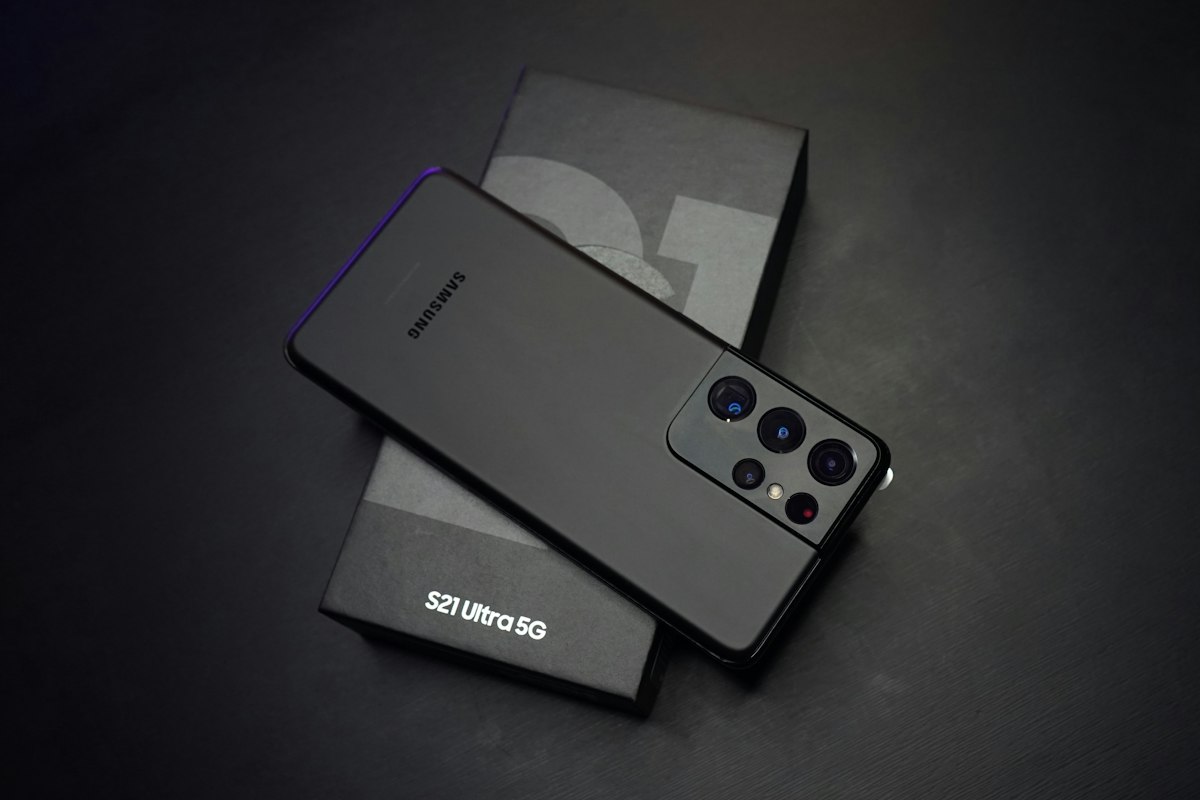
The Semiconductor Arms Race: Samsung s Exynos 2400 and Apple s A18 Bionic in the Global Smartphone Landscape
Introduction: A New Era of Mobile Computing
The smartphone industry has long been a battleground for technological supremacy, with Samsung and Apple at the forefront of innovation. As the world enters 2024, the release of the Galaxy S26 series powered by Samsung s in-house Exynos 2400 "Mooreland" chipset and Apple s rumored A18 Bionic chip for the iPhone 17 has reignited debates about performance, efficiency, and regional market dynamics. These advancements are not merely incremental upgrades but represent a strategic shift in how semiconductor design influences global consumer behavior, supply chain strategies, and the future of mobile computing. This article examines the technical, economic, and geopolitical implications of this rivalry, contextualizing the latest benchmarks within the broader narrative of smartphone evolution.
Historical Context: From ODMs to In-House Innovation
For much of the 2010s, Samsung relied on Qualcomm s Snapdragon chips for its Galaxy devices, a decision driven by cost efficiency and rapid time-to-market. However, the company s 2011 launch of the Exynos 4412 marked a pivotal shift toward in-house semiconductor development. By 2020, Samsung had overtaken Apple in global smartphone shipments, yet its Exynos chips lagged behind Apple s A-series in performance, particularly in single-core benchmarks and AI capabilities. Apple, in contrast, has maintained a closed ecosystem since the A6 chip in 2012, refining its custom silicon to optimize for iOS-specific workloads. This divergence in strategy Samsung s dual-path approach (Exynos for non-US markets, Snapdragon for the US) versus Apple s unified A-series has created a fragmented but dynamic market.
Recent data from Counterpoint Research underscores this trend: Samsung s Exynos chips now account for 38% of its Galaxy devices in 2024, up from 22% in 2022, reflecting both strategic necessity (avoiding Qualcomm s licensing fees) and technical progress. Meanwhile, Apple s A-series chips have consistently dominated the AnTuTu rankings since 2018, with the A17 Pro chip achieving 1.3 million points in 2023. The Exynos 2400 s rumored 940,000 AnTuTu score represents a 40% improvement over the Exynos 2300, signaling a narrowing gap.
Technical Deep Dive: Mooreland vs. A18 Bionic
The Exynos 2400 s "Mooreland" architecture introduces a 4nm process node with a 30% reduction in power consumption compared to its predecessor, according to Samsung s whitepaper. Early benchmarks from Geekbench 6 show a single-core score of 2,100 and multi-core score of 6,800, compared to the A18 Bionic s rumored 2,300 and 7,200. While Apple retains a 9% edge in single-core performance critical for tasks like app launches and multitasking Samsung s multi-core gains (10%) suggest a focus on parallel processing for gaming, video editing, and AI workloads.
Graphics performance, a key battleground for flagship devices, reveals a more pronounced shift. The Exynos 2400 s Mali-G11 GPU, paired with Samsung s Adaptive Thermal Management system, achieves 92% stability in the 3DMark Wildlife Stress Test over 30 minutes, versus the A18 Bionic s 88%. This 4% improvement is significant in regions like Southeast Asia, where mobile gaming constitutes 62% of smartphone usage (DataReportal, 2023). Samsung s thermal efficiency also reduces the risk of throttling during extended gaming sessions, a pain point for users of the Galaxy S23 Ultra in 2023.
AI capabilities further differentiate the two chips. The Exynos 2400 integrates a 3.5x faster Neural Processing Unit (NPU) than the Exynos 2300, enabling real-time object recognition and natural language processing. This aligns with Samsung s push into AI-driven photography (e.g., "Scene Optimizer 3.0") and productivity tools (e.g., S Pen integration). Apple s A18 Bionic, meanwhile, reportedly dedicates 15% of its transistors to AI, emphasizing on-device machine learning for features like Live Text and Photo Analysis. Both approaches reflect divergent philosophies: Samsung prioritizes hardware versatility for emerging AI use cases, while Apple focuses on seamless integration within its closed ecosystem.
Market Implications: Regional Strategies and Consumer Behavior
The rivalry between Exynos and Apple s A-series extends beyond technical metrics, shaping regional market strategies. Samsung s dual-chip approach Exynos for Europe, Asia, and the Middle East, Snapdragon for the US has allowed it to optimize for local regulations and consumer preferences. For instance, the Exynos 2400 s enhanced 5G modem (supporting 3GPP Release 17 standards) caters to markets like India, where sub-6GHz networks dominate, while Snapdragon s mmWave support remains crucial in the US.
Apple s reliance on a single chip architecture simplifies development but limits customization. The A18 Bionic s performance advantages in single-core tasks may appeal to enterprise users in North America, where productivity apps (e.g., Microsoft 365) are heavily utilized. However, in regions like South Korea and China, where gaming and social media drive smartphone adoption, Samsung s GPU and thermal efficiency could sway consumer choices. According to a 2023 JD.com survey, 72% of Chinese users cited gaming performance as a top purchase factor, a segment where the Exynos 2400 s 3DMark score provides a tangible edge.
Economically, Samsung s in-house chip production reduces dependency on external suppliers, a critical advantage in a post-pandemic supply chain environment. The company s 3nm process, set to debut in 2025, could further narrow the performance gap while lowering costs. Conversely, Apple s partnership with TSMC for A18 Bionic production ensures manufacturing consistency but exposes it to geopolitical risks, such as US-China trade tensions affecting TSMC s operations in Taiwan.
Broader Industry Impact: The Future of Mobile Semiconductors
The Exynos 2400 and A18 Bionic benchmarks are not isolated events but part of a larger trend toward hyper-optimized, AI-centric mobile processors. By 2026, Counterpoint predicts that 40% of flagship smartphones will feature dedicated NPUs, up from 12% in 2023. This shift will redefine user expectations, with real-time language translation, augmented reality, and personalized health monitoring becoming standard features.
Environmental considerations also come into play. Samsung s 4nm process reduces energy consumption by 22% compared to 5nm, aligning with the EU s Corporate Sustainability Reporting Directive (CSRD), which mandates environmental impact disclosures for tech firms. Apple s carbon-neutral roadmap by 2030, meanwhile, hinges on partnerships with renewable energy providers for its chip manufacturing partners. These initiatives suggest that sustainability will increasingly influence chipset design, with energy efficiency metrics becoming as critical as raw performance.
For smaller competitors like Xiaomi and Oppo, the Exynos 2400 s success may pressure them to invest in in-house R&D or risk obsolescence. Huawei s recent Ascend 3D chip, for example, leverages 7nm technology with AI-driven camera enhancements, indicating a broader industry move toward differentiated, region-specific solutions. This fragmentation could lead to a more diverse but complex ecosystem, where consumers must weigh performance, price, and regional support when purchasing devices.
Conclusion: A New Benchmark for Innovation
The Galaxy S26 s Exynos 2400 and the iPhone 17 s A18 Bionic represent more than a technical duel they are milestones in the evolution of mobile computing. Samsung s closing of the performance gap, particularly in multi-core and GPU tasks, challenges Apple s long-standing dominance while offering tailored solutions for regional markets. Meanwhile, Apple s focus on AI and ecosystem integration reinforces its appeal to enterprise and premium consumers. As the industry moves toward 3nm and beyond, the competition will likely extend into new frontiers: quantum computing, neuromorphic architectures, and ultra-low-power sensors for IoT applications. For consumers, this rivalry ensures a future where smartphones are not just communication tools but intelligent, adaptive platforms shaping work, entertainment, and daily life.