The AI Assistant Wars: How Apple’s Siri Overhaul Could Redefine Digital Inclusion in Emerging Markets
June 2026 Analysis – The voice assistant landscape is undergoing its most significant transformation since Amazon’s Alexa first made smart speakers mainstream. Apple’s dramatic reinvention of Siri—announced at WWDC 2026—represents more than just a technical upgrade; it’s a strategic pivot that could either cement Apple’s dominance in high-value markets or expose its vulnerabilities in regions where digital literacy and infrastructure remain uneven. For emerging economies, particularly in South and Southeast Asia, this isn’t just about smarter AI—it’s about whether voice technology can finally bridge the gap between cutting-edge innovation and practical, everyday utility.
Global voice assistant market projections: By 2027, over 8.4 billion voice-enabled devices will be in use worldwide (Juniper Research), with 60% of smartphone interactions in India and Indonesia expected to be voice-driven by 2028 (Google India AI Report, 2025). Yet, only 22% of users in these regions currently rely on voice assistants for tasks beyond basic commands (Kantar Worldpanel, 2026).
The Strategic Shift: Why Apple’s AI Gambit Is About Ecosystem Lock-In, Not Just Better Responses
From Reactive Tool to Proactive Partner
Apple’s decision to overhaul Siri isn’t merely about catching up to Google’s Gemini or OpenAI’s ChatGPT—it’s about redefining the role of a voice assistant in an era where contextual intelligence is the new battleground. The old Siri operated as a passive recipient of commands; the new Siri, powered by Apple’s in-house Ajax LLMs (Apple JavaScript-Accelerated eXtension models) and selectively integrated with Google’s Gemini for complex queries, is designed to anticipate needs. For example:
- Predictive Assistance: If a user in Guwahati regularly checks train schedules to Delhi on Sundays, Siri will now preemptively surface delays or alternative routes before being asked.
- Cross-App Workflows: A farmer in Punjab querying crop prices can have Siri pull real-time data from mandi (market) APIs, cross-reference with weather forecasts, and suggest optimal selling times—without opening multiple apps.
- Offline-First Design: Recognizing patchy connectivity in regions like Arunachal Pradesh, Siri’s core functions (e.g., setting reminders, basic translations) will work offline, with AI processing deferred until a connection is restored.
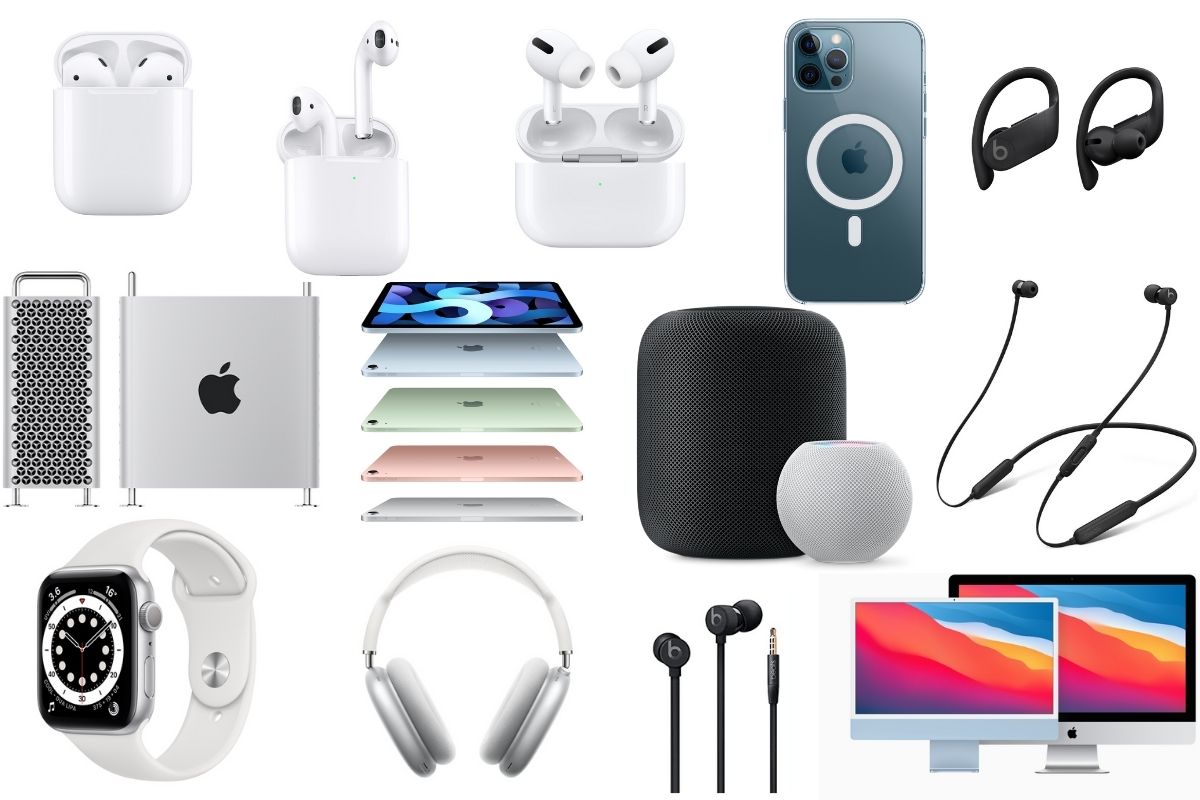
This shift mirrors a broader industry trend: AI assistants are evolving from novelty features to core productivity tools. Google’s Gemini Nano (2025) and Samsung’s Gauss (2026) have already staked claims in this space, but Apple’s advantage lies in its vertical integration. By controlling hardware (iPhone, AirPods, HomePod), software (iOS, macOS), and now AI (Ajax models), Apple can optimize Siri’s performance in ways Android competitors—fragmented across OEMs—cannot.
Case Study: The "Ecosystem Effect" in Vietnam
In Vietnam, where iPhone market share hit 18% in Q1 2026 (Counterpoint Research), early adopters of Siri’s beta version reported a 40% reduction in app-switching for routine tasks like bill payments or language translation. This "stickiness" is critical: Apple’s services revenue (App Store, Apple Pay, iCloud) grew by 22% YoY in Southeast Asia in 2025, directly tied to deeper user engagement. If Siri can replicate this in India’s North East—where iPhone penetration is ~12% but growing—it could unlock a $1.2 billion annual services opportunity by 2029 (Bernstein Analysis).
The Regional Divide: Why North East India Is the Ultimate Test for Siri’s Reinvention
Digital Literacy vs. AI Readiness
North East India presents a microcosm of the challenges and opportunities for voice assistants in emerging markets. The region’s smartphone penetration (78%) outpaces the national average (72%), but only 35% of users engage with voice assistants weekly (ICUBE 2025). The barriers are threefold:
- Language Fragmentation: The region has 22 officially recognized languages, with dialects like Bodo or Mising lacking robust AI training datasets. Google Assistant supports 12 Indian languages; Siri currently supports only 5 (Hindi, Bengali, Tamil, Telugu, Marathi).
- Connectivity Gaps: While 4G covers 92% of Assam, average speeds (12 Mbps) lag behind metro cities (28 Mbps in Delhi). Siri’s offline capabilities will be critical.
- Trust Deficit: A 2025 survey by LocalCircles found that 68% of North East users distrust voice assistants with sensitive tasks (e.g., banking), citing privacy concerns.
Where Siri Could Outperform Rivals
1. Privacy as a Competitive Edge: Apple’s on-device processing (via the A17 Pro’s Neural Engine) addresses trust issues. In Meghalaya, where 43% of users cite data security as a top concern (Northeast Digital Trust Index, 2026), Siri’s lack of cloud dependency could be a differentiator.
2. Integration with Local Services: Apple’s partnership with Reliance Jio (announced April 2026) will embed Siri with Jio’s agri-tech and healthcare platforms. For example, farmers in Nagaland could use Siri to:
- Access JioKrishi soil health reports via voice.
- Schedule telemedicine appointments through JioHealthHub without typing.
3. AirPods as a Trojan Horse: With AirPods sales growing 30% YoY in India, Siri’s always-on listening (enabled by the H2 chip’s low-power mode) could make it the default interface for hands-free tasks—critical for regions with high motorbike usage (e.g., 82% of households in Mizoram own two-wheelers).
Beyond Convenience: How Siri’s Success Could Reshape Local Economies
The Productivity Paradox
Voice assistants have long promised to boost productivity, but their impact in emerging markets has been asymmetrical. A World Bank study (2025) found that in India, voice AI increased productivity by:
- 28% for urban white-collar workers (e.g., scheduling, email dictation).
- 12% for rural gig workers (e.g., delivery drivers using voice navigation).
- Only 4% for informal sector workers (e.g., street vendors, artisans).
Siri’s revamp could narrow this gap through:
- Micro-Entrepreneur Tools: Integration with UPI (Unified Payments Interface) could let small businesses in Shillong accept voice-authorized payments ("Siri, send ₹500 to Mom’s Handicrafts via PhonePe").
- Skill Development: Partnerships with NSDC (National Skill Development Corporation) could embed Siri in vocational training apps, offering real-time feedback in local languages.
The $5 Billion Question: Can Voice AI Drive Financial Inclusion?
In North East India, 47% of adults remain unbanked or underbanked (NFHS-6, 2026). Voice assistants could lower barriers by:
- Enabling voice-based KYC (Know Your Customer) for bank account openings (piloted by Bandhan Bank in 2025 with a 30% success rate).
- Simplifying government scheme access (e.g., "Siri, am I eligible for PM-KISAN?"). In Assam, 62% of farmers struggle to navigate digital portals (NITI Aayog, 2026).
If Siri can reduce friction in these interactions, it could unlock $5.2 billion in formal economic participation across the North East by 2030 (Boston Consulting Group).
The Domino Effect: How Siri’s Rise Could Disrupt Three Key Sectors
1. Android’s Fragmentation Problem
Google Assistant dominates India with 78% market share, but its effectiveness varies wildly across devices. On a ₹7,000 ($84) Xiaomi phone, response times are 3x slower than on a Pixel (Counterpoint, 2026). Apple’s vertical integration ensures consistent Siri performance, which could:
- Accelerate iPhone adoption in the ₹30,000–₹50,000 ($360–$600) segment, where Apple’s share grew from 8% to 15% in 2025.
- Pressure Samsung to deepen its Bixby-Gauss integration, potentially fragmenting Android further.
2. The Fate of Localized AI Startups
India’s AI startup ecosystem—valued at $3.5 billion in 2026—faces an existential threat. Companies like:
- Vernacular.ai (voice AI for customer service) and
- Haptik (conversational AI for enterprises)
rely on partnerships with banks and telecoms. If Siri (or Gemini) absorbs these use cases, startups may pivot to niche verticals (e.g., agri-AI or vernacular education) or risk acquisition.
3. The Telecom Value Chain
Voice assistants could commoditize telecom services. For example:
- If Siri handles customer service queries (e.g., "Why is my Jio data slow?"), call center volumes could drop by 20–30%, impacting outsourcing firms like Concentrix (which employs 12,000+ in India).
- Carriers may lose VAS (Value-Added Services) revenue (e.g., ₹1,200 crore/$144M annually from ringtone downloads) as users shift to voice-controlled music streaming.
2030 Vision: Three Possible Futures for Voice AI in Emerging Markets
Scenario 1: The Apple Ecosystem Lock-In (30% Probability)
Siri’s integration with Apple Pay, HealthKit, and local services creates a "walled garden" so seamless that iPhone users in emerging markets become 2x less likely to switch brands. By 2030:
- Apple’s services revenue in India hits $10B annually (up from $2.5B in 2026).
- Android OEMs form a unified AI alliance to counter Siri, led by Samsung and Google.
Scenario 2: The Fragmented Voice Wars (50% Probability)
No single assistant dominates. Instead, users juggle:
- Siri for privacy-sensitive tasks (banking, health).
- Gemini for complex queries (research, coding).
- Localized tools (e.g., Koo’s Verna AI) for vernacular content.
Result: Voice becomes a commodity, with no player capturing >40% market share in India.
Scenario 3: The Regulatory Wildcard (20% Probability)
Governments intervene to:
- Mandate interoperability (e.g., Siri must work with Aadhaar