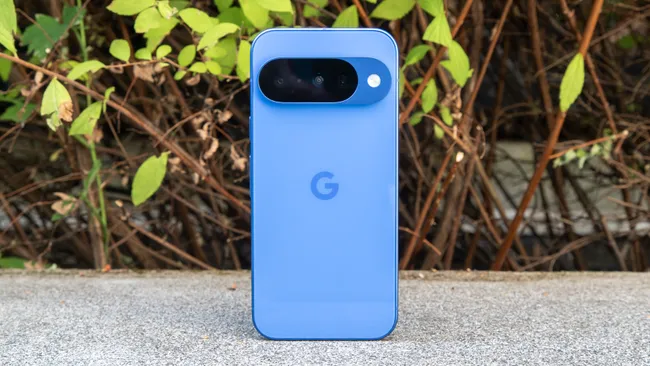
Google Pixel 10a: A Strategic Shift in Mid-Range Smartphone Innovation
Introduction: The Evolution of Mid-Range Smartphone Strategies
The smartphone industry has long been a battleground for technological innovation, with flagship devices setting the pace for advancements in hardware, software, and design. However, the mid-range segment—devices priced between $300 and $600—has emerged as a critical arena for market share and consumer loyalty. Google’s rumored Pixel 10a, a potential rebranded iteration of the Pixel 9a, exemplifies a broader industry trend: the prioritization of cost efficiency over radical innovation. This shift reflects not only Google’s strategic recalibration but also the challenges of sustaining growth in a market where consumer expectations outpace technological progress. For regions like North East India, where affordability and accessibility are paramount, the Pixel 10a’s design and marketing strategy offer a window into the future of mobile technology adoption.
Market Context: The Stagnation of Mid-Range Innovation
The mid-range smartphone market has seen diminishing returns on investment for manufacturers. According to Counterpoint Research, global mid-range smartphone shipments declined by 12% in Q2 2023 compared to the same period in 2022, with brands like Samsung, Xiaomi, and Google struggling to differentiate their offerings. This stagnation is driven by two factors: the commoditization of hardware and the rising cost of R&D. For instance, the Pixel 9a’s design—featuring a flat back, dual-lens camera bump, and IP68 water resistance—mirrors the aesthetics of flagship models from 2021. By rebranding this design for the 10a, Google avoids the financial burden of redesigning components while maintaining a familiar user experience.
This strategy is not unique to Google. In 2023, Xiaomi’s Redmi Note 12 series reused the same Snapdragon 695 chipset across three models, varying only in storage configurations and color options. Similarly, Samsung’s Galaxy A-series has adopted a “yearly refresh” model, with incremental upgrades in camera software and battery life. These approaches underscore a pragmatic response to market saturation: rather than investing in disruptive features, manufacturers focus on optimizing existing technologies to meet budget constraints.
Design and Specifications: A Case Study in Cost Optimization
Leaked renders of the Pixel 10a reveal a device nearly identical to the Pixel 9a, with only minor adjustments to color options and potential chipset upgrades. The EU Energy Label, a key source of technical data, confirms an IP68 rating, a 1,000-cycle battery (retaining 80% capacity after 1,000 charges), and a “drop rating of A” (suggesting improved durability). While these specifications align with the 9a’s profile, the absence of a Tensor G5 chipset—Google’s latest AI-optimized processor—raises questions about the company’s commitment to mid-range innovation.
Historically, Google has leveraged its Pixel line to showcase cutting-edge features, such as computational photography and on-device AI. The Pixel 9a, however, marked a departure from this ethos. Its dual-lens camera system, while capable, lacks the 50MP sensors and periscope zoom found in flagship models. Instead, the device focuses on software enhancements, such as Magic Eraser and Live Translate, to justify its price point. This shift reflects a broader industry trend: the decoupling of hardware and software innovation. For example, the Pixel 9a’s camera software, powered by Google’s AI models, outperforms many flagship devices in low-light conditions, even with lower-resolution sensors.
Regional Implications: North East India and the Mid-Range Divide
In regions like North East India, where smartphone penetration is still growing, the Pixel 10a’s strategy could have significant implications. According to a 2023 report by Statista, only 35% of households in the region own a smartphone, compared to 82% in urban centers. Affordability remains a key barrier, with the average smartphone price in the region hovering around $250. The Pixel 10a’s potential $400 price point positions it as a premium option, but its design and feature set may not justify the cost for price-sensitive consumers.
Local competitors like Realme and Poco have capitalized on this gap by offering devices with flagship-like features at lower prices. The Realme 11 Pro, for instance, includes a 64MP primary camera and a 120Hz AMOLED display for $300, directly challenging the Pixel 10a’s value proposition. Moreover, the rise of e-commerce platforms like Flipkart and Amazon has intensified price competition, forcing manufacturers to prioritize cost-cutting over innovation. In this context, Google’s rebranded approach risks alienating consumers who expect tangible improvements for their investment.
Broader Industry Trends: The Future of Mid-Range Strategy
The Pixel 10a’s potential launch highlights a paradigm shift in smartphone manufacturing. As R&D costs rise—flagship phones now require over $1 billion in development, according to a 2022 Gartner report—companies are increasingly adopting a “platform-as-a-service” model. This involves reusing hardware designs across multiple product lines while differentiating through software and ecosystem integration. Google’s reliance on Android One and its focus on AI-driven features exemplify this approach, but it also raises concerns about long-term sustainability.
One critical challenge is the erosion of brand loyalty. A 2023 survey by Deloitte found that 68% of consumers in emerging markets prioritize hardware upgrades over software features when choosing a smartphone. If the Pixel 10a fails to deliver visible improvements, it risks being perceived as a “me-too” product, undermining Google’s reputation for innovation. Conversely, the strategy could succeed if Google leverages its ecosystem advantages, such as seamless integration with Google Assistant, Google Photos, and Android Auto, to create a cohesive user experience.
Conclusion: Balancing Affordability and Innovation
The Pixel 10a represents a microcosm of the smartphone industry’s evolving priorities. In a market where hardware innovation has plateaued, manufacturers are turning to cost optimization and software differentiation to maintain competitiveness. For Google, this strategy aligns with its broader vision of AI-driven mobile experiences but risks alienating consumers who expect tangible value for their money. In regions like North East India, where affordability is a key driver, the success of the Pixel 10a will depend on its ability to balance cost efficiency with meaningful feature upgrades.
Looking ahead, the mid-range segment may become a testing ground for emerging technologies such as AI-powered cameras, foldable displays, and modular hardware. Companies that can integrate these innovations without inflating prices will likely dominate the market. For now, the Pixel