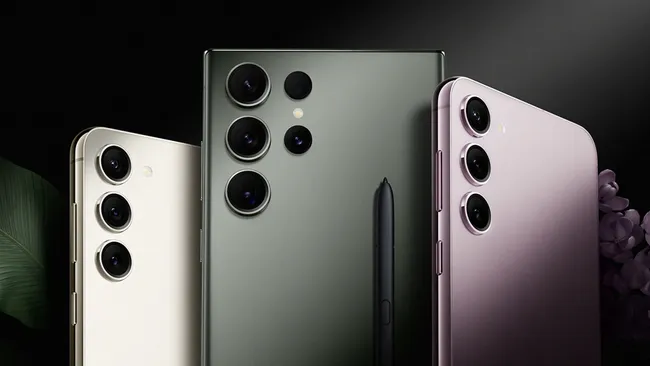
The AI Camera Revolution: A Paradigm Shift in Mobile Photography
Introduction
The evolution of mobile photography has been nothing short of revolutionary. From the early days of grainy, low-resolution images to the current era of high-definition, professional-grade photographs, the journey has been marked by significant technological advancements. Among these, the integration of Artificial Intelligence (AI) in camera systems stands out as a game-changer. This article delves into the AI camera revolution, focusing on the Vivo X300 Pro and Samsung Galaxy S26 Ultra, and explores the broader implications and regional impact of this technological shift.
Main Analysis: The AI Camera Revolution
The Evolution of Mobile Photography
Mobile photography has come a long way since the first camera phone, the Sharp J-SH04, was introduced in 2000. The initial cameras were rudimentary, offering low resolution and limited functionality. However, as smartphones became more powerful and ubiquitous, so did their camera capabilities. The introduction of high-resolution sensors, optical image stabilization, and advanced lenses has transformed mobile phones into viable alternatives to traditional cameras.
The real turning point, however, came with the integration of AI. AI-powered cameras can analyze scenes in real-time, adjust settings automatically, and even enhance images post-capture. This has led to a significant improvement in photo quality, making mobile photography more accessible and convenient than ever before.
The Role of AI in Modern Camera Systems
AI in camera systems serves multiple purposes. It can recognize scenes and objects, adjust settings like exposure and white balance, and even suggest compositions. For instance, the Vivo X300 Pro uses AI to optimize portrait mode, ensuring that subjects are sharply focused while the background is beautifully blurred. Similarly, the Samsung Galaxy S26 Ultra employs AI to enhance low-light photography, making it possible to capture clear, detailed images even in dimly lit environments.
Moreover, AI can also be used for post-processing. Features like AI-powered noise reduction, color correction, and image enhancement can significantly improve the final output. This is particularly useful for amateur photographers who may not have the skills or tools to edit their photos manually.
Examples: Vivo X300 Pro vs Galaxy S26 Ultra
Vivo X300 Pro: Pushing the Boundaries of AI Photography
The Vivo X300 Pro is a testament to the potential of AI in mobile photography. Equipped with a quad-camera setup, including a 64MP primary sensor, the device uses AI to enhance every aspect of photography. The AI portrait mode, for instance, uses advanced algorithms to distinguish between the subject and the background, creating a professional-grade bokeh effect. Additionally, the AI night mode combines multiple exposures to produce bright, clear images in low-light conditions.
Vivo's AI capabilities extend beyond still photography. The X300 Pro also offers AI-powered video stabilization, ensuring smooth, steady footage even when shooting handheld. This is particularly useful for content creators who rely on their smartphones for vlogging and social media content.
Samsung Galaxy S26 Ultra: Innovation in AI Camera Technology
Samsung has long been at the forefront of camera innovation, and the Galaxy S26 Ultra is no exception. The device features a 108MP primary sensor, supported by AI-powered features that enhance every shot. The AI scene optimizer, for instance, can recognize up to 30 different scenes and adjust settings accordingly. This ensures that whether you're shooting a landscape, a portrait, or a close-up, the camera is always optimized for the best results.
One of the standout features of the Galaxy S26 Ultra is its AI-powered zoom. The device combines optical and digital zoom with AI enhancements to produce clear, detailed images even at high zoom levels. This is a significant advantage for wildlife and sports photographers who often need to capture subjects from a distance.
Broader Implications and Regional Impact
The Democratization of Photography
The AI camera revolution has democratized photography, making high-quality imaging accessible to a broader audience. Traditionally, professional-grade photography required expensive equipment and specialized skills. However, with AI-powered smartphones, anyone can capture stunning images with minimal effort. This has led to a surge in user-generated content, with platforms like Instagram and TikTok benefiting from the influx of high-quality visuals.
The democratization of photography has also had a significant impact on industries like journalism and marketing. Citizen journalists can now document events with professional-grade images, while marketers can create high-quality content without the need for expensive photo shoots. This shift has leveled the playing field, allowing smaller players to compete with established brands.
Regional Impact: Asia and Beyond
The AI camera revolution has had a profound impact on the Asian market, where smartphone penetration is high, and consumers are tech-savvy. Countries like China, South Korea, and India have seen a surge in demand for AI-powered smartphones. According to a report by Counterpoint Research, the smartphone market in Asia-Pacific is expected to grow at a CAGR of 5.7% from 2021 to 2026, driven largely by the demand for advanced camera features.
Beyond Asia, the impact is also felt in other regions. In Europe and North America, the AI camera revolution has led to a shift in consumer preferences. A study by Deloitte found that camera quality is now the second most important factor for consumers when choosing a smartphone, after battery life. This has prompted manufacturers to invest heavily in camera technology, leading to a race for innovation.
Economic Implications
The AI camera revolution has significant economic implications. The global smartphone camera module market is expected to reach $35.2 billion by 2026, growing at a CAGR of 7.8% from 2021 to 2026, according to a report by MarketsandMarkets. This growth is driven by the increasing demand for high-resolution cameras and AI-powered features.
Moreover, the AI camera revolution has also created new job opportunities. The demand for AI engineers, data scientists, and camera specialists has surged, leading to the creation of high-skilled jobs. This has a positive impact on the economy, contributing to job growth and innovation.
Conclusion
The AI camera revolution, exemplified by devices like the Vivo X300 Pro and Samsung Galaxy S26 Ultra, represents a significant shift in mobile photography. By integrating AI into camera systems, manufacturers have made high-quality imaging accessible to a broader audience, democratizing photography and leveling the playing field. The impact of this revolution is felt globally, with significant economic and regional implications. As the technology continues to evolve, we can expect even more innovative features and capabilities, further enhancing the mobile photography experience.