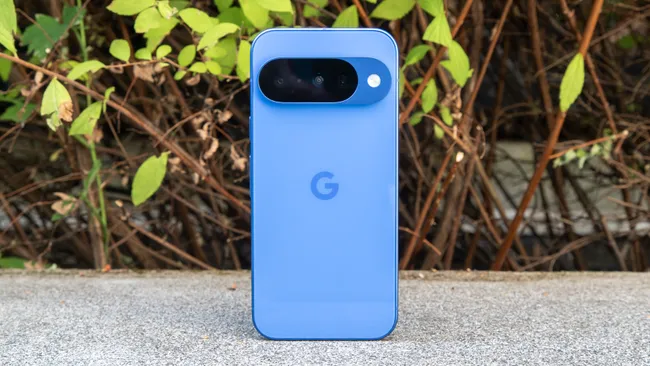
The Foldable Smartphone Wars: How Google’s Pricing Strategy Could Reshape the Premium Market
By Connect Quest Artist | Senior Technology Analyst
Introduction: The Foldable Market at a Crossroads
The foldable smartphone segment has evolved from a niche experiment to a battleground for tech supremacy, with Google’s recent pricing maneuvers for the Pixel Fold (marketed in some regions as the Pixel 10 Pro Fold) serving as the latest volley in this high-stakes competition. What began as a Samsung-dominated category in 2019—with the Galaxy Fold priced at an eye-watering $1,980—has now become a litmus test for how premium innovation can scale. Google’s decision to aggressively discount its first-generation foldable device via Amazon isn’t just a tactical retail move; it’s a strategic gambit that could redefine consumer expectations, OEM profit margins, and the very trajectory of the foldable market.
To understand the implications, we must first contextualize the foldable market’s growth. According to Counterpoint Research, global foldable smartphone shipments surged by 155% year-over-year in 2023, reaching 16.5 million units. Yet, despite this growth, foldables still represent just 1.5% of the total smartphone market. The barrier? Price. With average selling prices (ASPs) hovering around $1,200–$1,800, foldables remain inaccessible to the mass market. Google’s pricing strategy—slashing the Pixel Fold’s cost by as much as 30% within months of launch—could either democratize the category or trigger a race to the bottom that stifles innovation.
Global Foldable Smartphone Market (2023–2027)
27.6M
Projected shipments by 2025 (IDC)
155% YoY growth in 2023 (Counterpoint)
The Pixel Fold’s Pricing Paradox: Premium Innovation at a Discount
Google’s Pixel Fold launched in June 2023 at $1,799, positioning it as a direct competitor to Samsung’s Galaxy Z Fold 5 ($1,799) and Huawei’s Mate X3 (~$2,500). However, by October 2023, the device was available on Amazon for as low as $1,259—a 29% discount—raising questions about Google’s long-term strategy. Was this a fire sale to clear inventory, or a calculated move to undercut Samsung’s dominance?
The Three Layers of Google’s Pricing Strategy
- Market Penetration: Google lacks Samsung’s supply chain efficiencies or Huawei’s vertical integration. By lowering prices, it can attract cost-conscious early adopters who might otherwise opt for a refurbished Galaxy Z Fold 4.
- Ecosystem Lock-in: The Pixel Fold is a Trojan horse for Google’s AI-driven services (e.g., Tensor G3 chip optimizations for Google Assistant, Call Screen, and Magic Eraser). A lower entry price could accelerate user migration to Google’s ecosystem.
- OEM Pressure: If Google sustains aggressive pricing, it forces Samsung and Huawei to either match discounts (eroding margins) or justify premium pricing through hardware innovations (e.g., under-display cameras, rollable screens).
Price Comparison (October 2023):
- Google Pixel Fold: $1,259 (Amazon) | Original: $1,799
- Samsung Galaxy Z Fold 5: $1,799 (no major discounts)
- Huawei Mate X3: ~$2,500 (limited global availability)
- Oppo Find N3 Flip: $1,199 (aggressive pricing from day one)
Source: Amazon, retailer listings, GSMArena
The Risks of a Price War
While discounts may boost short-term sales, they risk commoditizing foldables before the technology matures. Consider the tablet market: Apple’s iPad dominated with premium pricing until Amazon’s $199 Fire Tablet (2011) redefined expectations. Today, the tablet market is stagnant, with ASPs below $400. If foldables follow a similar trajectory, OEMs may lack incentives to invest in R&D for next-gen form factors (e.g., tri-fold screens, self-healing polymers).
Moreover, Google’s discounts could alienate carriers. Verizon and AT&T heavily subsidize flagship phones to lock users into 36-month contracts. If Google undercuts carrier pricing, it may face pushback—similar to how OnePlus struggled to gain carrier support in the U.S. after its "flagship killer" pricing strategy.
Regional Implications: Who Wins (and Loses) in a Discounted Foldable Market?
The impact of Google’s pricing strategy varies dramatically by region, influenced by local income levels, carrier dynamics, and competitive landscapes.
United States: The Carrier Conundrum
In the U.S., 70% of smartphones are sold through carriers (Statista). Google’s Amazon discounts bypass this channel, which could:
- Benefit consumers: Unlocked Pixel Folds at $1,259 are cheaper than carrier-locked Galaxy Z Fold 5s ($1,799 + taxes/fees).
- Hurt Google’s carrier relationships: AT&T and Verizon may deprioritize Pixel promotions if Google undercuts their subsidized pricing.
- Accelerate unlocked phone adoption: If foldables lead the unlocked trend, it could disrupt the carrier-subsidy model that has defined U.S. smartphone sales for a decade.
Data Point: Only 28% of U.S. consumers bought unlocked phones in 2022 (CIRP). Foldables could change this.
Europe: The Huawei Wildcard
In Europe, Huawei’s Mate X3 dominates the foldable market despite U.S. sanctions, thanks to aggressive pricing in China and strong brand loyalty. Google’s discounts could:
- Pressure Huawei: The Mate X3 retails for ~€2,000 in Europe. A €1,300 Pixel Fold could lure consumers away from Huawei’s ecosystem.
- Boost Google’s hardware market share: Google holds just 2% of the European smartphone market (Kantar), compared to Samsung’s 30%. Foldables could be a wedge.
- Trigger regulatory scrutiny: If Google’s pricing is seen as predatory, the EU (which has fined Google €8.25 billion since 2017 for antitrust violations) may investigate.
Asia-Pacific: The Oppo and Vivo Threat
In markets like India and Southeast Asia, Oppo and Vivo dominate the affordable foldable segment with devices like the Find N2 Flip ($899) and Vivo X Fold 2 ($1,299). Google’s discounts could:
- Cannibalize mid-range foldables: A $1,259 Pixel Fold undercuts Oppo/Vivo’s premium offerings, forcing them to compete on price rather than features.
- Limit local innovation: If Google and Samsung squeeze margins, regional players may abandon foldables entirely, as LG did in 2021 after its Rollable phone flopped.
- Accelerate the "China vs. Rest" divide: Huawei, Oppo, and Xiaomi already enjoy 60%+ market share in Asia (IDC). Google’s discounts may not dent their dominance.
Broader Industry Implications: Beyond the Fold
The Pixel Fold’s pricing isn’t just about foldables—it’s a microcosm of larger shifts in the tech industry:
1. The Death of the $2,000 Smartphone?
For years, OEMs have pushed ASPs higher with incremental upgrades (e.g., 108MP cameras, 120Hz screens). Foldables were the next frontier, but Google’s discounts suggest even premium form factors aren’t immune to price sensitivity. If foldables fail to command $1,500+ prices, OEMs may:
- Shift to subscription models (e.g., $50/month for a phone + services).
- Accelerate modular designs (e.g., swappable cameras, batteries) to justify higher costs.
- Abandon foldables entirely, as Microsoft did with the Surface Duo after poor sales.
2. The Rise of the "Good Enough" Foldable
Google’s Tensor G3 chip lags behind Qualcomm’s Snapdragon 8 Gen 2 in benchmarks, yet the Pixel Fold’s discounts position it as a "good enough" alternative to Samsung’s flagship. This mirrors the Android vs. iPhone dynamic, where Google’s software optimizations (e.g., AI photo processing) compensate for hardware gaps. If successful, this could:
- Encourage OEMs to prioritize software-driven differentiation over hardware specs.
- Lead to a two-tier foldable market: premium (Samsung/Huawei) and value (Google/Oppo).
- Reduce R&D spending on "moonshot" features (e.g., under-display cameras) in favor of cost-cutting.
3. The Carrier vs. OEM Power Struggle
Google’s direct-to-consumer discounts on Amazon bypass carriers, which historically controlled smartphone pricing. This could:
- Weaken carrier influence: If OEMs sell more unlocked phones, carriers lose leverage in negotiations (e.g., preloaded bloatware, exclusive models).
- Trigger retaliation: Carriers may deprioritize Pixel updates or offer worse trade-in values, as T-Mobile did with OnePlus in 2020.
- Accelerate eSIM adoption: Unlocked foldables pair well with eSIMs, reducing carrier stickiness. Google’s Pixel-exclusive eSIM features (e.g., dual-SIM 5G) could hasten this shift.
4. The Environmental Cost of Discounted Premium Devices
Foldables are resource-intensive, requiring 3x more rare earth metals than traditional smartphones (Greenpeace). If price cuts drive higher turnover rates, the e-waste crisis could worsen. Google’s discounts may:
- Incentivize shorter upgrade cycles, contradicting its "Made by Google" sustainability pledges.
- Pressure OEMs to use recycled materials (e.g., Samsung’s Galaxy S23’s ocean-bound plastics) to offset margin compression.
- Lead to regulatory backlash, as the EU’s "Right to Repair" laws (2024) target planned obsolescence.
Case Study: Lessons from the Tablet Market’s Collapse
The foldable market’s trajectory bears eerie similarities to the tablet sector’s rise and fall. In 2010, Apple’s iPad launched at $499, creating a new category. By 2013, Amazon’s $199 Fire Tablet and Google’s $299 Nexus 7 had slashed prices, leading to:
- Commoditization: ASPs fell from $499 to $250 by 2016 (IDC).
- Stagnation: Global tablet shipments declined 30% from 2014–2022.
- Profit erosion: Samsung exited the Android tablet market in 2021; only Apple’s iPad Pro segment remains profitable.
If foldables follow