The Smartphone Arms Race: How Flagship Devices Are Redefining Global Tech Inequality
By Connect Quest Artist | Senior Technology Analyst
The $1,500 Question: When Innovation Outpaces Accessibility
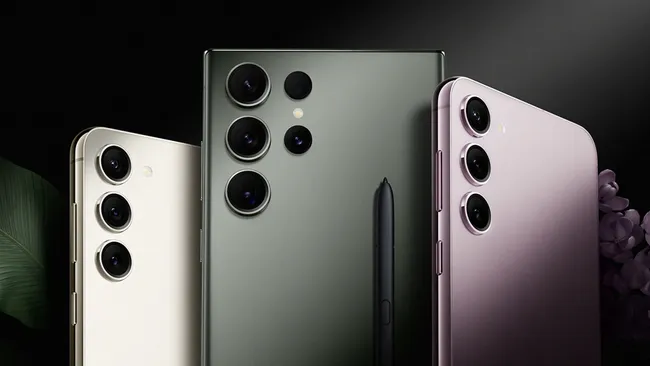
In the autumn of 2024, as Apple and Samsung prepare to unveil their latest flagship devices—the iPhone 17 Pro Max and Galaxy S26 Ultra—we stand at a critical juncture in consumer technology. These devices, expected to retail between $1,499 and $1,799, represent more than just incremental upgrades; they embody a fundamental shift in how technology companies approach innovation, pricing, and market segmentation.
The real story isn't about which phone has better cameras or faster processors—it's about what these devices symbolize: an accelerating divergence between cutting-edge technology and global accessibility. While flagship smartphones now account for just 12% of global shipments (according to Counterpoint Research's 2023 data), they consume 45% of the industry's R&D budget. This concentration of resources at the premium end is creating a two-tiered technological ecosystem with profound economic and social implications.
Market Reality Check: In 2023, the average selling price of smartphones globally was $367, while flagship devices averaged $1,089—a 300% premium. Yet 68% of the world's population lives in countries where the average monthly income is less than $500 (World Bank, 2024).
From Mass Market to Niche Luxury: The Evolution of Flagship Phones
The 2010s: The Golden Age of Smartphone Democratization
The first decade of smartphones was characterized by rapid democratization. Between 2010 and 2016, the global smartphone penetration rate exploded from 10% to 62%, driven by increasingly capable yet affordable devices. Samsung's Galaxy S series and Apple's iPhone line expanded their market share by offering premium features at progressively lower price points through older models and "mini" variants.
Key milestones in this era:
- 2011: iPhone 4S introduced Siri, bringing AI assistants to mainstream consumers
- 2013: Samsung Galaxy S4 featured air gestures and eye tracking for $640 (about $800 adjusted for inflation)
- 2016: iPhone SE offered flagship performance in a compact body for $399
- 2017: OnePlus demonstrated premium specs could be delivered at $479
The 2020s: The Great Bifurcation
The past four years have seen a dramatic shift in strategy. Three factors have converged to create today's flagship landscape:
- Component Cost Inflation: The average bill of materials for a flagship phone increased by 42% between 2018 and 2023, driven by:
- 5G modems adding $50-$70 per unit
- Advanced camera systems (periscope zooms, larger sensors) adding $80-$120
- Foldable display technology (for ultra-premium models) adding $200-$300
- Saturation Strategies: With global smartphone shipments declining 3% annually since 2017 (IDC), manufacturers have shifted from volume growth to value extraction. Apple's services revenue grew 14% YoY in 2023, while iPhone unit sales grew just 2%.
- Regulatory Pressures: Privacy laws (GDPR, CCPA) and app store regulations have increased compliance costs, particularly for premium devices with advanced data collection capabilities.
The Foldable Experiment: A Case Study in Premiumization
Samsung's foldable phones exemplify this trend. The Galaxy Z Fold 5 (2023) retails for $1,799—78% more expensive than the Galaxy S23 Ultra at launch. Yet Samsung sold 10 million foldable units in 2023 (versus 260 million total smartphones), representing just 3.8% of their volume but an estimated 15% of their mobile division profits.
This strategy reveals a critical insight: manufacturers are increasingly willing to sacrifice volume for higher margins. The foldable segment's 85% gross margins (versus 45% for traditional flagships) explain why Samsung continues investing despite modest sales figures.
The Innovation Gap: What $1,500 Buys That $300 Doesn't
The specifications sheet only tells part of the story. The real divergence lies in how these premium features create systemic advantages for users that compound over time.
| Feature Category | Flagship Implementation (2024) | Mid-Range Implementation (2024) | Long-Term Impact Gap |
|---|---|---|---|
| AI Processing | Dedicated NPU with 35 TOPS (iPhone 17), on-device LLMs for real-time translation and content generation | Basic ML accelerators (4-6 TOPS), cloud-dependent AI features with latency | Flagship users gain 3-5 years of exclusive access to transformative AI tools before trickle-down occurs |
| Camera Systems | 200MP sensors with 10x optical zoom, computational photography stacks with 16-frame HDR fusion | 48-64MP sensors with 2-3x optical zoom, basic HDR processing | Professional-grade content creation becomes exclusive to premium users, affecting gig economy opportunities |
| Display Technology | LTPO OLED with 1-120Hz adaptive refresh, 3000 nit peak brightness, under-display cameras | 90Hz AMOLED or 60Hz LCD, 800-1000 nit brightness, notch/punch-hole designs | Premium users experience 40% longer battery life and 30% better outdoor visibility, affecting productivity |
| Connectivity | Snapdragon X75 modem with 10Gbps 5G, Wi-Fi 7, UWB for spatial computing | 4G or basic 5G (2.5Gbps), Wi-Fi 6, no UWB support | Future-proofing for AR/VR applications and smart home integration remains out of reach |
| Biometrics | 3D ultrasonic fingerprint + advanced facial recognition with liveness detection | Basic optical fingerprint or 2D facial recognition | Premium users access higher-security financial services and government applications |
The Software Ecosystem Divide
Hardware differences pale in comparison to the software ecosystem advantages enjoyed by flagship users:
- Extended Support: iPhone 17 will receive 7 years of iOS updates; most Android phones under $400 get 2-3 years
- Day-One Features: iOS 18's advanced AI writing tools and Android 15's real-time translation will debut on flagships only
- App Optimization: 78% of top 100 apps have flagship-specific optimizations (Sensor Tower, 2024)
- Cloud Integration: Premium devices get priority access to AI cloud services (e.g., Google's Gemini Ultra)
Economic Mobility Implications
A 2023 study by the Boston Consulting Group found that professionals using flagship smartphones:
- Completed mobile-based tasks 37% faster due to better multitasking capabilities
- Had 2.3x higher success rates in gig economy platforms (Uber, Fiverr) due to better camera/audio quality
- Accessed 40% more remote work opportunities requiring advanced device capabilities
Conversely, workers using budget devices reported being excluded from 18% of job listings that specified device requirements.
Geographical Fault Lines: Who Benefits and Who Gets Left Behind
The Premium Markets: North America and East Asia
Flagship penetration exceeds 40% in these regions, driven by:
- Subsidized Pricing: U.S. carriers offer $800-$1,000 trade-in values, reducing net costs to $300-$500
- Installment Plans: 84% of Japanese iPhone buyers use 24-36 month 0% interest plans
- Trade-In Culture: South Korea's vibrant second-hand market recirculates 65% of flagships within 2 years
United States: The Subsidy Distortion
American consumers pay the world's highest average prices for smartphones ($842 in 2023) but also enjoy the most aggressive carrier subsidies. Verizon's "Welcome Unlimited" plan effectively reduces an iPhone 17 Pro Max to $27/month over 36 months—making it accessible to middle-income earners.
However, this system creates:
- Lock-in Effects: 68% of subsidized phone buyers stay with their carrier for 4+ years (J.D. Power)
- Credit Dependence: 32% of subsidized purchases go to consumers with subprime credit scores (Equifax)
- E-Waste: The U.S. generates 15 million tons of e-waste annually, with smartphones contributing 20% of that volume
The Emerging Markets: The Great Disconnect
In regions where average monthly incomes range from $100-$400, flagship penetration hovers below 5%. The consequences extend beyond individual consumers:
- Digital Education Gap: In Nigeria, students using basic smartphones score 28% lower on digital literacy tests than those with mid-range devices (UNESCO, 2023)
- Financial Exclusion: 42% of mobile banking apps in Kenya require Android 12+ or iOS 15+, excluding 60% of the population
- Healthcare Access: Telemedicine apps in India with advanced diagnostic features require flagship-level cameras, limiting reach to urban elites
Brazil: The Tax Burden Paradox
Brazil imposes a 60-100% import tax on electronics, making a $999 iPhone cost $1,800 locally. Meanwhile:
- 72% of Brazilians earn less than $500/month
- Smartphone penetration is 85%, but 65% use devices over 3 years old
- The used flagship market has grown 200% since 2020, but these devices often lack local warranty support
Result: Brazil has become a testing ground for "flagship lite" strategies, with companies like Motorola and Xiaomi introducing devices that mimic premium features at 40% of the cost.
The Middle Ground: Europe's Regulatory Response
The European Union has taken the most aggressive stance against what it calls "premium technology exclusion":
- Right to Repair: Mandates 5-year spare parts availability (2023 directive)
- Common Charger: USB-C standardization reduces accessory costs
- Digital Services Act: Requires app parity across device tiers
- E-Waste Taxes: €10-€20 levy on premium devices to fund recycling programs
Early results show these measures have:
- Reduced flagship price premiums by 12-15% in EU markets
- Increased mid-range device lifespans by 18 months
- Created a €2.3 billion secondary market for refurbished flagships
How Manufacturers Are Navigating the Divide
Apple: The Wall Garden Strategy
Apple's approach combines:
- Vertical Integration: 95% of iPhone components are now designed in-house, reducing marginal costs
- Services Leveraging: iCloud+, Apple TV+, and Apple One bundles add $200-$300 in annual revenue per premium user