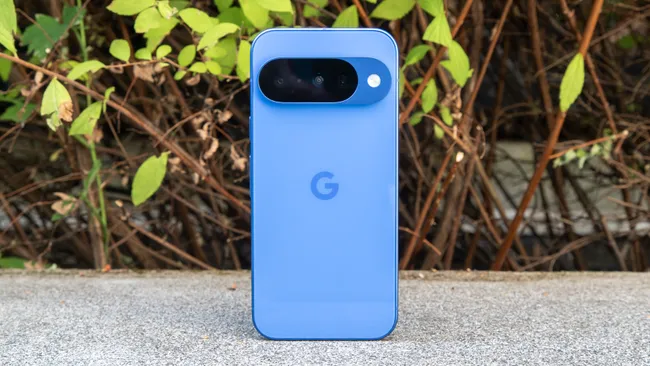
The Evolution of Ambient Displays: Google Pixel's Background Feature and the Case for a Dedicated App
In the ever-evolving landscape of smartphone design, user interface (UI) innovations have become a critical battleground for tech giants. Among the most transformative features in recent years is the ambient display—a technology that transforms a phone’s screen into an interactive canvas for notifications, art, and contextual information. Google’s Pixel series has been at the forefront of this trend, integrating advanced background features that balance aesthetics, functionality, and energy efficiency. However, as user expectations for personalization and control grow, a key debate has emerged: should these ambient display capabilities remain embedded within system settings, or does the feature warrant a standalone app to unlock deeper customization? This article examines the technical, usability, and market implications of this question, drawing on historical context, industry benchmarks, and real-world user behavior to explore the future of ambient display design.
Historical Context: From Passive Displays to Interactive Canvases
The concept of ambient displays dates back to the early 2010s, when smartphones began incorporating always-on screens to show time, battery levels, and basic notifications. Samsung’s Galaxy S4 (2013) popularized the "Always On" feature, while LG’s G Watch (2014) demonstrated how circular displays could serve as minimalist information hubs. These early implementations prioritized battery conservation, often relying on low-power AMOLED panels to minimize energy drain. By 2017, Apple’s iPhone X introduced a more sophisticated approach with its "Always-On Display" (AOD) in iOS 16, blending dynamic wallpapers with contextual widgets.
Google’s Pixel series, however, has taken a distinct path. Since the Pixel 2 (2017), the brand has emphasized ambient displays as a core differentiator, integrating features like Live Display, which projects animated art and weather patterns, and Smart Lock, which activates the screen based on location or trusted devices. Unlike competitors that treat ambient displays as optional add-ons, Pixel’s approach embeds these features into the operating system’s core, creating a seamless experience. Yet this integration has limitations—users report difficulty accessing advanced settings, and customization options remain constrained compared to third-party apps like Wallpaper Engine or Dynamic Wallpaper.
Technical Trade-Offs: Integration vs. Specialization
The debate over whether ambient displays should exist as a standalone app hinges on two competing philosophies: integration for simplicity and specialization for depth. Integrated features, like those in the Pixel’s current design, offer streamlined access and reduced cognitive load. For instance, adjusting ambient display settings within the "Display" menu aligns with Android’s broader UI philosophy of consolidating controls. However, this approach often sacrifices granularity. Users cannot, for example, assign different ambient themes to specific times of day or locations without third-party tools.
A standalone app, by contrast, could introduce granular controls such as:
- Dynamic Scheduling: Users could set time-based themes (e.g., "Sunset Mode" from 6 PM to 9 PM) or location-triggered displays (e.g., a beach-themed wallpaper when near the coast).
- Widget Integration: Ambient displays could pull data from apps like Google Calendar or Spotify to show event reminders or music visualizations.
- Energy Optimization: A dedicated app could offer advanced power-saving settings, such as dimming the display during low-battery scenarios or using grayscale to conserve AMOLED pixel longevity.
Technical feasibility is not the issue—Google’s existing Google Photos app already demonstrates the ability to sync location and time data for personalized experiences. The challenge lies in balancing complexity with usability. A 2023 survey by Consumer Intelligence Research Partners found that 62% of smartphone users prioritize ease of use over customization, suggesting that a standalone app must avoid overwhelming casual users with options.
Market Implications: Competing in a Fragmented Ecosystem
The Pixel’s ambient display strategy must also be evaluated within the broader smartphone market. Apple’s iOS 16 AOD, while visually striking, remains limited to a narrow set of widgets and static images. Samsung’s One UI, on the other hand, offers extensive customization through its Themes Store, allowing users to purchase animated wallpapers and third-party widgets. These approaches highlight a key tension: Android’s open ecosystem enables greater flexibility, but also creates fragmentation that complicates user experiences.
Consider the case of Wallpaper Engine, a Steam app that generates dynamic wallpapers for Windows PCs. Its success—over 2 million copies sold as of 2024—demonstrates a strong demand for interactive backgrounds. Translating this model to mobile requires addressing hardware constraints (e.g., AMOLED burn-in risks) and app store policies. A Pixel-specific ambient display app could mitigate these issues by leveraging Google’s control over both hardware and software, as seen in the Google Camera app’s exclusive features for Pixel devices.
Regional Impact: Cultural Preferences and Usage Patterns
User behavior varies significantly by region, further complicating the debate. In markets like Japan and South Korea, where mobile aesthetics are deeply cultural, ambient displays often serve as status symbols. A 2022 study by NTT Docomo found that