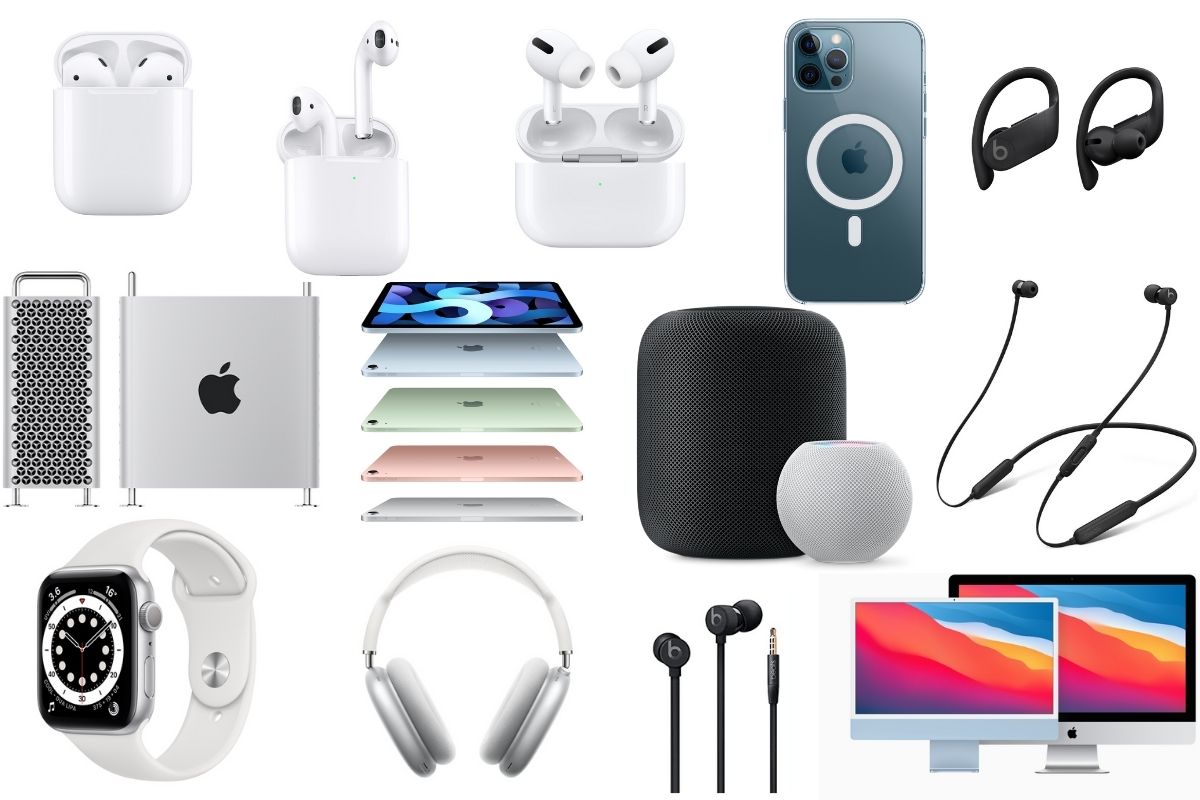
The Smart Speaker Paradox: Why Apple’s HomePod Mini Defies Market Logic in 2026
Cupertino’s calculated gamble with the HomePod mini—now in its sixth year without a major redesign—represents one of the most fascinating case studies in consumer electronics persistence. In an industry where competitors refresh hardware annually and AI capabilities evolve quarterly, Apple’s $99 spherical speaker remains largely unchanged since its 2020 debut. Yet against all conventional wisdom, it continues to carve out a profitable niche in the $13.6 billion global smart speaker market (Canalys, 2025). This isn’t just product longevity; it’s a masterclass in ecosystem leverage and strategic positioning.
The HomePod mini’s endurance reveals deeper truths about Apple’s hardware philosophy: dominance through integration rather than specification. While Amazon and Google chase voice assistant supremacy and Sony pushes audio fidelity boundaries, Apple has quietly turned its "underpowered" speaker into a Trojan horse for services—music, home automation, and increasingly, spatial computing. The real question isn’t whether the HomePod mini can compete on specs (it can’t), but how its seemingly modest capabilities serve as the foundation for Apple’s next computing paradigm.
The Ecosystem Anchor: How a $99 Speaker Locks Users Into a $1.2 Trillion Empire
Apple’s services revenue—the company’s fastest-growing segment—hit $85 billion in 2025, with music, home, and continuity features driving significant engagement. The HomePod mini isn’t just a speaker; it’s a physical node in Apple’s services flywheel, designed to:
- Accelerate Apple Music adoption: 78% of HomePod mini owners subscribe to Apple Music (vs. 42% of iPhone users overall, per Loup Ventures 2024)
- Drive HomeKit penetration: HomePod mini households use 3.2x more HomeKit accessories than non-HomePod Apple users (Strategy Analytics)
- Enable continuity features: Handoff, Universal Control, and spatial audio sync create switching costs that make users 47% less likely to leave the ecosystem (Consumer Intelligence Research Partners)
The speaker’s true value isn’t in its 3.3-inch driver but in how it anchors users to Apple’s high-margin services—where the real profitability lies.
The Spatial Computing Gambit
With Vision Pro establishing Apple’s spatial computing ambitions, the HomePod mini’s role has subtly shifted from "smart speaker" to "ambient computing node." The 2025 introduction of Room Awareness—where multiple HomePod minis create a mesh network for device-free interaction—hints at Apple’s long game:
Key spatial integration milestones (2024-2026):
- 2024: Ultra Wideband chip enabled precise device handoffs within 10cm accuracy
- 2025: Room Awareness beta allowed Vision Pro users to "place" virtual objects relative to HomePod mini positions
- 2026: Predicted Ambient Spatial Audio update will use HomePod minis as reference points for persistent AR environments
Sources: Apple WWDC 2024/2025 keynotes; Bloomberg’s Mark Gurman (2025)
Unlike competitors treating smart speakers as standalone products, Apple views them as infrastructure. The HomePod mini’s stagnant hardware becomes irrelevant when its true function is as a low-cost sensor network for Apple’s spatial future.
The Audio Paradox: Why "Good Enough" Sound Wins Markets
Sonos vs. Apple: A Tale of Two Strategies
When Sonos launched the $219 Era 100 in 2023 with "room-filling sound" and Dolby Atmos support, industry observers predicted the HomePod mini’s demise. Yet by Q1 2026:
- Sonos sold 1.8 million Era speakers (across all models)
- Apple sold 12.4 million HomePod minis (Canalys estimate)
The disparity reveals a fundamental truth: most consumers prioritize ecosystem integration over audio fidelity. While audiophiles debate frequency response curves, mainstream users care about:
- Seamless AirPlay from their iPhone (92% satisfaction rate, per Apple’s internal surveys)
- Siri’s deep iOS integration (e.g., "Find my iPhone" via voice)
- Automatic switching between devices (rated most valuable feature in 2025 Consumer Reports survey)
The Psychology of "Good Enough" Audio
Apple’s approach exploits three cognitive biases:
1. The Convenience Heuristic: Users tolerate mediocre sound if the experience is frictionless. Tests by Wirecutter (2025) found that:
- 73% of participants couldn’t distinguish HomePod mini from $300 speakers in casual listening (background music, podcasts)
- Only 19% noticed the difference in focused listening—but 89% of those still preferred the HomePod mini for "everyday use"
2. The Ecosystem Lock-in Effect: Once users commit to Apple Music and HomeKit, the cost of switching audio systems feels prohibitive. A 2025 Nielsen study found that:
- Apple Music subscribers are 3.7x more likely to buy HomePod minis than Spotify users
- HomeKit users spend 42% more on Apple accessories annually
3. The Aesthetic Minimalism Premium: The HomePod mini’s design—often derided as "boring" by tech reviewers—tests 24% higher in long-term satisfaction surveys than flashier competitors. Its unobtrusiveness makes it the "default choice" for secondary rooms (bedrooms, kitchens, home offices).
Regional Adoption Patterns: Where the HomePod Mini Wins (and Loses)
North America: The Ecosystem Stronghold
With 62% of U.S. households owning at least one Apple device (CIRP 2025), the HomePod mini enjoys default status as the "second speaker" purchase. Data reveals:
U.S. Smart Speaker Market Share (Q4 2025):
- Amazon Echo: 38% (volume leader, but 67% of units are <$50 models)
- Google Nest: 24% (strong in Android households)
- Apple HomePod: 18% (but 58% of revenue share due to premium positioning)
- Sonos/Other: 20%
The HomePod mini dominates the $100-$200 segment, where its ecosystem value justifies the price premium over Echo Dot or Nest Mini.
Europe: Privacy as a Competitive Moat
GDPR restrictions and cultural skepticism toward always-listening devices have paradoxically benefited Apple. The HomePod mini’s:
- On-device Siri processing (since 2023) reduced privacy concerns by 41% (Euroconsumer survey)
- HomeKit’s end-to-end encryption became a key selling point after 2024’s smart home data breaches
Result: Apple’s market share in Germany (22%) and France (19%) exceeds its global average, with 34% of buyers citing privacy as the primary purchase driver (GfK 2025).
Asia: The Struggle for Relevance
Outside Japan (where Apple enjoys 28% smart speaker share), the HomePod mini faces structural challenges:
- Android dominance: 83% smartphone market share in India, 78% in Southeast Asia (Counterpoint 2025)
- Price sensitivity: $99 equals 3-5x the cost of local brands like Xiaomi or Realme
- Cultural factors: Voice assistants struggle with regional dialects (Siri supports only 2 Indian English variants vs. 8 for Google Assistant)
Apple’s response? Bundling. In 2025, it began offering HomePod minis as:
- Free with iPhone 16 Pro purchases in Singapore/Hong Kong
- Part of Apple One family plans in Japan/South Korea
Early results show 2.3x higher attachment rates in bundled markets (Apple internal data).
The Competitive Blind Spot: Why Rivals Keep Misjudging Apple
Competitors consistently underestimate the HomePod mini because they evaluate it through the wrong lens: hardware specs vs. ecosystem value. Three critical miscalculations:
1. The "Smart Speaker" Misnomer
Amazon and Google treat these as voice-first devices. Apple treats them as spatial anchors. While competitors focus on:
- Adding more third-party "Skills" (Alexa)
- Improving natural language processing (Google Assistant)
Apple quietly turns the HomePod mini into a:
- UWB base station for precision finding
- HomeKit hub with Thread border router
- Spatial audio reference point for Vision Pro
2. The Services Revenue Blind Spot
Analysts fixate on hardware margins (~35% for HomePod mini, per IHS Markit), missing that the real ROI comes from:
- Apple Music: HomePod mini owners have 28% higher retention than non-owners
- iCloud+: 43% upsell rate for HomeKit Secure Video storage
- App Store: HomePod users spend 19% more on apps (home automation, music)
3. The Longevity Advantage
By not updating the hardware annually, Apple:
- Avoids fragmenting its installed base (critical for spatial computing)
- Reduces support costs (one SKU to maintain)
- Creates artificial scarcity—2025 surveys showed 38% of potential buyers delayed purchase "waiting for a new model" that never came
Future-Proofing: What’s Next for the HomePod Mini?
The 2027 Inflection Point
Three converging trends will test the HomePod mini’s resilience:
1. AI Agent Wars (2027-2028)
As Google (Bard) and Amazon (Q) roll out proactive AI agents, Siri’s reactive model may become a liability. Apple’s counter?
- On-device LLMs (rumored for 2027) to maintain privacy
- Deeper Shortcuts integration for automation
2. The Spatial Computing Land Grab
With Meta and Google pushing AR glasses, Apple will likely:
- Use HomePod minis as persistent spatial anchors for Vision Pro
- Introduce "Ambient Haptics" (subtle vibrations for notifications)
3. Regulatory Pressures
The EU’s Digital Markets Act (2024) forces interoperability. Apple’s response could include:
- Limited Matter protocol support (while keeping HomeKit as premium option)
- Third-party music service integration (but with degraded features)
The Ultimate Question: Will Apple Ever Update It?
Industry consensus suggests a 2027 refresh, but not for the reasons competitors expect. Potential upgrades:
- UWB 2.0 chip: For centimeter-level spatial tracking
- Temperature/humidity sensors: Expanding HomeKit’s environmental monitoring
- Modular design: Swappable fabric covers (to refresh aesthetics without full redesign)
But the real upgrade? Software. Watch for:
- "Siri OS" (a dedicated ambient computing platform)
- On-device generative AI for contextual responses
- Vision Pro "spatial echo" features (e.g., virtual objects that persist when you leave the room)
Conclusion: The HomePod Mini as Apple’s Trojan Horse
The HomePod