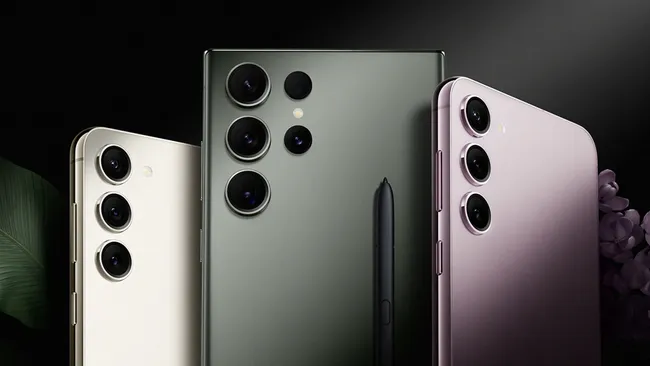
Revolutionizing Mobile Photography: The Galaxy S26 Ultra's Impact on Northeast India
Introduction: The Evolution of Mobile Photography
The smartphone industry has witnessed a remarkable evolution in mobile photography, transforming how we capture and share our world. With the imminent launch of the Galaxy S26 Ultra, Samsung is poised to set new benchmarks, particularly in the realm of selfie cameras. This analysis explores the broader implications of the Galaxy S26 Ultra's advanced selfie camera technology, focusing on its practical applications and regional impact, with a special emphasis on Northeast India.
The Technological Leap: From ISOCELL to Sony Sensors
The Galaxy S26 Ultra is rumored to feature a 12MP front-facing camera, a specification that might seem familiar to those who have followed the Galaxy S series. However, the true innovation lies in the sensor technology. Samsung is reportedly transitioning from its proprietary ISOCELL 3LU sensor to a Sony sensor, a move that could significantly enhance image quality and performance.
Sony sensors are renowned for their superior image quality, a reputation built on years of innovation and technological prowess. The new sensor in the Galaxy S26 Ultra is expected to maintain the 1/3.2-inch size with a 1.12m pixel size and f/2.2 aperture but will offer a wider 85-degree field of view. This enhancement is crucial for capturing more expansive scenes without sacrificing quality, making it ideal for group selfies and landscape shots.
Practical Applications: Beyond Casual Photography
The wider field of view in the Galaxy S26 Ultra's selfie camera has practical applications that extend far beyond casual photography. For content creators and vloggers, this feature allows for more dynamic and engaging content. In Northeast India, where the landscape is as diverse as it is breathtaking, the ability to capture wider scenes can revolutionize how local creators showcase their region.
Take, for example, the vibrant festivals of Northeast India, such as the Hornbill Festival in Nagaland or the Bihu Festival in Assam. These events are characterized by their colorful parades, traditional dances, and communal feasts. With the Galaxy S26 Ultra, content creators can capture the entirety of these festivals, from the intricate details of traditional attire to the expansive views of the celebrations, without needing to switch to a rear camera or use additional equipment.
Regional Impact: Empowering Local Creators
The Northeast region of India is a treasure trove of cultural diversity and natural beauty, yet it often remains underrepresented in mainstream media. The advanced selfie camera technology in the Galaxy S26 Ultra can empower local creators to tell their stories more effectively, bridging the gap between the region and the rest of the world.
According to a report by the Internet and Mobile Association of India (IAMAI), the number of internet users in rural India is expected to reach 350 million by 2025. This growth, coupled with the increasing penetration of smartphones, presents a unique opportunity for content creators in Northeast India. With tools like the Galaxy S26 Ultra, they can create high-quality content that showcases their culture, traditions, and natural wonders, attracting a global audience.
Economic Implications: Boosting Local Tourism
The impact of advanced selfie camera technology extends beyond content creation to economic development. High-quality, wide-angle selfies can serve as powerful marketing tools for the tourism industry. In Northeast India, where tourism is a significant economic driver, the ability to capture and share stunning landscapes and cultural events can attract more visitors.
For instance, the Kaziranga National Park in Assam, a UNESCO World Heritage Site, is home to the world's largest population of one-horned rhinoceroses. Visitors armed with the Galaxy S26 Ultra can capture not just the rhinos but the entire panorama of the park, including its diverse wildlife and lush landscapes. These images, shared on social media, can inspire others to visit, boosting local tourism and contributing to the region's economic growth.
Broader Implications: Setting New Industry Standards
The Galaxy S26 Ultra's advanced selfie camera technology has broader implications for the tech industry. As Samsung sets new benchmarks, other manufacturers are likely to follow suit, leading to a wave of innovation in mobile photography. This competitive landscape benefits consumers, who can expect continuous improvements in camera technology.
Moreover, the shift to Sony sensors highlights the importance of collaboration and technological exchange in the industry. By leveraging Sony's expertise in sensor technology, Samsung demonstrates a willingness to integrate the best available solutions, regardless of their origin. This approach can foster a more collaborative and innovative tech ecosystem, driving the industry forward.
Conclusion: The Future of Mobile Photography
The Galaxy S26 Ultra's advanced selfie camera technology represents a significant leap forward in mobile photography. With its wider field of view and superior image quality, it offers practical applications that can empower content creators, boost local tourism, and drive economic growth, particularly in regions like Northeast India. As the tech industry continues to evolve, the innovations introduced by the Galaxy S26 Ultra are likely to set new standards, paving the way for a future where mobile photography plays an even more integral role in our lives.