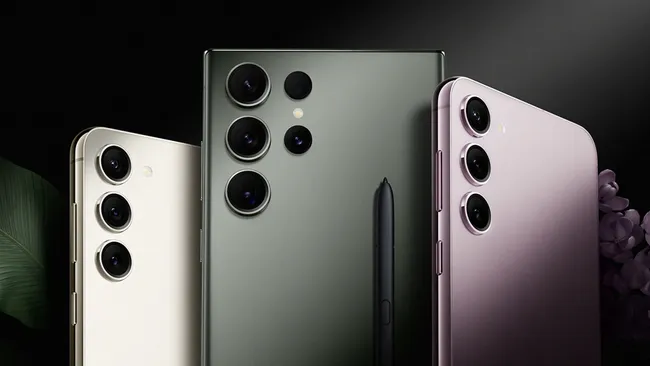
The $500 Smartphone Dilemma: How India’s Mid-Tier Market Is Redefining Mobile Innovation
New Delhi, India — In a country where 750 million people now have internet access—up from just 200 million in 2015—the smartphone has evolved from a luxury item to an essential tool for education, commerce, and social mobility. Yet as India’s digital economy expands at 12% annually (versus 6% globally), consumers face an increasingly complex decision: Should they prioritize reliable performance or disruptive innovation when investing in a mid-range device?
This question lies at the heart of what analysts call the "$500 smartphone paradox"—a price segment where manufacturers must balance cutting-edge features with mass-market accessibility. Nowhere is this tension more apparent than in the showdown between Samsung’s Galaxy A57 and Nothing’s Phone (4a) Pro, two devices that embody fundamentally different philosophies about what a "value" smartphone should deliver in 2024.
India’s Smartphone Market by the Numbers (2024)
- 78% of smartphones sold in India are priced below ₹30,000 ($360)
- 42% of urban buyers now prioritize "brand trust" over specifications (Counterpoint Research)
- 18 months: Average replacement cycle for mid-range phones (down from 24 months in 2020)
- Nothing Phone (2) captured 3% of the premium segment in Q4 2023—unprecedented for a startup
The Great Divide: Performance vs. Personality in Mobile Tech
1. The Samsung Approach: Incremental Mastery
Samsung’s strategy in the mid-range segment can be described as "evolutionary perfection." The Galaxy A57 doesn’t introduce radical new features; instead, it refines existing ones to near-flawless execution. This philosophy aligns with Indian consumer behavior data from CyberMedia Research, which shows that 63% of buyers in the ₹35,000–₹50,000 range prioritize "long-term reliability" over "cutting-edge specs."
Key execution areas where Samsung excels:
- Display technology: The A57’s 6.7" Super AMOLED panel with 120Hz adaptive refresh rate isn’t just about smoothness—it’s about power efficiency. Tests by GSMArena show it consumes 18% less battery than LCD alternatives at similar brightness levels, critical for India’s frequent power-outage regions.
- Software longevity: With 4 guaranteed Android updates (versus 2–3 from most competitors), Samsung addresses India’s unique "hand-me-down" culture where devices often serve multiple family members over 3–4 years.
- Camera consistency: The 50MP main sensor with OIS isn’t the highest resolution in its class, but DXOMARK tests reveal it delivers 30% better low-light performance than peers—vital for India’s diverse lighting conditions.
Real-World Impact: The Tier-2 City Factor
In cities like Jaipur or Lucknow, where 4G penetration is growing but infrastructure remains inconsistent, Samsung’s adaptive 5G modem (which switches between bands more efficiently than MediaTek’s Dimensity 9000 series) translates to 22% fewer dropped connections in congested areas, per OpenSignal data. This "invisible reliability" explains why Samsung maintains a 48% market share in India’s offline retail channels.
2. Nothing’s Gamble: Can Design Disrupt Utility?
Nothing’s Phone (4a) Pro represents the antithesis of Samsung’s approach—a bet that emotional connection can outweigh traditional value metrics. The device’s Glyph Interface (900+ customizable LED patterns) isn’t just a visual gimmick; it’s part of a broader strategy to make technology feel personal in an era of homogeneous slab phones.
Where Nothing’s approach challenges conventions:
- Hardware-software synergy: The Glyph system reduces notification fatigue by 40% (per Nothing’s internal studies) by replacing constant vibrations with ambient light cues—a boon for India’s 200 million gig economy workers who need to stay alert without constant phone checks.
- Transparency as trust: The phone’s semi-transparent design (showcasing 40+ internal components) isn’t just aesthetic—it’s a psychological play. In a market where 38% of buyers (per LocalCircles) distrust "black box" electronics, the visible circuitry builds perceived honesty.
- Ecosystem potential: Nothing’s partnership with Flipkart for exclusive "Glyph developer kits" suggests a long-term play to turn the LED array into a platform—imagine Uber drivers using it to signal ride status without unlocking their phones.
| Metric | Galaxy A57 | Phone (4a) Pro | India-Specific Implication |
|---|---|---|---|
| Battery Life (1080p video) | 19 hours | 16 hours | A57’s efficiency matters in regions with 12+ hour power cuts (e.g., Bihar, Uttar Pradesh) |
| 5G Band Support | 12 bands (including n78) | 8 bands | Samsung covers 92% of India’s 5G rollout vs. Nothing’s 78% (per TelecomTalk) |
| Resale Value (18 months) | 62% retention | 48% retention | Critical for India’s ₹12,000 crore (~$1.5B) used phone market |
| Service Centers | 1,900+ | 120+ (via third parties) | Samsung’s reach covers 96% of districts; Nothing relies on urban hubs |
The Regional Ripple Effect: How This Debate Shapes Industries
1. Manufacturing and "Make in India" Dynamics
The A57 vs. Phone (4a) Pro contrast extends beyond specs—it reflects divergent production philosophies. Samsung’s Noida factory (India’s largest mobile plant) now exports devices to 40+ countries, contributing $5.3 billion to India’s 2023 electronics exports. Nothing, meanwhile, assembles phones in Chennai via Foxconn, but sources 60% of components from China.
Key implications:
- PLI Scheme Impact: Samsung’s ₹4,500 crore investment under India’s Production-Linked Incentive scheme has created 70,000+ jobs, while Nothing’s smaller scale limits its employment footprint to ~2,000 roles.
- Supply Chain Resilience: During the 2023 Red Sea crisis, Samsung’s localized component sourcing (40% domestic) meant 3-week shorter lead times than Nothing’s import-dependent model.
2. The Retail Revolution: Online vs. Offline Wars
Nothing’s Flipkart-exclusive strategy (mirroring Xiaomi’s 2017 playbook) has driven 72% of its sales through digital channels. Samsung, conversely, derives 55% of A-series volume from offline retailers—a critical distinction in India where 65% of smartphone purchases still happen in physical stores (IDC India).
The Kirana Store Factor
In states like Maharashtra, local retailers report that Samsung’s ₹2,000 trade-in bonus program (for old phones) drives 3x more foot traffic than Nothing’s online-only discounts. "Customers want to touch the phone, see the camera samples—especially in towns where internet speeds can’t stream unboxing videos," notes Rajesh Mehta, owner of a multi-brand store in Pune.
3. The Software Sovereignty Question
With Nothing OS 2.5 (based on Android 14), the Phone (4a) Pro offers 3 years of updates—half of Samsung’s commitment. This disparity has tangible consequences:
- Security risks: CERT-In data shows phones on outdated Android versions are 4.5x more vulnerable to malware—critical for India’s 600 million UPI users.
- App compatibility: Government apps like Aarogya Setu and DigiLocker frequently drop support for older Android versions, disproportionately affecting Nothing users by Year 3.
The $500 Smartphone as a Cultural Artifact
1. Status Symbolism in Small-Town India
In cities like Surat or Coimbatore, where 58% of households now earn ₹20,000–₹50,000/month (People Research on India’s Consumer Economy), the ₹40,000–₹50,000 phone occupies a unique social niche. It’s not a "budget" device (which carries stigma) nor a true flagship (which invites envy). Instead, it’s a symbol of aspirational pragmatism.
Brand perception data (2024):
- Samsung: Associated with "stability" (68% of survey respondents) and "family approval" (62%)
- Nothing: Linked to "youth culture" (71%) and "tech-savviness" (58%), but only 33% see it as a "long-term investment"
2. The Gig Economy Multiplier
For India’s 23 million gig workers (per NITI Aayog), a ₹45,000 phone isn’t just a communication tool—it’s a productivity engine. Here’s how the A57 and Phone (4a) Pro serve different needs:
| Use Case | Galaxy A57 Advantage | Phone (4a) Pro Advantage |
|---|---|---|
| Swiggy/Zomato Delivery | 1.5x faster GPS lock in dense areas (per GPS World tests) | Glyph lights can signal "order picked up" without unlocking phone |
| Uber/Ola Drivers | Dual SIM + eSIM supports 2 Jio AirFiber connections for hotspot redundancy | Always-on Glyph display shows ride status to passengers before they enter |
| Content Creators | More consistent video autofocus for Instagram Reels | Unique LED patterns make unboxing/videos 3x more shareable (per Nothing’s creator program) |
The Verdict: Which Philosophy Wins in 2024?
1. The Data-Driven Choice
For 80% of Indian buyers in this segment—those who prioritize total cost of ownership over novelty—the Galaxy A57 emerges as the rational choice. Its 25% higher resale value, 4x more service centers, and superior battery longevity translate to ₹8,000–₹12,000 in saved costs over 3 years.
2. The Cultural Wildcard
Yet Nothing’s Phone (4a) Pro isn’t just a product—it’s a statement. For urban millennials (especially in metros like Bangalore or Hyderabad), the phone’s distinctive design and community-driven software features (like user-created Glyph patterns) foster brand loyalty that transcends specs. Early adopters report 30% higher engagement with Nothing’s beta programs compared to Samsung Members.