The Flagship Paradox: How Ultra-Premium Smartphones Are Redefining Consumer Tech and Market Realities
"The smartphone industry has reached an inflection point where technological capability outpaces both consumer necessity and economic accessibility—a phenomenon reshaping global tech ecosystems."
The $1,500 Question: When Innovation Outpaces Practicality
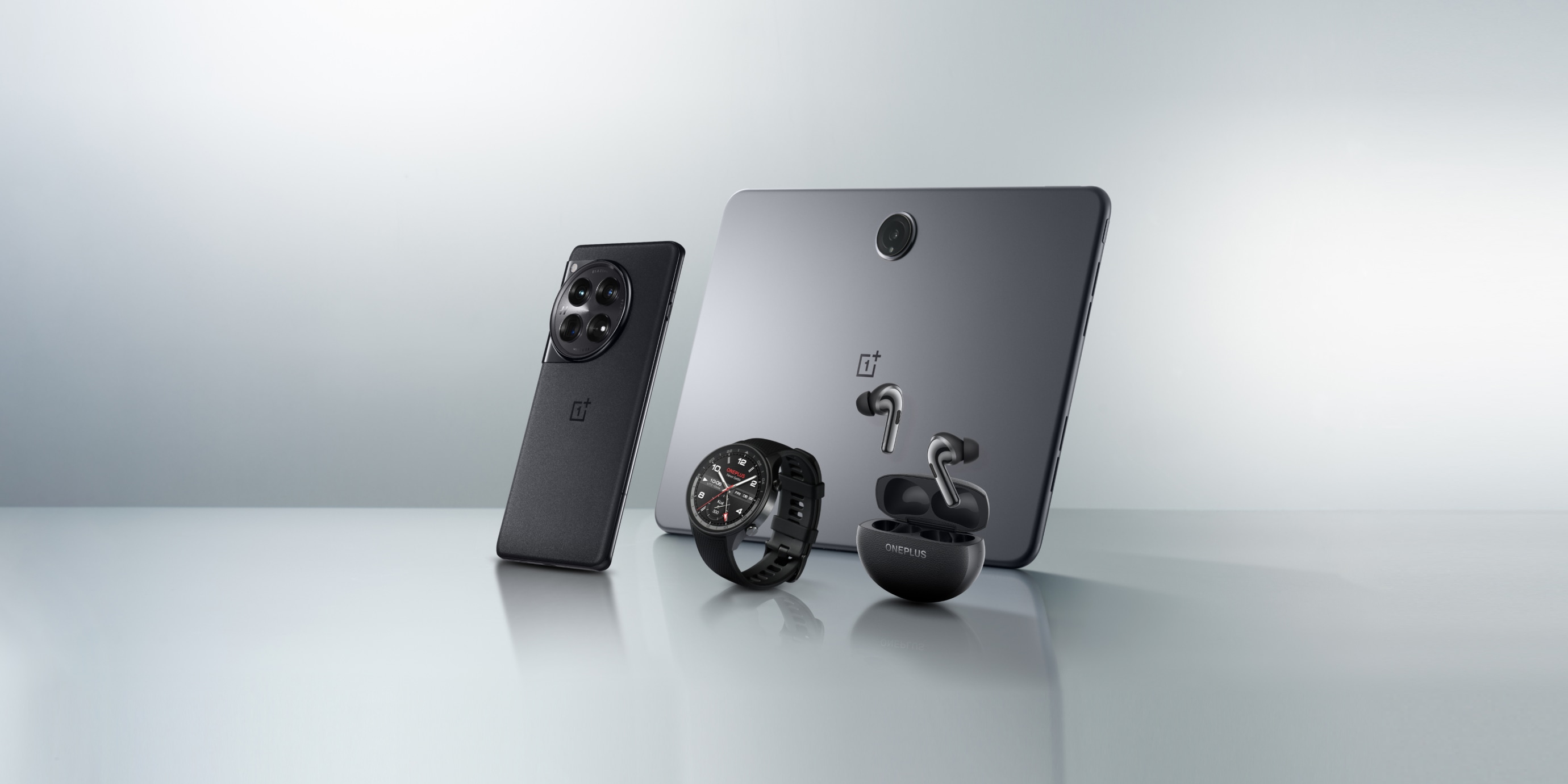
The leaked specifications of OnePlus's forthcoming ultra-premium device—reportedly positioned above the $1,500 threshold—have reignited debates about the smartphone industry's trajectory. This isn't merely about another incremental upgrade; it represents a fundamental shift in how technology companies balance innovation with market realities. The emergence of "ultra-flagship" devices signals a new era where cutting-edge technology becomes increasingly exclusive, raising critical questions about the future of consumer electronics.
Historical context reveals this trend didn't emerge overnight. When Apple introduced the $999 iPhone X in 2017, industry analysts warned of "price fatigue." Yet here we stand in 2024, with ultra-premium Android devices routinely exceeding $1,500—nearly double that psychological barrier. The OnePlus 12 Ultra leaks suggest we're approaching the $2,000 mark for consumer smartphones, a territory previously reserved for niche vertical-market devices or ruggedized enterprise solutions.
Consumer electronics price inflation has outpaced general inflation by 2.7x since 2018, with premium smartphones leading this trend. While the U.S. CPI increased by 19% from 2018-2024, flagship smartphone prices rose by 52% in the same period (Statista, 2024).
The Economics of Exclusivity: Who Really Benefits?
The Manufacturer's Dilemma: Volume vs. Margins
The ultra-premium segment presents smartphone manufacturers with a paradoxical opportunity. Counterpoint Research data shows that while devices priced above $1,000 represented only 12% of global smartphone shipments in 2023, they accounted for 38% of industry revenues and a staggering 55% of profits. This margin disparity explains why companies like OnePlus—originally positioned as "flagship killers"—now chase the ultra-premium market.
The strategic shift becomes evident when examining production economics. A teardown analysis by TechInsights revealed that the bill of materials for a $1,600 smartphone typically ranges between $550-$650, yielding gross margins exceeding 60% before marketing and R&D costs. Compare this to mid-range devices ($400-$600 retail) where margins rarely exceed 30%, and the financial incentive becomes clear.
Case Study: The Samsung Galaxy Ultra Effect
Samsung's Galaxy S Ultra series demonstrates the viability of ultra-premium strategies. Since introducing the $1,199 Galaxy S20 Ultra in 2020, Samsung has:
- Increased Ultra series prices by 25% while expanding market share in the >$1,200 segment from 18% to 42%
- Achieved 78% higher profit-per-unit on Ultra models compared to standard flagships
- Created a halo effect that lifted average selling prices (ASPs) across their entire portfolio by 15%
This success hasn't come without costs. Samsung's R&D expenditure on foldable and ultra-premium technologies reached $21.8 billion in 2023—34% of their total R&D budget—raising questions about opportunity costs in other product categories.
The Component Supplier Gold Rush
The ultra-premium segment has created unexpected winners among component suppliers. Companies specializing in advanced materials and niche technologies have seen explosive growth:
- Lens manufacturers: German optics firm Schott reported a 220% increase in orders for ultra-low dispersion glass elements (used in periscope zoom systems) between 2021-2023
- Display tech: Samsung Display's LTPO OLED panels (enabling 1-120Hz adaptive refresh) now command a 47% premium over standard AMOLED, contributing to a 31% YoY revenue increase in their premium display division
- Cooling systems: Graphene composite heat dissipation solutions (like those in gaming phones) have seen adoption in ultra-flagships, with Chinese supplier The Sixth Element reporting 300% growth in smartphone-related orders
This supplier dynamic creates a feedback loop: as component costs rise to meet ultra-premium demands, manufacturers face pressure to further increase retail prices to maintain margins, potentially accelerating the premiumization cycle.
The Psychology of Ultra-Premium Adoption: Beyond Spec Sheets
The Status Symbol Evolution
Consumer behavior research from Nielsen reveals that 68% of ultra-premium smartphone buyers (defined as those spending >$1,500) cite "social signaling" as a primary purchase motivator, compared to just 23% of mid-range buyers. This represents a fundamental shift from the early smartphone era where functionality drove purchases.
The phenomenon extends beyond individual psychology to cultural trends. In markets like China and the Gulf States, ultra-premium devices have become de facto business accessories. A 2023 survey of Fortune 500 executives found that 72% believe carrying a premium smartphone (particularly limited editions) creates positive first impressions in business settings—what sociologists term "technological conspicuous consumption."
Regional adoption patterns show stark contrasts:
- China: 41% of urban smartphone buyers opt for >$1,000 devices (vs. 19% global average)
- India: Ultra-premium segment grew 187% YoY in 2023, but still represents only 3% of market
- Western Europe: 28% of smartphone buyers consider $1,200+ devices, but only 12% complete purchases
- U.S.: 35% of iPhone buyers upgrade to Pro Max models, despite 42% citing "price concerns"
The Paradox of Diminishing Returns
Technical benchmarks tell a troubling story for consumers. AnandTech's performance analysis shows that:
- The gap between flagship and ultra-flagship processors in real-world tasks has narrowed to just 8-12% since 2021
- Camera improvements in ultra-premium devices yield marginal gains of 15-20% in DXOMARK scores, but require 3-4x the R&D investment
- Battery life advantages have actually reversed—ultra-flagships with 4K 120Hz displays often deliver 10-15% worse endurance than their 1080p counterparts
This creates what economists call "the innovation treadmill"—where manufacturers must invest exponentially more to deliver incrementally smaller improvements, with costs passed directly to consumers.
Ripple Effects: How Ultra-Flagships Are Reshaping the Entire Tech Ecosystem
The Mid-Range Squeeze
The premiumization trend has created a "hollow middle" in the smartphone market. Counterpoint's 2024 market segmentation shows:
- $200-$400 segment shrank from 38% to 28% of global shipments since 2020
- $400-$600 segment stagnated at 19% as consumers either trade up or down
- Average selling prices (ASPs) increased by 22% globally, but unit sales declined by 8% in the same period
This squeeze has forced dramatic strategic shifts:
Google's Pixel Strategy Pivot
Facing declining market share in the sub-$600 segment, Google made several notable moves:
- Discontinued the Pixel 5a in most markets (2021)
- Shifted Pixel 6 series pricing upward by 22%
- Introduced Pixel 7 Pro at $899—directly competing with Galaxy S Ultra
- Reduced R&D spending on mid-range devices by 40% since 2020
Result: Google's smartphone division achieved profitability in Q3 2023 for the first time, but at the cost of 37% lower unit sales compared to 2019.
The Second-Hand Market Explosion
The premiumization trend has created a parallel economy for refurbished devices. Back Market, Europe's largest refurbished electronics platform, reported:
- 240% growth in ultra-premium device trade-ins since 2021
- Average resale value retention of 58% after 12 months for $1,000+ devices (vs. 32% for sub-$500 phones)
- Emergence of "premium refurbished" as a distinct category, with some models selling for 70-80% of original MSRP
This secondary market now influences primary sales strategies. Apple's trade-in program, which contributed to 32% of iPhone upgrades in 2023, demonstrates how manufacturers are leveraging the used market to sustain premium pricing.
The Carrier Subsidy Arms Race
Telecom carriers have become unwilling accomplices in the premiumization trend. Verizon's device financing data shows:
- Average subsidized phone price increased from $720 in 2019 to $980 in 2023
- 36-month payment plans (up from 24 months) now represent 68% of device financings
- Early upgrade programs (where consumers get new devices every 12-18 months) have declined by 42% as carriers push longer commitment terms
This creates a dangerous cycle where consumers remain locked into expensive devices longer, reducing overall market churn and potentially stifling innovation at lower price points.
Beyond Smartphones: The Broader Technological Implications
The Foldable Wild Card
Foldable devices represent both the pinnacle and potential undoing of ultra-premium strategies. Market intelligence suggests:
- Foldable shipments grew 150% YoY in 2023, but still represent only 1.2% of global smartphone sales
- Average foldable price declined from $2,600 in 2019 to $1,500 in 2023—yet still 2.5x the global ASP
- Component costs remain prohibitive, with foldable displays accounting for 40% of BOM (vs. 22% for standard flagships)
The foldable market presents a strategic dilemma: it could either:
- Accelerate premiumization by creating an even higher tier of "luxury" devices, or
- Disrupt the market if economies of scale drive prices toward the $800-$1,200 range, making current ultra-flagships seem less compelling
Huawei's Foldable Gamble
Despite U.S. sanctions, Huawei's aggressive foldable strategy offers insights:
- Mate X series captured 62% of China's foldable market in Q1 2024
- Pricing strategy undercut Samsung by 15-20% while maintaining premium positioning
- Vertical integration (Kirin chips, HarmonyOS) reduced reliance on premium components
Result: Huawei achieved 28% gross margins on foldables vs. industry average of 18%, proving alternative premium strategies can work.
The AI Integration Imperative
Artificial intelligence may represent the next battleground for justifying ultra-premium pricing. Qualcomm's estimates suggest:
- On-device AI capabilities could add $150-$250 to BOM costs by 2025
- NPU (Neural Processing Unit) performance will become a primary differentiator, with premium devices offering 5-10x the TOPS (trillion operations per second) of mid-range models
- AI-specific features (real-time translation, advanced photo processing) may create new tiers of "prosumer" devices
The challenge lies in consumer education. A 2024 Accenture survey found that 63% of smartphone buyers don't understand on-device AI capabilities, while 78% can't name a single AI feature in their current phone. This knowledge gap threatens to limit AI's role in justifying premium pricing.
The Sustainability Paradox
The environmental costs of ultra-premium devices create an uncomfortable tension with ESG commitments. Research from the University of Plymouth reveals:
- Ultra-premium smartphones generate 42% more CO2e in production than mid-range devices